






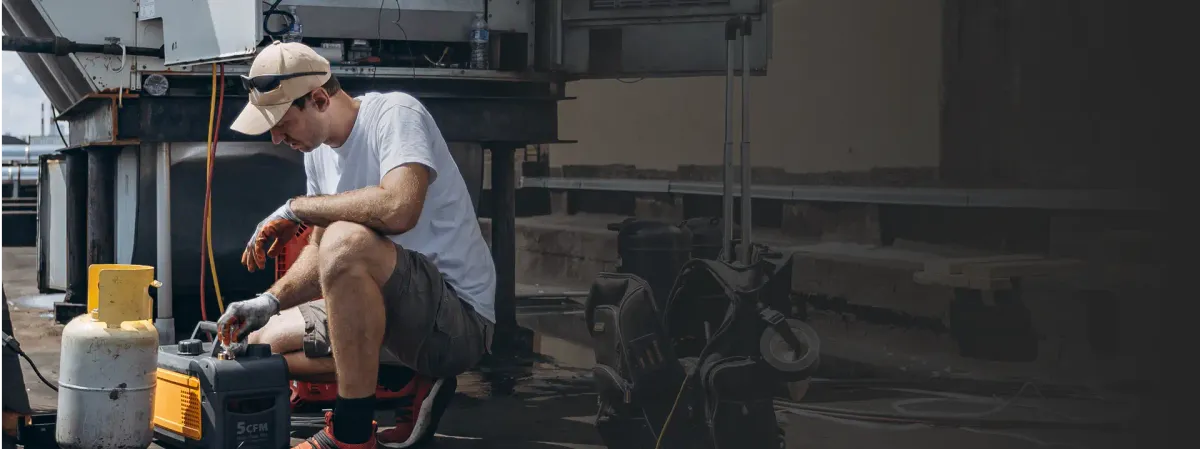
When Your Air Conditioner Fails: Understanding Emergency HVAC Response
Air conditioning failures occur at the worst possible times. Data from the Air Conditioning Contractors of America shows that 78% of emergency service calls happen during heat waves when outdoor temperatures exceed 90°F. Visit acrepair for more.
The sudden loss of climate control creates more than discomfort—it poses genuine health risks, particularly for vulnerable populations including children under five, adults over 65, and individuals with respiratory conditions.
Emergency AC repair services exist to restore cooling capacity when standard appointment scheduling proves inadequate. These specialized response teams operate 24/7, typically arriving within two to four hours of initial contact. The premium pricing reflects the immediate availability, extended operating hours, and the expertise required to diagnose and resolve failures under time pressure.
Industry statistics reveal that approximately 40% of air conditioning emergencies stem from electrical component failures, 28% from refrigerant leaks, 18% from compressor malfunctions, and 14% from miscellaneous mechanical issues. Understanding these failure patterns helps homeowners recognize genuine emergencies versus issues that can wait for regular business hours.
Identifying True Air Conditioning Emergencies
Not every AC malfunction requires emergency intervention. A true emergency involves complete system failure during extreme weather, refrigerant leaks creating safety hazards, electrical problems producing burning odors, or water damage threatening property. These scenarios justify the premium rates—typically 150% to 300% of standard service pricing—charged for after-hours response.
Reduced cooling capacity often feels urgent but rarely qualifies as a true emergency. If your system produces some cool air, even if struggling to maintain set temperatures, standard next-business-day service usually suffices.
The distinction matters because emergency call fees in major metropolitan areas range from $200 to $500 before any actual repair work begins.
Temperature-related health risks define the threshold. The National Weather Service issues excessive heat warnings when the heat index reaches 105°F or higher. During such conditions, indoor temperatures climbing above 85°F in homes with infants, elderly residents, or individuals with chronic health conditions constitute legitimate emergencies requiring immediate professional response.
Property damage scenarios also warrant emergency classification. Air handlers freezing and flooding living spaces, condensate drain blockages causing ceiling leaks, or electrical shorts tripping breakers repeatedly all demand urgent attention regardless of outdoor temperature.
These situations escalate repair costs exponentially when left unaddressed.
What Happens During Emergency Service Calls
Emergency AC repair follows a structured diagnostic protocol even under time constraints. Technicians begin with safety assessments—checking electrical panels for shorts, inspecting refrigerant lines for leaks, and ensuring carbon monoxide levels remain safe if gas heating shares the HVAC system.
This initial survey takes 10 to 15 minutes but prevents cascading failures.
The diagnostic phase employs both traditional and digital tools. Multimeters measure voltage and amperage at key circuit points. Manifold gauges assess refrigerant pressures on both high and low sides of the system.
Infrared thermometers identify temperature differentials across coils and ducts. Modern technicians increasingly use smartphone apps that function as HVAC calculators, computing subcooling and superheat values instantly rather than relying on manual calculations.
Most emergency repairs fall into three categories. First-tier fixes—thermostat replacements, capacitor swaps, contactor changes—take 30 to 45 minutes and cost $150 to $400 in parts and labor.
Second-tier repairs including blower motor replacements, control board swaps, or minor refrigerant additions require one to two hours and run $400 to $900. Third-tier emergencies involving compressor issues or extensive refrigerant system work may take three to five hours with costs reaching $1,500 to $3,000.
Reputable emergency services provide transparent pricing before beginning work. Technicians present diagnostic findings, explain repair options, and quote prices that include parts, labor, and emergency premiums.
This transparency allows homeowners to make informed decisions about proceeding with immediate repairs versus temporary solutions that restore partial function until regular-hours service becomes available.
Geographic Variations in Emergency AC Services
Emergency AC repair availability and pricing vary dramatically by region. Dense urban markets like New York City support numerous 24/7 HVAC companies competing for emergency business.
This competition moderates prices—emergency AC repair NYC providers typically charge 180% to 220% of daytime rates. Rural and suburban areas with fewer service providers see emergency premiums reaching 250% to 350% of standard pricing.
Response times correlate with population density. Metropolitan areas with established 24 hour ac repair services generally deliver two-hour response windows. Suburban zones typically promise three to four hours.
Rural locations may require five to eight hours as technicians travel from centralized service bases. These geography-driven delays matter enormously when outdoor temperatures exceed 95°F and indoor conditions become hazardous.
Coastal regions experience seasonal demand spikes that strain emergency service capacity. Gulf Coast and Southeastern markets see call volumes increase 400% to 600% from June through August compared to winter months.
During heat waves, even established customers may face extended wait times as service queues fill. Some providers implement triage systems, prioritizing calls involving health risks or property damage over general comfort complaints.
Climate patterns influence both failure rates and repair complexity. Desert Southwest systems running 8 to 10 months annually accumulate wear faster than Northern units operating four to six months.
Salt air in coastal environments corrodes components more aggressively. Humidity in Southeastern states stresses condensate systems. These regional factors affect both emergency frequency and repair costs.
Compressor Failures: The Costliest Emergency
The question "can you repair an AC compressor" frequently arises during emergency calls because compressor replacement represents the single most expensive residential HVAC repair. The answer involves nuance—some compressor issues allow repair, but most require complete unit replacement.
Electrical failures outside the compressor itself sometimes create symptoms mimicking compressor death. Hard-start capacitors, which provide the initial voltage surge needed to start the compressor motor, fail regularly in systems over seven years old.
Replacing this $15 to $40 component takes 20 minutes and restores function. Similarly, failed contactors preventing electrical current from reaching the compressor cost $25 to $60 to replace.
True compressor mechanical failures present different economics. Compressors operate as sealed units—internal damage from refrigerant contamination, bearing failure, or valve damage cannot be repaired in field conditions.
Replacement costs for residential compressor units range from $1,200 to $2,800 in parts alone. Labor adds another $500 to $1,200. Refrigerant—required after opening the sealed system—contributes $200 to $600 depending on system capacity and refrigerant type.
The age calculus matters tremendously. HVAC industry standard practice advises against compressor replacement in systems exceeding 10 to 12 years of service life.
At that age, the $2,000 to $4,000 compressor replacement cost represents 50% to 70% of complete system replacement. Other components—coils, fans, control boards—approach end-of-life simultaneously, meaning additional failures typically occur within 12 to 24 months after compressor replacement.
Refrigerant phase-outs complicate compressor decisions further. Systems using R-22 refrigerant—banned from production since January 2020—face particularly difficult economics.
R-22 now costs $80 to $150 per pound compared to $5 to $10 per pound before the phase-out. Replacing a failed compressor in an R-22 system while recharging refrigerant can easily exceed complete new-system costs, making repair economically irrational except as temporary measures.
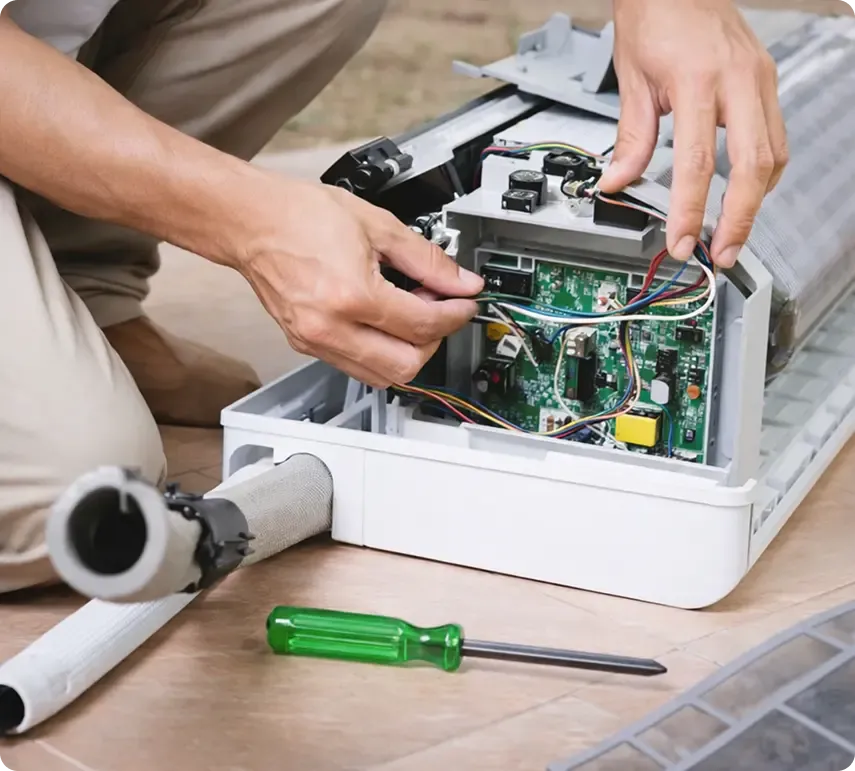
Recovery Time: How Long to Cool House After AC Repair
Homeowners consistently ask how long to cool house after AC repair, expecting immediate relief once technicians complete work. The physics of thermal mass dictate more gradual recovery than most anticipate.
Multiple variables—building size, insulation quality, outdoor temperature, and pre-repair indoor temperature—determine cooling timelines.
Standard residential systems remove heat at rates between 18,000 and 60,000 BTUs per hour depending on unit tonnage. A typical 2,000-square-foot home with a three-ton system (36,000 BTU/hour capacity) operating at peak efficiency removes approximately 450 BTUs per degree Fahrenheit of temperature reduction across the entire space.
This means dropping indoor temperature from 85°F to 75°F requires removing 4,500 BTUs—theoretically achievable in 7.5 minutes of runtime.
Reality extends these timelines substantially. Buildings contain thermal mass—drywall, furniture, flooring, countertops—that absorbs and radiates heat independent of air temperature.
A home baking at 90°F indoor temperature for several hours has absorbed enormous heat energy into structural elements. These materials continue radiating heat even as the AC cools air, slowing perceived comfort improvement.
Practical cooling timelines for homes requiring 10 to 15 degree temperature reductions typically span three to six hours after repair completion. Initial air temperature drops happen relatively quickly—the first five degrees often occur within 45 to 90 minutes.
The final five degrees take disproportionately longer as the system works against heat radiating from thermal mass and continued solar gain through windows and walls.
Expectations should account for outdoor conditions. Systems cool most efficiently when outdoor temperatures stay below 95°F. Above that threshold, efficiency declines as the temperature differential between indoor and outdoor air increases.
On 100°F days, systems may require six to eight hours to achieve full comfort after extended outages, particularly in homes with south-facing windows or inadequate insulation.
Finding Reliable Emergency Services Near You
Searching "air conditioner repair near me" during an emergency often produces overwhelming results—dozens of companies claiming 24/7 service and fastest response times. Vetting providers during a crisis proves challenging, yet choosing poorly compounds problems.
Several screening criteria help identify reputable emergency services.
Licensing verification takes priority. Legitimate HVAC contractors hold state and local licenses demonstrating technical competency and insurance coverage.
Most state contractor licensing boards maintain online databases allowing instant verification. Companies operating without proper licensing expose homeowners to liability if technicians injure themselves or damage property during repairs.
Established business presence indicates stability and accountability. Companies operating from physical locations with posted business hours, service departments, and administrative staff typically provide more reliable service than one-truck operations running entirely on mobile phones.
Better Business Bureau ratings, Google reviews spanning multiple years, and membership in professional organizations like ACCA or NATE signal commitment to industry standards.
Transparent pricing structures separate professional operations from opportunistic operators. Reputable companies offering 24 hour ac repair services quote emergency service fees upfront during initial phone contact.
They provide written estimates before beginning repair work. They explain warranty terms covering parts and labor. Companies refusing to discuss pricing until after arriving on-site frequently exploit customer desperation with inflated charges.
Emergency service guarantees matter. Quality providers stand behind emergency repairs with warranties matching or exceeding those offered for standard appointments.
Thirty-day labor warranties and manufacturer parts warranties should apply regardless of service timing. Companies offering reduced warranties for emergency work signal lower quality standards.
Preventing Future Emergencies Through Maintenance
The most effective emergency AC repair strategy involves preventing emergencies altogether. Data from HVAC manufacturers shows that routine maintenance reduces emergency breakdowns by 60% to 70% compared to neglected systems.
The economics favor prevention—annual maintenance costing $100 to $200 versus emergency repairs averaging $800 to $1,500.
Spring maintenance appointments scheduled before cooling season address predictable failure points. Technicians clean condenser coils, improving heat exchange efficiency by 15% to 25%. They test capacitors—the components most likely to fail during high-demand periods.
They check refrigerant levels, identifying slow leaks before they cause compressor damage. They lubricate motors, tighten electrical connections, and verify thermostat calibration.
Filter replacement represents the single most impactful homeowner maintenance task. Standard one-inch filters require replacement every 30 to 60 days during operating season.
Clogged filters restrict airflow, forcing blower motors to work harder and run hotter. This stress shortens motor life and triggers thermal overload shutdowns mimicking catastrophic failures. The $5 to $15 monthly filter cost prevents $400 to $800 blower motor replacements.
System age dictates replacement versus repair decisions. HVAC systems averaging 15 to 20 years of service life (depending on climate and maintenance history) reach points where emergency repairs become economically questionable.
Tracking repair history helps identify this threshold—once cumulative repairs over three years exceed 50% of replacement cost, continued repair rarely makes financial sense.
Modern diagnostic tools allow homeowners to monitor system health proactively. Smart thermostats track runtime patterns, alerting owners when cycles become unusually short or extended—both indicators of developing problems.
Whole-home energy monitors identify increased electrical consumption suggesting degraded efficiency. These early warnings enable scheduled repairs during regular business hours at standard rates rather than emergency premiums.
Making Emergency Decisions Under Pressure
Emergency situations compress decision timelines, forcing choices between repair and replacement without the research time normal purchases allow. Several frameworks help structure these high-pressure decisions rationally rather than emotionally.
The 50% rule provides quick guidance—if quoted emergency repair costs exceed 50% of comparable system replacement cost, replacement deserves serious consideration. This calculation requires knowing approximate replacement costs, where HVAC calculators prove valuable.
These online tools estimate equipment and installation costs based on home size, existing ductwork, and local market rates, providing ballpark figures for comparison.
Age multipliers adjust the 50% threshold. Systems under five years old justify repairs up to 75% of replacement cost because remaining service life extends decades.
Systems between five and ten years warrant repairs up to 50% of replacement cost. Systems exceeding 10 years make economic sense only for repairs below 30% of replacement cost, given limited remaining lifespan and likelihood of additional failures.
Temporary solutions often bridge emergency situations when replacement makes more sense than costly repairs. Technicians can sometimes implement limited fixes—adding refrigerant to leaking systems, bypassing failed components, or implementing manual overrides—that restore partial function.
These stopgap measures buy time for proper replacement planning, competitive bidding, and scheduled installation rather than desperation purchases.
Financing availability influences emergency decisions substantially. Many HVAC contractors offer payment plans or manufacturer-sponsored financing making replacement feasible even when immediate cash availability seems prohibitive.
Zero-percent financing promotions during shoulder seasons sometimes make scheduled replacement more affordable than emergency repairs financed on credit cards at 18% to 24% APR.
The Bottom Line on Emergency AC Services
Emergency AC repair services fill critical needs when climate control failures threaten health or property. The premium pricing reflects genuine value—immediate availability, after-hours response, and expertise resolving complex problems under pressure.
Understanding when emergencies truly exist versus situations tolerating brief delays prevents unnecessary expenditure while ensuring safety.
Smart homeowners balance emergency service knowledge with preventive strategies that minimize crisis frequency. Routine maintenance, timely filter changes, and attention to early warning signs keep most systems running through peak demand periods.
When emergencies occur despite best efforts, informed decision frameworks prevent panicked choices that compound rather than solve problems.
The air conditioning repair landscape continues evolving. Refrigerant transitions, efficiency standard improvements, and smart diagnostic technologies reshape both emergency response capabilities and long-term system reliability.
Homeowners researching 24 hour ac repair options before emergencies strike gain negotiating power and avoid hasty decisions during actual crises. Staying informed about these changes helps property owners navigate both routine maintenance decisions and unexpected emergency situations with confidence grounded in data rather than desperation.


