






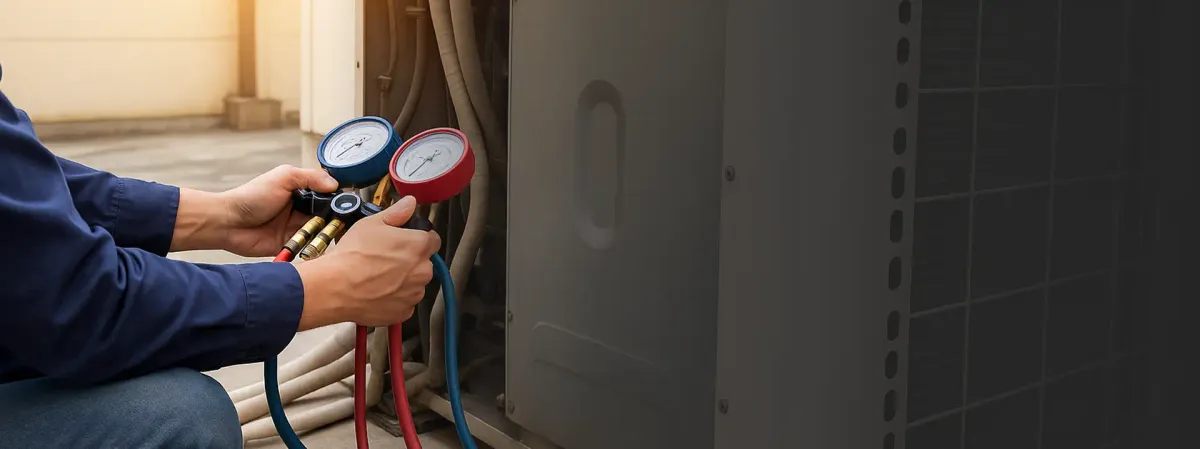
Understanding Your Outdoor AC Unit and When It Needs Professional Attention
The outdoor component of a residential cooling system—technically called the condenser unit—handles the heat exchange that makes indoor comfort possible. This cabinet contains the compressor, condenser coil, fan motor, and control electronics that work together to expel heat from your home. Visit acrepair for more.
When this equipment fails, indoor temperatures rise quickly, particularly during peak summer months when ambient conditions stress the system most.
Statistics from the Air Conditioning Contractors of America show that 75% of no-cooling calls trace back to outdoor unit problems. Homeowners searching for "emergency air conditioning repair near me" typically discover issues at the worst possible time: during heat waves when HVAC technicians handle maximum call volume.
Understanding what your outdoor a/c unit does, recognizing failure symptoms early, and maintaining the equipment properly reduces both emergency repair needs and lifetime operating costs.
Common Outdoor AC Unit Problems That Require Professional Service
Compressor Failure
The compressor pumps refrigerant through your system and represents the single most expensive component. Hard-starting, overheating, or complete failure to run indicates compressor trouble.
Industry data places compressor replacement costs between $1,200 and $2,500 for residential systems, making this repair decision point where many homeowners evaluate full system replacement instead.
Compressors fail for several reasons. Electrical issues account for approximately 40% of premature failures, while refrigerant problems cause another 30%.
Contaminants in the refrigerant circuit, inadequate lubrication, and age-related wear make up the remainder. Units operating beyond their 12-15 year design life face exponentially higher compressor failure rates.
Refrigerant Leaks
Your air conditioning maintenance schedule should include annual leak checks because refrigerant loss reduces cooling capacity while forcing the compressor to work harder. The Department of Energy estimates that undercharged systems lose 20% efficiency for every 10% refrigerant deficit.
Leaks typically develop at connection points, in the condenser coil, or along refrigerant lines.
Modern R-410A refrigerant costs $50-125 per pound at current market rates. A central air system holds 6-15 pounds depending on tonnage and line length.
Simply adding refrigerant without repairing the leak wastes money and violates EPA regulations. Technicians must recover existing refrigerant, repair the leak, evacuate the system, and recharge to manufacturer specifications—a process requiring specialized equipment and certification.
Fan Motor and Blade Issues
The condenser fan pulls air across the coil to dissipate heat. When this fan stops, the unit overheats and safety controls shut the compressor down within minutes.
Field service data indicates fan motor problems generate 15-20% of "ac not working" service calls during cooling season.
Signs of failing fan motors include excessive noise, visible wobble, intermittent operation, or complete failure to start. Capacitor failure often mimics motor problems—the capacitor provides starting torque, and when it degrades, the motor hums without spinning.
Capacitor replacement costs $150-250, while motor replacement runs $300-600 depending on horsepower and installation complexity.
Dirty or Damaged Condenser Coils
The aluminum fins on your condenser coil require unrestricted airflow. Cottonwood seeds, grass clippings, leaves, and general debris accumulation restrict this airflow and reduce heat transfer efficiency.
Research published in ASHRAE journals shows that coil blockage reducing airflow by 25% cuts system capacity by 15% while increasing energy consumption by 20%.
Professional coil cleaning during central ac maintenance visits typically costs $100-200 and should happen annually in most climates. Facilities in high-pollution areas, near busy roads, or surrounded by deciduous trees benefit from twice-yearly cleaning.
Bent fins require straightening tools, and severely damaged coils may need replacement at $800-1,500 installed.
Electrical Component Failures
Control boards, contactors, transformers, and wiring deteriorate from heat cycling, moisture exposure, and electrical stress. The National Fire Protection Association reports that HVAC electrical failures cause approximately 6,000 residential fires annually, highlighting the importance of addressing electrical symptoms immediately.
Contactors switch high-amperage current to the compressor and fan motor. These mechanical relays wear out every 5-10 years and cost $150-300 to replace.
Control board failures present more complex diagnostic challenges—symptoms range from complete unit shutdown to erratic behavior. Board replacement runs $250-600 depending on system complexity and manufacturer.
The True Cost of Neglecting Outdoor AC Unit Maintenance
Energy Information Administration data reveals that air conditioning accounts for 12% of total residential energy expenditure in the United States, averaging $400-600 per household annually. Poorly maintained systems increase this cost by 25-40% through reduced efficiency and premature component failure.
A multi-year study tracking 1,200 residential HVAC systems documented that units receiving annual professional maintenance lasted 16.2 years on average, while neglected systems failed at 11.3 years. The five-year lifespan difference represents $8,000-15,000 in replacement costs avoided through $150-250 annual maintenance investments—a return exceeding 500%.
Beyond financial considerations, comfort suffers when systems lose capacity. A properly functioning three-ton residential a/c removes approximately 36,000 BTUs of heat per hour.
When refrigerant charge drops 15% and the condenser coil accumulates dirt, that capacity falls to 28,000 BTUs—insufficient for design cooling loads during peak afternoon temperatures. Rooms stay humid, temperatures climb above setpoint, and occupant complaints increase.
What Professional Outdoor AC Unit Service Actually Includes
Quality air conditioning maintenance extends beyond filter changes and thermostat adjustments. EPA-certified HVAC technicians follow systematic inspection protocols covering electrical, mechanical, and refrigerant systems.
Physical Inspection and Cleaning
Technicians examine the cabinet for rust, damage, and proper installation. The unit must sit level on its pad—tilt as small as two degrees creates compressor lubrication problems over time.
Clearance requirements specify 12 inches minimum around the unit and 60 inches above for adequate airflow and service access.
Condenser coil cleaning removes accumulated debris using specialized coil cleaners and pressure washing equipment. Technicians straighten bent fins and verify that all panels seal properly.
The fan blade receives inspection for cracks, imbalance, and secure mounting. Even minor blade damage creates vibration that accelerates bearing wear.
Electrical System Testing
Comprehensive electrical diagnostics include voltage and amperage measurements under operating conditions. Compressor amp draw reveals mechanical problems before catastrophic failure occurs.
High amp draw indicates excessive wear or refrigerant issues; low readings suggest electrical supply problems or starting component failure.
Contactor inspection checks for pitting, burning, and proper operation. These switches handle 30-60 amps repeatedly, and contact surfaces degrade over seasons.
Capacitor testing measures microfarad values against manufacturer specifications—capacitors lose capacity gradually, and values outside ±6% of rating indicate replacement needs. Technicians verify control board outputs, safety switch operation, and proper grounding throughout the circuit.
Refrigerant System Evaluation
Technicians measure suction and discharge pressures, then calculate superheat and subcooling values. These thermodynamic parameters reveal refrigerant charge accuracy, metering device performance, and heat exchange efficiency.
Proper diagnostics distinguish between refrigerant loss, airflow problems, and mechanical issues that present similar symptoms.
When charging adjustments are necessary, certified technicians recover excess refrigerant or add measured amounts while monitoring system response. They document refrigerant type, circuit pressures, and charge weight for service history records.
Leak detection using electronic sensors or dye injection locates escaping refrigerant before significant loss occurs.
Performance Verification
Final testing measures supply and return air temperatures, verifying appropriate temperature split across the evaporator coil. Residential systems should achieve 15-20°F temperature drop under normal conditions.
Insufficient split indicates airflow restriction, refrigerant problems, or dirty evaporator coils. Excessive split suggests refrigerant overcharge or reduced airflow.
Technicians document baseline performance data for future comparison. Gradual efficiency decline signals developing problems that preventive intervention can address before emergency failure.
This data-driven approach replaces reactive "fix it when it breaks" strategies with predictive maintenance that maximizes equipment longevity.
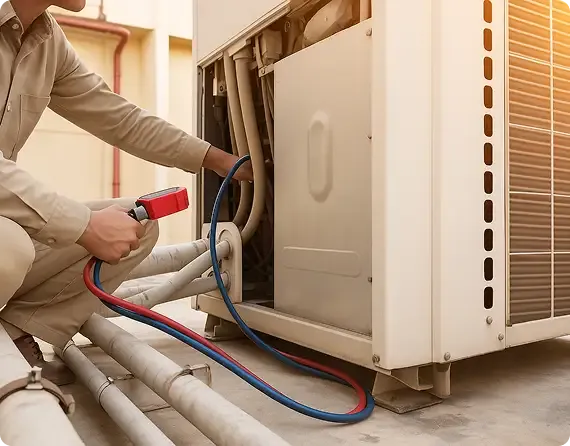
Emergency Outdoor AC Unit Repairs: What Homeowners Need to Know
Summer cooling emergencies spike during heat waves when outdoor units operate 12-16 hours daily instead of typical 6-8 hour cycles. This extended runtime stresses aged components and reveals marginal equipment condition.
Search volume for "emergency air conditioning repair near me" increases 300% during multi-day temperature extremes above 95°F.
Emergency service calls command premium pricing—expect 50-100% surcharges for after-hours, weekend, or holiday response. Standard diagnostic fees run $75-150, but emergency diagnostics reach $150-300.
These charges typically apply toward repair costs if customers authorize work, but some contractors assess separate trip charges.
Response time varies by contractor availability and geographic service area. During peak demand periods, waits extend to 24-48 hours even for "emergency" service.
Customers with maintenance agreements receive priority scheduling—another benefit justifying annual service contract investment.
Temporary cooling failure management becomes critical when professional help is hours away. Turn the system off to prevent compressor damage if it's short-cycling (starting and stopping every few minutes).
Check the circuit breaker and outdoor disconnect—tripped breakers or pulled disconnects account for 10% of emergency calls that require no actual repair. Clear visible debris from around the unit and ensure nothing blocks airflow to the cabinet.
Comparing Repair Costs Against Replacement Decisions
The "$5,000 rule" provides rough guidance for repair-versus-replace decisions: multiply the repair estimate by the system age in years. If the result exceeds $5,000, replacement makes better financial sense.
For example, a $600 repair on a 10-year-old system yields 6,000—marginally above the threshold and worth considering given remaining useful life.
This calculation omits efficiency gains. A 15-year-old system with 10 SEER efficiency uses 40% more electricity than a new 16 SEER unit performing identical cooling.
In climates with long cooling seasons, energy savings offset replacement costs over 7-10 years. Federal tax credits of up to $300 and utility rebates averaging $200-500 further improve replacement economics.
Major component failures—compressor, condenser coil, or indoor evaporator—on systems over 12 years old typically justify replacement. Labor costs to change these components approach 40-50% of new system installed price, but you retain the old heat exchanger, ductwork connections, and refrigerant lines.
New systems include manufacturer warranties covering parts for 5-10 years and compressors for up to 12 years, eliminating repair uncertainty during the warranty period.
Maximizing Outdoor AC Unit Lifespan Through Proper Care
Location selection impacts longevity significantly. Units installed in direct sun run hotter than shaded installations, reducing component life by 15-20%.
Strategic landscaping provides afternoon shade while maintaining the required clearances. Never plant shrubs closer than 12 inches to the cabinet—roots damage refrigerant lines and foliage blocks airflow.
Seasonal shutdown preparation extends equipment life in climates with winter heating. Cover the unit with a breathable waterproof cover to prevent ice and snow accumulation.
Never use plastic sheeting—trapped moisture causes worse corrosion than weather exposure. Clean surrounding areas of leaves and debris that decompose and generate corrosive acids.
Spring startup after months of inactivity should begin with visual inspection. Remove winter covers, clear debris, and verify the outdoor disconnect energizes the unit.
Set thermostats to cooling mode with setpoint several degrees below room temperature, then listen for normal startup. Unusual noises, failure to start, or weak airflow indicate professional inspection needs before extended operation.
Monitor monthly energy bills for unexplained increases. A 15-20% consumption rise without corresponding weather changes suggests efficiency loss requiring professional diagnosis.
Smart thermostats with usage tracking simplify this monitoring and alert homeowners to abnormal patterns automatically.
The Relationship Between Outdoor Units and Complete System Performance
The outdoor cabinet works with the indoor evaporator coil and blower as an integrated system. Problems isolated to one component affect overall performance.
A dirty indoor coil reduces airflow across the outdoor condenser by lowering refrigerant pressure differential. Undersized or leaking ductwork forces the outdoor unit to run longer cycles attempting to satisfy thermostat demand.
System balance requires matching components. Installing an oversized outdoor unit with an undersized indoor coil creates short-cycling problems and humidity control issues.
The equipment reaches setpoint quickly but fails to run long enough to remove moisture effectively, leaving spaces feeling clammy despite adequate temperature.
HVAC contractors use Manual J load calculations to size equipment properly. Rooms, insulation levels, window areas, and orientation factor into these calculations.
Rules of thumb like "400 square feet per ton" fail in modern construction with varied ceiling heights, window efficiency, and insulation standards. Proper sizing prevents both undersized systems that never satisfy loads and oversized equipment that cycles excessively.
Professional Service Selection Criteria
License verification protects homeowners from unqualified contractors. State licensing boards maintain searchable databases showing active licenses, complaint history, and disciplinary actions.
EPA Section 608 certification is mandatory for anyone handling refrigerants—request technician certification cards before authorizing work.
Established companies carry liability insurance and workers compensation coverage protecting homeowners from accident liability. Request certificates of insurance showing current coverage before permitting work on your property.
Sole proprietors working without proper insurance expose homeowners to significant risk if accidents occur.
Written estimates should detail specific repairs, parts costs, labor rates, and warranty terms. Legitimate contractors provide clear pricing before beginning work—pressure tactics and vague "need to get started right away" urgency signal unprofessional operations.
Compare estimates from three contractors for major repairs, evaluating not just price but scope, warranty coverage, and company reputation.
Online review analysis requires skepticism. Look for patterns in multiple reviews rather than isolated complaints.
Companies maintaining 4.5+ star averages across 50+ reviews demonstrate consistent service quality. Recent reviews matter more than historical ratings—management changes affect service delivery significantly.
Your outdoor a/c unit represents a substantial investment in home comfort and property value. Professional a/c maintenance, prompt repair attention, and informed replacement decisions protect that investment while ensuring reliable cooling season after season.

