






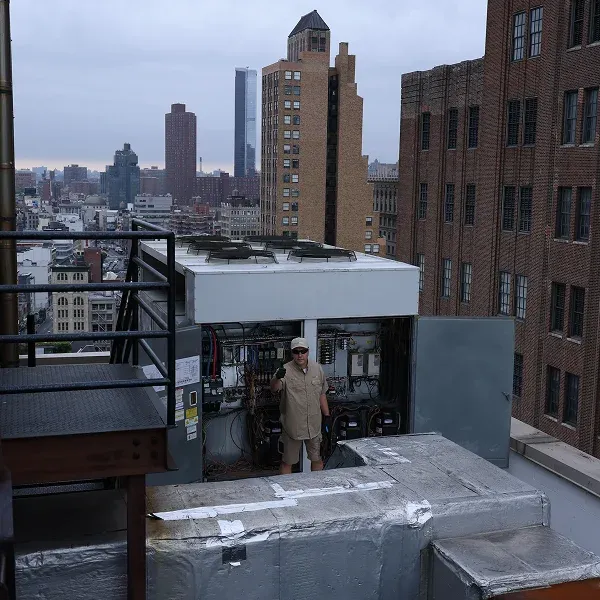
Understanding Split AC Systems in Manhattan's Unique Climate
Manhattan's dense urban environment and extreme seasonal temperature swings create particular demands on split air conditioning systems. These ductless units power over 68% of commercial spaces in Manhattan below 5,000 square feet, according to 2023 NYC Department of Buildings data. Visit acrepair for more.
The island's aging building stock—42% constructed before 1950—makes split systems the practical choice where traditional central air remains impossible to retrofit.
Split AC units separate the compressor and condenser into outdoor components while keeping the air handler indoors. This configuration proves ideal for Manhattan's high-rise apartments, brownstones, and street-level retail spaces where running ductwork would require extensive construction.
Property managers report that properly maintained split systems deliver 15-20 years of service, yet the average Manhattan unit receives professional attention only after failure rather than through preventive care.
The city's 2019 Climate Mobilization Act now requires buildings over 25,000 square feet to reduce carbon emissions by 40% before 2030. This legislation has accelerated commercial property conversions to energy-efficient split systems.
Building owners replacing older window units with modern multi-zone splits see cooling costs drop by 30-40% while meeting new regulatory standards.
Common Split AC Failures Specific to Manhattan Buildings
Manhattan's electrical infrastructure stress becomes apparent each summer when Con Edison reports peak demand exceeding 13,000 megawatts. Voltage fluctuations during these periods damage split system compressors and control boards.
Service records from Manhattan HVAC companies show compressor failures spike 240% during heat waves when grid demand peaks.
Water damage from condensate line failures represents 38% of emergency service calls in Manhattan high-rises. Unlike ground-level installations, units mounted above the 15th floor face unique drainage challenges.
Condensate pumps fail when debris accumulates, causing water to back up into apartments or drip onto lower units. A single condensate overflow in a Midtown co-op building resulted in $47,000 in water damage claims across four floors in 2023.
Refrigerant leaks constitute 23% of split system repairs across the five boroughs. Manhattan's temperature extremes—summer highs reaching 105°F and winter lows near 0°F—stress copper line sets connecting indoor and outdoor components.
Vibration from building movement, particularly in new construction with narrower floor plates, accelerates wear on flared connections. The 2020 EPA refrigerant phase-out has increased repair costs as R-410A prices climbed from $8 per pound in 2018 to $26 per pound in 2024.
Dust and construction debris infiltration affects Manhattan units at triple the rate of suburban installations. Street-level construction generates fine particulate matter that clogs evaporator coils and reduces system efficiency by 30-35% annually.
Commercial spaces in neighborhoods with active development—Hudson Yards, Lower Manhattan, Long Island City borders—require quarterly coil cleaning versus the industry-standard annual service.
Commercial AC Repair Demands in Manhattan's Business Districts
Manhattan's commercial districts contain roughly 475 million square feet of office space. The Midtown business corridor alone operates 87,000 commercial AC units requiring specialized maintenance protocols.
Financial services firms in the Financial District maintain ambient temperatures within 2-degree tolerances to protect server infrastructure worth millions. A split system failure in these environments triggers emergency response requirements with contractual four-hour repair windows.
Restaurant and hospitality businesses face particular split AC vulnerabilities. Kitchen heat loads in Manhattan restaurants average 150-200 BTUs per square foot—three times residential requirements.
Split systems in these spaces run 16-18 hours daily, accelerating wear on compressor contactors and fan motors. Department of Health violations for inadequate temperature control resulted in 2,847 citations across Manhattan food service establishments in 2023, with failed AC systems cited in 41% of cases.
Retail operations lost an estimated $127 million in Manhattan during summer 2023 due to AC-related closures. Customer traffic studies show foot traffic drops 65% when interior temperatures exceed 78°F.
Luxury retailers on Madison Avenue and SoHo maintain multiple redundant systems, yet independent shops operating single split units face complete closure during compressor failures that average 3-5 day replacement timelines.
Medical offices and urgent care facilities operate under strict HVAC performance requirements. New York State Department of Health regulations mandate specific air exchange rates and humidity controls.
Split system failures in these settings require same-day restoration. The five Urgent Care facilities in the Columbus Circle area collectively spent $284,000 on emergency AC repairs in 2023 to maintain licensing compliance.
Split AC Repair Cost Factors in Manhattan Markets
Geographic location within Manhattan directly impacts service pricing. Companies based in Queens or New Jersey add $75-$150 travel surcharges for Manhattan service calls.
Parking challenges in high-density neighborhoods—Midtown, Upper East Side, Financial District—add 45-90 minutes to typical service appointments. This inefficiency gets passed to customers through higher hourly rates averaging $185-$240 versus $125-$165 in outer boroughs.
Component replacement costs reflect Manhattan's premium market positioning. A standard 3-ton compressor costing $890 wholesale gets installed for $2,400-$3,200 in Manhattan compared to $1,600-$2,000 in Brooklyn or Staten Island.
Labor rates alone account for 60% of repair invoices, with experienced technicians commanding $95-$135 per hour. EPA-certified technicians qualified for refrigerant work add another $30-$50 hourly premium.
Emergency and after-hours service multiplies baseline costs by 1.5x to 2.5x. A standard diagnostic visit costing $175 during business hours jumps to $350-$440 for evening or weekend calls.
Manhattan commercial leases frequently require 24-hour HVAC restoration, forcing property managers to accept premium emergency pricing. One Battery Park residential building spent $8,900 on a Sunday compressor replacement that would have cost $4,200 during weekday business hours.
Building access complications add unexpected costs. High-rise installations requiring roof access or exterior scaffolding add $500-$2,000 in logistics expenses.
Co-op and condo buildings with certificate of insurance requirements delay repairs while contractors secure proper coverage. Landmark buildings in historic districts require Landmarks Preservation Commission approval for exterior equipment modifications, extending simple repairs into multi-week projects.
Parts availability separates competent service providers from exceptional ones. Companies maintaining local parts inventory complete 73% of repairs in single visits versus 41% for companies ordering components after diagnosis.
A Lenox Hill apartment building with eight failed split systems in summer 2023 waited 11 days for replacement circuit boards from a contractor without parts stock. The building lost $23,000 in rent concessions to affected tenants during the extended outage.
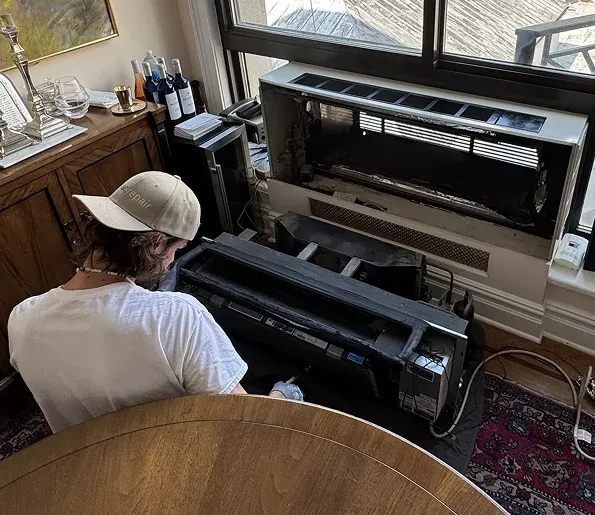
Selecting an AC Repair Company in Manhattan's Competitive Market
Manhattan supports approximately 380 licensed HVAC contractors ranging from one-person operations to national service chains. The city's Department of Consumer Affairs reports 1,247 HVAC-related complaints filed in 2023, with 62% involving unlicensed contractors or misrepresented qualifications.
Verification becomes essential when mechanical failures threaten property damage or business interruption.
Proper licensing starts with New York City Department of Buildings registration. All HVAC work requires pulling permits for refrigerant handling and electrical modifications.
Contractors must carry general liability insurance with minimum $1 million coverage plus workers' compensation for employees. Buildings Department records show 18% of Manhattan HVAC contractors operate without current insurance, exposing property owners to significant liability.
EPA Section 608 certification proves technicians can legally handle refrigerant. The 2020 American Innovation and Manufacturing Act tightened refrigerant handling regulations, making certification verification more critical.
Uncertified technicians cannot purchase or handle refrigerants, yet 23% of service calls involve improperly credentialed workers according to industry surveys. Property owners risk $37,500 EPA fines when uncertified technicians service their equipment.
Response time guarantees separate premium services from budget providers. Top Manhattan commercial providers commit to four-hour emergency response within Manhattan boundaries.
Residential services typically promise same-day or next-day appointments. Companies failing to meet these commitments often lack adequate technician staffing—a chronic problem during peak summer demand when service backlogs extend 5-7 days.
Warranty terms reveal contractor confidence in repair quality. A reputable ac repair company will offer 90-day to one-year warranties on labor and pass through manufacturer warranties on parts.
Contracts limiting warranties to 30 days or excluding specific failure modes indicate potential quality concerns. A Chelsea restaurant paid twice for the same compressor repair when the initial contractor's 30-day warranty expired before the underlying electrical issue was resolved.
Manufacturer certifications matter for specialized equipment. Mitsubishi, Daikin, LG, and Samsung maintain authorized service networks with factory-trained technicians.
These specialists access technical support and OEM parts unavailable to general contractors. A Tribeca penthouse with a Daikin VRV system saved $4,800 using a factory-certified technician who diagnosed a control board conflict that three general contractors had misdiagnosed as compressor failure.
Preventive Maintenance Reduces Manhattan AC Repair Frequency
Data from Manhattan property management firms shows preventive maintenance contracts reduce emergency repair calls by 64% compared to run-to-failure approaches. Scheduled service identifies refrigerant leaks, electrical issues, and component wear before they cause complete system shutdown.
A typical maintenance visit costs $180-$280 versus $800-$2,400 for emergency diagnostic and repair services.
Seasonal tune-ups address Manhattan-specific environmental factors. Spring service includes condensate line flushing critical for high-rise installations where algae growth blocks drainage.
Technicians verify outdoor unit clearances—problematic in Manhattan where rooftop equipment shares space with communications arrays, cooling towers, and building maintenance equipment. Fall winterization prevents freeze damage to condensate systems in units without proper drainage.
Filter maintenance delivers immediate efficiency gains. Standard filters require monthly replacement in Manhattan's high-particulate environment.
Property managers report energy consumption drops 12-18% after installing clean filters in neglected systems. Pleated MERV 11-13 filters cost $12-$28 each but capture construction dust and vehicle emissions that would otherwise coat evaporator coils.
Coil cleaning restores lost capacity and efficiency. Dirty evaporator coils reduce heat transfer, forcing compressors to run longer cycles.
Professional coil cleaning costs $150-$350 but recovers 25-30% lost efficiency in affected systems. Manhattan restaurants and street-level retail spaces need quarterly cleaning versus annual service in less contaminated environments.
Refrigerant level verification catches slow leaks before they cause compressor damage. Systems running low on refrigerant force compressors to work harder, generating excessive heat that breaks down lubricants and damages internal components.
A $200 refrigerant top-off prevents a $2,800 compressor replacement. Federal regulations now require leak repair when systems lose more than 10% of charge annually.
Electrical connection inspection prevents fire hazards and component damage. Vibration loosens wire terminals over time, creating resistance that generates heat.
Thermal imaging during maintenance visits identifies hot connections before they fail. A loose contactor connection in a SoHo loft's split system melted wire insulation, nearly causing a fire that could have destroyed the $3.2 million property.
Energy Efficiency Standards Impact Manhattan AC Repair Decisions
New York State's updated energy codes require minimum 15 SEER ratings for new split system installations. Older units operating at 8-10 SEER consume 60% more electricity for equivalent cooling.
When repair costs exceed 50% of replacement value, upgrading to high-efficiency equipment makes economic sense. A Upper West Side co-op calculated that replacing fifteen 12-year-old 10 SEER units with 18 SEER models would pay back in 4.3 years through reduced electricity costs.
Utility rebate programs offset efficiency upgrade expenses. Con Edison offers $350-$500 rebates per ton for qualifying high-efficiency equipment. NYSERDA provides additional incentives for commercial customers.
These programs reduced net replacement costs by $8,400 for a Gramercy building upgrading eight split systems, making replacement more attractive than repairing aging equipment.
Variable-speed compressor technology cuts operating costs 30-40% compared to single-stage systems. These inverter-driven units modulate output to match cooling demand rather than cycling on and off.
Manhattan apartments with variable-speed splits report summer electric bills $90-$140 lower monthly versus conventional systems. The technology adds $800-$1,400 to equipment costs but delivers 2-3 year payback periods.
Smart thermostat integration optimizes split system performance. Modern controllers learn occupancy patterns and adjust temperatures automatically.
Commercial spaces using occupancy-based controls reduce HVAC runtime 25-35%. A Flatiron District creative agency cut cooling costs 38% after installing smart controls across sixteen split system zones, saving $6,800 annually.
Conclusion: Strategic Approach to Manhattan Split AC Service
Manhattan's unique operating environment—extreme weather, aging infrastructure, regulatory requirements, and premium real estate values—demands strategic thinking about split AC maintenance and repair. Property owners who implement preventive maintenance programs, establish relationships with a qualified ac repair company before emergencies occur, and make data-driven repair versus replacement decisions minimize disruption and control costs.
The split system repair market will continue expanding as Local Law 97 drives conversions from older technologies. Building owners who understand component lifecycles, maintain service documentation, and budget for eventual replacement avoid expensive emergency situations.
Choosing the right ac repair company impacts both immediate service quality and long-term system performance. In Manhattan's competitive real estate market, reliable climate control directly impacts property values, tenant satisfaction, and business operations.
Any ac repair company treating HVAC systems as critical infrastructure rather than afterthought utilities separates successful properties from problematic ones.


