






Understanding the Economics of Preventive AC Maintenance
Property managers and homeowners spend roughly $300 to $500 annually on preventive central AC maintenance. That cost prevents an average repair bill of $1,800 to $3,500 when major components fail. Data from the Air Conditioning, Heating, and Refrigeration Institute shows properly maintained systems last 15 to 20 years, while neglected units fail between years 10 and 12. Visit acrepair for more.
The core issue remains straightforward: refrigerant systems operate under extreme pressure and temperature differentials. A central a/c maintenance program addresses wear before cascading failures destroy expensive components. The compressor alone costs $1,200 to $2,800 to replace—more than five years of routine service.
Modern HVAC contractors track failure patterns across thousands of service calls. The most common emergency repairs stem from three preventable issues: refrigerant leaks caused by corroded connections, compressor failures from contaminated oil, and electrical problems from oxidized contacts. Each problem develops slowly but accelerates once started.
Critical Components That Require Regular Inspection
The condenser sits outside, exposed to weather, debris, and insects. Aluminum fins bend easily, blocking airflow and forcing the system to work 20 to 30 percent harder. Technicians measure static pressure across the coil—readings above manufacturer specifications indicate restricted airflow that will eventually damage the compressor.
Inside the condenser cabinet, the contactor switch cycles hundreds of times per cooling season. This component fails more frequently than any other electrical part. A worn contactor creates resistance, generating heat that damages wire insulation and circuit boards. Commercial ac repair technicians replace contactors on a schedule rather than waiting for failure.
The evaporator coil resides in the air handler, where it removes heat and humidity from indoor air. Condensation drips constantly during operation, creating ideal conditions for mold and mineral buildup. A partially blocked coil reduces capacity by 15 percent before occupants notice decreased cooling. Technicians use endoscopes to inspect coil cleanliness without dismantling ductwork.
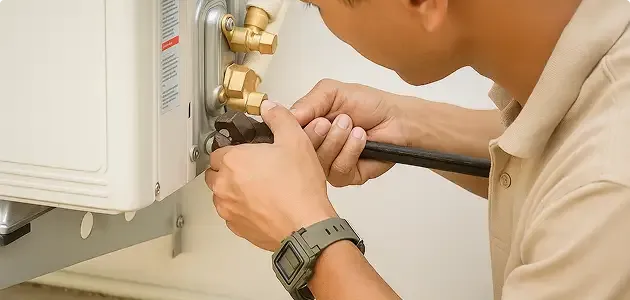
Refrigerant lines connect indoor and outdoor units through insulated copper tubes. These lines expand and contract daily, stressing brazed joints and flare fittings. A leak losing two ounces of refrigerant per month won't trigger immediate problems, but after one season the system runs continuously without reaching setpoint. Leak detection requires electronic sniffers or ultraviolet dye—visual inspection alone misses 80 percent of slow leaks.
The air filter deserves separate consideration despite its simplicity. A $5 filter protects $8,000 worth of equipment. Restricted airflow from a clogged filter drops evaporator coil temperature below freezing, causing ice formation that blocks airflow completely.
The resulting pressure imbalance can crack the compressor scroll or damage reed valves. Filter inspection belongs in monthly homeowner routines, not annual professional service.
Seasonal Maintenance Calendar for Peak Efficiency
Spring preparation begins six weeks before cooling season. Technicians measure refrigerant charge using superheat and subcooling calculations—methods that account for outdoor temperature and humidity. Simple pressure readings miss refrigerant issues that reduce efficiency by 10 to 15 percent. Proper charging requires manifold gauges, thermometers, and manufacturer-specific charts.
Electrical testing goes beyond visual inspection. Technicians measure voltage and amperage under load, comparing readings to nameplate specifications. A compressor drawing 8 percent above rated amperage signals internal wear or failing start components. Catching this early prevents a catastrophic failure that sends metal shavings through the entire refrigerant circuit.
Condensate drain lines clog gradually with algae and biofilm. A blocked drain causes water damage and automatic system shutdown via the float switch. Technicians clear the line with compressed air or suction, then treat it with biocide tablets that prevent regrowth. This simple step prevents 90 percent of water damage claims related to air conditioning systems.
Fall maintenance happens after cooling season ends. Coil cleaning works best when the a/c won't run for months—cleaning solutions need time to break down deposits without immediately recirculating debris. Technicians remove the condenser top and spray coils from inside out, pushing dirt away from fins rather than driving it deeper.
Thermostat calibration rarely appears on maintenance checklists, yet drift of just two degrees causes the system to short-cycle or run continuously. Electronic thermostats need level mounting and clean contacts. Technicians verify actual room temperature against thermostat reading using calibrated instruments. A $150 thermostat replacement often solves problems misdiagnosed as compressor or control board failures.
The Commercial AC Repair Perspective on Maintenance
Commercial properties operate under different constraints than residential buildings. A failed ac unit in a retail space costs $200 to $400 per hour in lost sales and customer complaints. Data centers and medical facilities require redundant cooling with maintenance schedules that prevent simultaneous equipment outages.
Commercial ac repair contracts specify response times and parts availability. Tier-one service agreements guarantee four-hour response for emergency calls and stock critical components like contactors, capacitors, and fan motors. The contract cost—typically 3 to 5 percent of equipment replacement value—includes quarterly inspections and priority scheduling.
Large commercial systems use multiple compressors and staged cooling. Maintenance technicians track runtime hours for each compressor, rotating lead units to equalize wear. Oil analysis reveals contamination before it causes bearing failure. Vibration sensors detect failing motor mounts or unbalanced fans weeks before occupants hear unusual noises.
Building automation systems log every start cycle, temperature reading, and alarm condition. Technicians analyze this data to identify patterns that indicate developing problems. A compressor that takes progressively longer to reach operating pressure signals a failing start capacitor or weak valves. Addressing this during scheduled maintenance costs $200; waiting for failure during peak cooling demand costs $2,500 plus emergency service fees.

When To Call for AC Emergency Repair Near Me
Certain symptoms demand immediate professional response rather than waiting for scheduled service. A system that runs constantly without cooling indicates refrigerant loss or compressor failure. Continued operation damages additional components and drives electric bills up 40 to 60 percent.
Unusual sounds point to specific failures. A grinding noise from the outdoor unit means the compressor or condenser fan motor has failing bearings. Squealing indicates a loose or glazed belt on older systems. Clicking sounds every few seconds suggest a failing contactor or relay. Each noise pattern tells technicians which components to inspect first.
Burning smells require immediate shutdown and professional evaluation. Overheating electrical components fail catastrophically, sometimes causing fires. The smell of hot plastic comes from melted wire insulation—a problem that worsens rapidly. Capacitors can rupture, spraying dielectric oil through the cabinet.
Ice formation on refrigerant lines or the outdoor unit signals restricted airflow or refrigerant problems. Homeowners often mistake this for normal operation during humid weather. Ice indicates the a/c can't absorb heat properly, forcing the compressor to work against damaging pressure differentials. Running the system while frozen risks permanent compressor damage.
Tripped circuit breakers deserve professional diagnosis when they recur. A breaker that trips once might reset successfully, but repeated trips indicate short circuits or ground faults. The compressor draws six to eight times its running amperage during startup—a weak breaker or loose wire connection creates resistance that generates heat and trips protection.
Air Conditioning Repair Services That Extend System Life
Duct sealing rarely appears in basic maintenance packages but significantly impacts efficiency and component longevity. The average residential duct system leaks 20 to 30 percent of conditioned air into unconditioned spaces. This forces the system to run longer, increasing compressor cycles and accelerating wear. Professional duct sealing using mastic or aerosol sealant recovers 15 to 25 percent of system capacity.
Blower wheel cleaning removes dust buildup that reduces airflow by 300 to 500 cubic feet per minute. This restriction raises evaporator coil temperature, reducing dehumidification and cooling capacity. Technicians remove the blower assembly completely, cleaning each blade and the housing. This service takes 90 minutes but prevents premature motor failure and improves indoor air quality.
Refrigerant recovery and recharge addresses systems that have lost efficiency over years of small leaks. Technicians recover existing refrigerant, vacuum the system to remove moisture and air, then recharge to precise specifications. This process costs $400 to $700 but restores performance to factory levels. Combined with leak repair, it extends system life by five to seven years.
Control board updates apply to systems more than eight years old. Manufacturers release revised boards that fix design flaws or improve reliability. A board replacement costs $300 to $600 but prevents intermittent failures that require multiple diagnostic calls. Technicians update firmware and verify all safety circuits function correctly.
Compressor hard-start kit installation benefits systems that experience voltage drops or have weak starting performance. The kit adds a capacitor that provides extra starting torque, reducing startup time and electrical stress. This $200 upgrade prevents premature compressor failure on systems that dim lights or trip breakers during startup.
Indoor Air Quality Integration With AC Maintenance
The evaporator coil environment supports microbial growth when maintenance neglects moisture management. Mold spores, bacteria, and endotoxins circulate through ductwork, causing respiratory irritation and allergic reactions. UV light installation in the air handler kills 95 percent of surface microbes, preventing buildup between service visits.
Upgraded filtration systems trap particles down to 0.3 microns—the size range that includes most allergens and fine dust. High-efficiency filters require more frequent changes and create additional static pressure. Technicians calculate external static pressure to verify the blower motor can overcome filter restriction without damage. Systems not designed for high-efficiency filters need blower upgrades to prevent overheating.
Humidification control matters in winter when heating systems dry indoor air below 30 percent relative humidity. Summer cooling naturally dehumidifies, but oversized systems short-cycle without removing enough moisture. Variable-speed air handlers solve this by running longer at lower capacity, maintaining 45 to 55 percent humidity. Proper humidity levels reduce dust circulation and improve perceived comfort.
Electronic air cleaners use charged plates to attract particles. These require cleaning every four to six weeks—a task most homeowners neglect. Dirty plates lose effectiveness and can arc, creating ozone. Maintenance contracts that include electronic cleaner service ensure consistent performance and identify failing power supplies before they damage the main control board.
The True Cost of Deferred Maintenance
System efficiency degrades 5 percent per year without maintenance, according to Department of Energy studies. A 3-ton system uses 3,500 watts when properly maintained. After three years of neglect, consumption rises to 4,100 watts—an increase of $120 to $180 annually in most markets. The efficiency loss compounds as refrigerant charge drifts, coils accumulate deposits, and mechanical components wear.
Warranty requirements specify annual professional maintenance. Manufacturers deny claims on systems without service records. A compressor failure costs $2,400 including labor; warranty coverage reduces this to zero. The service record requirement exists because data shows maintained systems fail at one-fifth the rate of neglected equipment.
Component failures cascade in predictable patterns. A dirty evaporator coil causes low suction pressure. The compressor compensates by running continuously at high amperage. Oil temperature rises, breaking down lubrication properties.
Metal particles circulate through the system, scoring cylinder walls and damaging the expansion valve. What began as a $200 coil cleaning becomes a $5,000 system replacement.
Indoor comfort deteriorates gradually—occupants adapt to reduced performance without recognizing the problem. An a/c that once cooled to 72 degrees now struggles to reach 75. Runtime increases from four hours daily to eight hours. The electric bill climbs 60 percent over two summers. Annual maintenance identifies these trends before they become expensive failures or comfort complaints.
Choosing Qualified Service Providers
Certification standards vary significantly across the HVAC industry. North American Technician Excellence certification requires passing exams covering refrigerant handling, electrical systems, and diagnostic procedures. NATE-certified technicians complete continuing education to maintain credentials. This certification correlates with first-time fix rates 40 percent higher than uncertified technicians.
Service agreement terms reveal company priorities. Agreements that specify inspection points, testing procedures, and documentation demonstrate systematic maintenance approaches. Vague language about "tune-ups" or "seasonal checks" allows technicians to complete service in 20 minutes without meaningful testing or adjustment.
Pricing transparency indicates business practices. Reputable contractors list agreement inclusions, exclusions, and additional service costs. Hidden fees for refrigerant, diagnostic time, or after-hours service create customer dissatisfaction. Flat-rate agreements with defined scope prevent disputes and align contractor incentives with thorough service.
Response time guarantees matter most during peak season. A company promising 24-hour emergency response but scheduling three days out during heat waves provides no real value. Service capacity—the number of trucks and technicians relative to customer base—determines actual response times. Regional contractors often respond faster than national chains during high-demand periods.
Professional maintenance keeps central air conditioning systems operating efficiently while preventing failures that require emergency intervention. The investment returns value through lower operating costs, extended equipment life, and reliable summer cooling when outdoor temperatures peak.


