






When Your AC Stops Working: Essential Pre-Diagnosis Steps
Air conditioning failures rarely occur at convenient times. The average residential AC unit experiences breakdowns most frequently during peak summer months, with service calls increasing by 62% when outdoor temperatures exceed 95°F. Visit acrepair for more.
Before reaching for your phone to schedule 24 hour ac repair, a methodical five-minute inspection can determine whether you face a genuine mechanical failure or a simple fix that requires no professional intervention.
HVAC service providers report that approximately 30% of repair calls result from issues homeowners can resolve independently. That translates to roughly $200–$400 in unnecessary diagnostic fees per incident.
Understanding what to check before calling AC repair professionals protects your budget and ensures technicians address legitimate problems when they arrive.
Thermostat Investigation: The First Line of Defense
The thermostat controls every aspect of your cooling system's operation. Begin every troubleshooting sequence here, regardless of symptoms.
Check the display first—a blank screen indicates a power issue rather than mechanical failure. Replace batteries if your unit uses them; most residential thermostats require fresh batteries every 12–18 months.
Verify the system setting shows "cool" rather than "heat" or "off." This sounds elementary, yet represents 8–10% of service calls according to technician dispatch records.
Confirm the temperature setting sits at least 3–5 degrees below current room temperature. Digital thermostats sometimes lose programming after power outages, reverting to default settings that may not activate cooling.
Examine the thermostat location itself. Devices installed near heat sources—lamps, electronics, direct sunlight—read artificially high temperatures and create erratic cycling patterns.
If your thermostat sits in a problematic location, this requires professional relocation rather than AC unit repair.
Test responsiveness by adjusting the temperature down several degrees while listening for the system to engage. You should hear the furnace blower activate within 30–60 seconds, followed by the outdoor compressor unit starting 15–30 seconds later.
If the thermostat displays properly but the system fails to respond, the issue extends beyond simple settings.
Electrical Panel and Circuit Breaker Assessment
AC systems draw substantial power—a typical 3-ton residential unit requires 15–20 amps during operation, while larger 5-ton systems pull 30–40 amps. This electrical demand makes circuit breakers a frequent failure point.
Locate your main electrical panel and identify breakers labeled for air conditioning or HVAC equipment. Most split systems use two breakers: one for the indoor air handler and one for the outdoor condensing unit.
Examine each breaker's position. A tripped breaker sits in a middle position between "on" and "off," though some flip completely to off.
Reset any tripped breaker by pushing it fully to the off position, then back to on. Do not simply flip it toward on—the reset requires complete disengagement first.
If the breaker trips again immediately or within minutes, you have a genuine electrical fault requiring professional diagnosis.
Check for signs of electrical problems at the panel itself. Burn marks, unusual odors, or warm breakers indicate serious issues that demand immediate attention from qualified technicians.
These symptoms suggest wire damage, component failure, or dangerous conditions that standard AC repair company technicians may not handle—you may need a licensed electrician before HVAC work proceeds.
The outdoor condensing unit includes a dedicated disconnect box mounted on the exterior wall near the unit. Open this weatherproof box and inspect the cartridge fuses or breaker inside.
Some disconnects use pull-out fuse blocks—if you see no obvious breaker, grasp the handle and pull straight out to access fuses. Test or replace these before calling for service; hardware stores stock standard HVAC fuses.
Air Filter Examination and Replacement
Clogged air filters represent the single most common cause of AC performance problems, accounting for an estimated 40% of reduced efficiency complaints. Filters trap airborne particles, but accumulation restricts airflow across evaporator coils, forcing the system to work harder while delivering less cooling.
Severe restriction causes coil freeze-up, leading to complete system shutdown.
Locate your filter—typically found in the return air grille, the air handler cabinet, or the furnace blower compartment. Standard 1-inch filters require replacement every 30–60 days during heavy use periods.
Pleated filters rated MERV 8–11 last 60–90 days, while high-efficiency MERV 13–16 filters need changing every 90 days maximum. Households with pets, smokers, or high dust levels need more frequent changes.
Remove the filter and hold it toward a light source. If you cannot see light passing through the material, the filter has exceeded its service life.
A visual inspection often reveals dust buildup, but restricted airflow occurs before visible saturation in high-efficiency filters. Replace rather than attempting to clean disposable filters—cleaning damages the media structure and reduces effectiveness.
Note the filter size and MERV rating printed on the frame. Using incorrect dimensions allows unfiltered air to bypass the media, while excessively high MERV ratings restrict airflow in systems not designed for them.
Residential systems typically perform optimally with MERV 8–11 filters unless specific air quality concerns dictate otherwise.
After installing a fresh filter, restore power and test system operation. If the AC runs properly with a new filter, you have avoided an unnecessary service call.
If problems persist despite good airflow, mechanical issues require professional assessment.
Outdoor Condensing Unit Inspection
The outdoor component of your split AC system releases heat extracted from your home's interior. This unit requires unobstructed airflow to function properly.
Walk outside and visually examine the condensing unit before scheduling 24 hour ac repair services. Confirm the fan operates when the system runs—you should see the fan blade rotating and feel substantial airflow from the top of the unit.
Clear debris from around the unit. Leaves, grass clippings, cottonwood seeds, and windblown trash accumulate around the base and block airflow through the coil fins.
Maintain a minimum 2-foot clearance around all sides of the unit. Remove any items stored against it, trim back vegetation, and clear away lawn debris.
Performance degrades by 10–15% for every inch of coil blockage.
Examine the coil fins on the unit's exterior. These thin aluminum plates transfer heat but bend easily, reducing efficiency.
Straightened fins improve performance, though attempting this yourself risks further damage. Note the condition for discussion with repair technicians if you proceed with service.
Check for ice formation on refrigerant lines or the unit itself. Ice indicates refrigerant flow problems, low charge, or severe airflow restriction.
Turn the system off immediately if you observe ice—continued operation damages the compressor. Allow 2–3 hours for complete thaw before attempting to restart.
If ice reforms quickly, you need professional AC unit repair.
Listen for unusual sounds from the outdoor unit. Normal operation produces steady fan noise and a consistent hum from the compressor.
Grinding, squealing, chattering, or clicking sounds indicate mechanical problems requiring professional diagnosis. Loud buzzing or humming without the unit starting suggests electrical or capacitor failure.
Drain Line Verification and Clearing
AC systems remove humidity from indoor air through condensation on evaporator coils. This water must drain away through dedicated lines.
A clogged condensate drain triggers safety switches that shut down the system to prevent water damage. This accounts for approximately 15–20% of summer AC repair calls.
Locate your indoor air handler or furnace unit. The condensate drain line—typically ¾-inch PVC pipe—exits the unit and routes to a floor drain, utility sink, or outdoors.
Find the drain termination point and verify water flows when the system runs. You should see steady dripping or a small stream during operation.
No water suggests either no system operation or a clogged line.
Many systems include a secondary drain pan under the air handler with a separate drain line. Check both primary and secondary drains.
If the secondary pan contains standing water, the primary drain has clogged, and the safety float switch may have triggered.
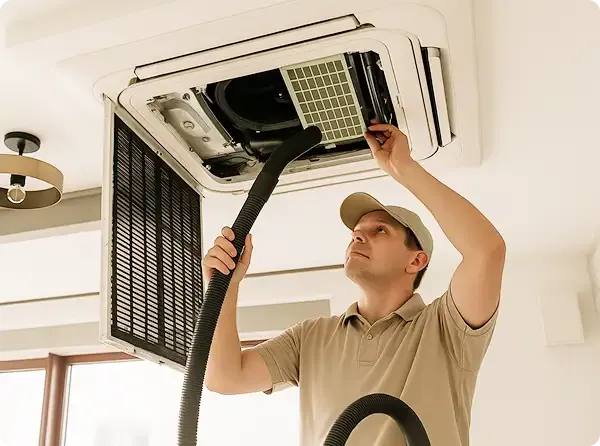
Clear clogged drains by locating the access point—usually a T-fitting with a removable cap near the air handler. Remove the cap and pour a cup of distilled white vinegar into the opening.
Wait 30 minutes, then flush with water. For stubborn clogs, a wet-dry vacuum applied to the drain terminus creates suction that often clears blockages.
This simple maintenance prevents many emergency AC repair situations.
If you successfully clear a drain clog and water begins flowing, reset any triggered float switches. Locate the small switch in the drain pan, lift the float, and listen for a click.
Restore power to the system and test operation. Systems that restart normally after drain clearing require no further service.
Supply and Return Vent Assessment
AC performance depends on proper air circulation throughout your home. Inadequate airflow mimics mechanical failures, leading to unnecessary service calls.
Walk through your home and inspect all supply vents—the openings that blow cool air into rooms. Verify each vent remains fully open.
Homeowners sometimes close vents in unused rooms believing this saves energy, but it actually increases system strain and reduces overall efficiency.
Remove any obstructions from supply vents. Furniture, curtains, rugs, and stored items commonly block airflow without homeowners realizing the impact.
Each blocked vent forces the system to work harder to maintain temperature, potentially triggering high-pressure safety switches that shut down operation.
Examine return air vents—typically larger openings without directional fins. These draw air back to the system for reconditioning.
Return vents require even more critical clearance than supply vents. A blocked return creates negative pressure that can freeze evaporator coils and damage the blower motor.
Ensure a minimum 6-inch clearance around all return vents.
Count your return vents. Adequate cooling requires proper return air volume—the general guideline suggests one large return vent per floor or a central return with sufficient size for your system capacity.
Homes with insufficient return air suffer chronic performance problems no amount of repair will solve. This represents a design issue rather than a mechanical failure.
When Professional Help Becomes Necessary
After completing these checks, you can make an informed decision about calling an AC repair company. Contact professionals immediately if you observe these conditions that require specialized tools, refrigerant handling certification, or safety expertise:
The system trips breakers repeatedly despite no obvious cause. Recurring electrical failures indicate internal short circuits, failing capacitors, or compressor problems.
These conditions pose fire risks and damage other system components if operation continues.
Refrigerant lines show frost or ice accumulation that reforms quickly after thawing. Low refrigerant charge requires leak detection and EPA-certified refrigerant handling.
Running a system with insufficient charge destroys compressors, turning a modest repair into a major replacement.
Unusual odors emanate from vents when the system operates. Musty smells indicate mold growth in ductwork or the air handler.
Burning odors suggest electrical problems or overheating motors. Chemical smells may signal refrigerant leaks.
Each requires professional assessment.
Water leaks appear around the indoor unit despite clear drain lines. This suggests frozen coil melt-off, compromised drain pans, or failing seal integrity.
Water damage spreads quickly in building structures, making prompt professional response critical.
The system runs continuously without achieving temperature setpoints. Continuous operation without adequate cooling indicates refrigerant loss, failing compressors, or severely undersized equipment.
Extended run times increase energy costs by 40–60% while delivering inadequate comfort.
Understanding Service Call Economics
Knowing how long does AC repair take helps you plan appropriately once you determine professional service is necessary. Standard diagnostic visits require 45–90 minutes for thorough assessment.
Simple repairs—capacitor replacement, contactor repair, or drain clearing—take 30–60 minutes after diagnosis. Complex repairs involving compressor replacement, refrigerant leak repair, or electrical rewiring require 3–6 hours.
Access to 24 hour ac repair services during weekends, holidays, or after standard business hours typically costs 50–100% more than regular appointments. The checks outlined above help determine whether your situation constitutes a genuine emergency requiring immediate attention or a problem that can wait until regular business hours.
True emergencies include complete system failure during extreme heat with vulnerable household members, refrigerant leaks, electrical burning smells, or water leaks causing property damage.
Preventive Measures That Reduce Future Calls
Regular maintenance prevents approximately 80% of mechanical failures according to HVAC industry studies. Once you resolve your current issue, implement a maintenance schedule that includes monthly filter checks, seasonal professional tune-ups, and quarterly drain line flushing.
Spring pre-season inspections identify developing problems before heat stress causes failures.
Annual professional maintenance costs $100–200 but prevents repairs averaging $400–600. Technicians clean coils, test capacitors, verify refrigerant charge, lubricate motors, and test safety controls.
This proactive approach extends equipment life by 40–50% compared to neglected systems.
Making the Call With Confidence
Completing these diagnostic steps before contacting 24 hour ac repair providers delivers multiple benefits beyond potential cost savings. You communicate more effectively with service dispatchers, helping them send appropriately equipped technicians.
You avoid unnecessary emergency charges for problems you can resolve independently. You gather valuable information about your system's condition that informs repair-versus-replace decisions if major problems exist.
When you do call for service, report your findings systematically. Describe which checks you completed, what you observed, and any unusual sounds or smells.
Note whether the outdoor unit operates, whether the indoor blower runs, and whether breakers remain engaged. This information helps technicians diagnose problems more efficiently, potentially reducing the service time and associated costs.
The goal is not to become an amateur HVAC technician but rather an informed consumer who understands the difference between simple troubleshooting and complex mechanical problems. This knowledge protects your investment in home comfort while ensuring repair professionals address genuine issues rather than basic maintenance needs.


