






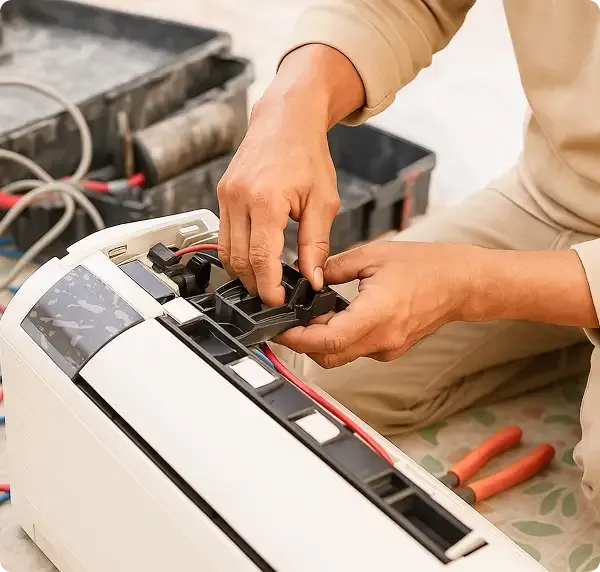
When Your Air Conditioner Fails: Understanding AC Service Emergencies
Air conditioning failures rarely happen at convenient times. Industry data shows 78% of emergency HVAC calls occur during peak cooling season, typically between June and August when replacement parts face supply constraints and technician schedules run at capacity. A complete system breakdown during a heat wave transforms from mere inconvenience to genuine health risk within hours, particularly for vulnerable populations. Visit acrepair for more.
Emergency AC service addresses critical cooling failures that compromise indoor comfort, equipment safety, or occupant health. These situations demand immediate professional intervention rather than next-day scheduling. Understanding what constitutes a true emergency versus a routine service need helps homeowners make informed decisions and potentially avoid inflated emergency service fees.
Recognizing Genuine AC Emergencies
Not every cooling problem qualifies as an emergency. Service providers classify situations based on severity, health impact, and equipment risk. A system running slightly less efficiently than normal does not warrant emergency rates. Complete failure during extreme heat conditions does.
Temperature thresholds matter significantly. When outdoor temperatures exceed 95°F and indoor temperatures climb above 85°F with no cooling function, health risks escalate rapidly. The Centers for Disease Control reports heat-related illness emergency room visits increase 133% when air conditioning access becomes limited during heat events.
Refrigerant leaks constitute immediate emergencies. Modern refrigerants, while less damaging than legacy R-22, still pose health hazards in enclosed spaces. Visible ice formation on refrigerant lines, hissing sounds near the outdoor unit, or chemical odors near vents indicate potential leaks requiring immediate professional assessment.
Electrical issues present both safety hazards and emergency conditions. Repeatedly tripped breakers, burning smells from the air handler, or visible sparking around the unit demand immediate shutdown and professional intervention. Electrical failures account for 31% of residential HVAC emergency calls according to HVAC trade association data.
Water damage from condensate drain failures escalates quickly. A backed-up drain pan can overflow at rates exceeding two gallons per hour in humid climates, causing ceiling damage, mold growth, and structural issues within 24 to 48 hours. Dark water stains on ceilings near indoor units or standing water around the air handler warrant urgent response.
The True Cost of Emergency AC Service
Emergency service rates reflect premium labor costs and after-hours availability. Standard diagnostic fees range from $89 to $150 during business hours. Emergency calls typically add 50% to 100% surcharges, bringing diagnostic visits to $150 to $300 before any repair work begins.
Geographic location significantly impacts pricing. Metropolitan markets with higher costs of living see diagnostic fees reaching $350 for evening or weekend emergency calls. Rural areas with limited service provider competition face different challenges—fewer available technicians but potentially lower base rates.
Repair complexity determines final costs beyond diagnostic fees. Simple fixes like capacitor replacements run $150 to $400 total during emergencies. Compressor failures, the most expensive common repair, cost $1,200 to $2,800 including emergency service premiums. Industry surveys indicate the average emergency AC repair totals $523 when combining diagnostic and repair costs.
Seasonal demand creates price volatility. A study of service call pricing across 47 markets found emergency rates increased 23% during heat waves compared to moderate weather periods. This surge pricing reflects technician availability constraints rather than arbitrary markup—qualified HVAC technicians work extended shifts during peak demand, justifying premium compensation.
Parts availability complicates emergency repairs. Technicians stock common failure components like capacitors, contactors, and fan motors in service vehicles. Specialized parts for specific brands require ordering, potentially converting a same-day emergency into a multi-day repair despite immediate diagnosis. This reality makes brand-specific considerations important for homeowners.
Brand-Specific Emergency Considerations
Samsung AC repair presents unique challenges in emergency scenarios. While Samsung produces reliable systems, their HVAC market presence remains smaller than legacy manufacturers. This translates to longer parts lead times—averaging 3 to 7 business days compared to 1 to 3 days for major brands. During emergencies, this delay becomes critical.
Samsung systems use proprietary smart controls and inverter technology. Not all HVAC technicians maintain certification for Samsung-specific diagnostics and repairs. Homeowners should verify technician qualifications before authorizing emergency service on Samsung units. The company's technical support provides dealer locator tools identifying certified service providers by ZIP code.
Trane AC repair enjoys broader service network advantages. With over 350 independent dealer networks nationwide, Trane systems benefit from extensive parts availability and technician familiarity. Emergency service for Trane units typically proceeds faster due to this infrastructure. The company's reputation for durability—average lifespan of 15 to 20 years—means emergency calls often address ancillary components rather than core system failures.
Trane's ComfortLink II communicating systems require specialized diagnostic equipment. Not all emergency service providers invest in brand-specific tools for every manufacturer. Homeowners with advanced Trane systems should establish service relationships with certified dealers before emergencies occur. Pre-existing service agreements often include priority emergency response.
Portable AC units require different service approaches entirely. Most portable ac repair near me searches reveal limited professional service options. These units typically cost $300 to $800 new, making professional repairs economically questionable when diagnostic fees alone approach $150. Manufacturers design portable units as semi-disposable appliances with limited serviceability.
When portable units fail during heat events, replacement rather than repair usually provides faster relief. Big-box retailers stock portable AC units year-round in most markets. A new 10,000 BTU portable unit can be operational within hours of purchase, while coordinating emergency service and awaiting parts may take days. This reality positions portable units as backup solutions rather than primary cooling sources worthy of emergency service investment.
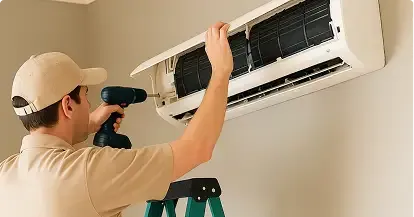
Finding Qualified Emergency AC Service Providers
The ac repair shop near me search represents the most common starting point during cooling emergencies. This broad query returns a mix of legitimate service providers, lead generation websites, and national franchise operations. Quality varies dramatically.
Customer reviews provide limited reliability under time pressure. A business with 4.7 stars across 200 reviews demonstrates more consistent service than one with 5.0 stars across 12 reviews—the sample size matters. However, reading reviews during an emergency wastes precious time. Pre-identifying qualified providers before failures occur represents smarter planning.
Licensing and insurance verification matters more during emergencies than routine service. Unlicensed technicians offering immediate availability at below-market rates often lack proper insurance coverage. If such a technician damages property or injures themselves on-site, homeowner liability exposure increases significantly. State contractor licensing boards provide online verification tools requiring only business name or license number.
Manufacturer warranties influence provider selection. Many AC manufacturers require certified dealer service to maintain warranty coverage. A homeowner facing emergency failure of a three-year-old system still under warranty should verify whether potential service providers qualify as authorized servicers. Unauthorized repairs often void remaining warranty protection.
National franchise operations like Benjamin Franklin Plumbing, One Hour Heating & Air Conditioning, and Aire Serv provide consistent service standards across markets. These franchises maintain 24/7 dispatch, guaranteed response times, and standardized pricing. However, their rates typically exceed independent operators by 15% to 30%. This premium purchases reliability and accountability.
Independent HVAC contractors often provide better value with comparable expertise. Established independents with strong local reputations frequently offer 24 hour ac service at rates 20% to 25% below franchise pricing. The tradeoff involves less standardization—service quality depends entirely on the specific business rather than corporate training programs.
Online platforms like Angi (formerly Angie's List) and HomeAdvisor now offer emergency service matching. These platforms connect homeowners with available technicians within 1 to 2 hours in many markets. The services take 10% to 20% commissions from contractors, potentially inflating final costs. However, the platforms provide payment protection and dispute resolution absent from direct hiring.
Temporary Cooling Strategies During Emergency Repairs
Even fast emergency response involves wait times. Creating temporary cooling while awaiting service prevents health risks and makes spaces habitable. These strategies work best in combination rather than individually.
Window-unit air conditioners provide room-specific cooling when whole-home systems fail. A 12,000 BTU window unit adequately cools 450 to 550 square feet—typically a master bedroom or main living area. Major retailers stock window units year-round with same-day availability. Installation requires only a properly sized window and standard electrical outlet. Prices range from $250 to $600 for quality units providing temporary relief during multi-day repairs.
Evaporative coolers work effectively in low-humidity climates. These devices reduce air temperature through water evaporation, consuming significantly less electricity than compressor-based AC. In regions where relative humidity stays below 40%, evaporative coolers drop temperatures 15 to 25 degrees. However, they prove ineffective in humid climates where moisture content already saturates air.
Strategic fan placement moves air efficiently without cooling it. Ceiling fans running counterclockwise create downdraft effects, making 78°F feel like 72°F through air movement. Box fans positioned in windows create negative pressure exhaust systems. Place fans in south and west-facing windows blowing outward during evening hours, drawing cooler outdoor air through north and east-facing openings.
Heat reduction strategies lower cooling demands. Closing blinds and curtains on sun-exposed windows blocks solar heat gain responsible for 25% to 35% of cooling loads. Avoiding oven and stovetop use eliminates internal heat sources adding 3,000 to 8,000 BTUs per hour. Running dishwashers and washing machines during evening hours reduces daytime heat generation.
Portable AC units offer quick deployment despite repair limitations discussed earlier. A 14,000 BTU portable unit costs $450 to $700 and requires no installation beyond venting the exhaust hose through a window. These units cool 500 to 700 square feet adequately. While not economical for long-term solutions, they provide immediate relief during emergency repairs, then serve as backup systems for future failures.
Preventing Future AC Emergencies
Emergency situations create urgency that prevents careful contractor selection and price comparison. Preventive maintenance dramatically reduces emergency service probability while extending system lifespan.
Annual professional maintenance visits cost $80 to $150 but reduce emergency breakdown probability by 65% according to HVAC industry studies. These visits include refrigerant level checks, electrical connection tightening, condensate drain clearing, and component wear assessment. Technicians identify developing problems before they cause failures.
Air filter replacement represents the single highest-impact homeowner maintenance task. Clogged filters reduce airflow, forcing components to work harder and fail faster. Standard 1-inch filters require replacement every 30 to 60 days during cooling season. Higher-efficiency 4-inch pleated filters last 6 to 12 months but cost $25 to $45 each versus $3 to $8 for standard filters.
Outdoor unit clearance maintenance prevents common failures. Condenser coils require 24 inches of clearance on all sides for adequate airflow. Vegetation encroachment, leaves, and debris accumulation reduce efficiency by 15% to 30% and increase compressor workload. Monthly visual inspections during cooling season identify clearance problems before they damage components.
Thermostat battery replacement prevents mysterious system failures. Many homeowners don't realize their programmable thermostats run on batteries requiring annual replacement. Dead batteries cause complete system shutdown mimicking serious failures. Replacing batteries during spring startup prevents this simple problem from becoming an emergency service call.
Surge protection guards against electrical damage, a leading emergency cause. Lightning strikes and power grid fluctuations damage sensitive control boards and compressors. Whole-home surge protection costs $250 to $400 installed, while AC-specific surge protectors run $150 to $250. This investment protects equipment worth $3,500 to $7,000 from electrical damage that manufacturers exclude from warranty coverage.
Service agreements with local contractors provide priority emergency response. These annual contracts cost $150 to $350 and include scheduled maintenance plus guaranteed response times. When emergency situations arise, agreement holders receive same-day or next-day service while non-contract customers wait 2 to 5 days during peak demand periods. Many providers offering 24 hour ac service bundle these agreements with discounted after-hours rates.
Making Smart Decisions During AC Emergencies
System age fundamentally influences repair-versus-replace decisions. The HVAC industry uses a calculation multiplying repair cost by system age. Results exceeding $5,000 suggest replacement makes better economic sense. A $800 repair on a 12-year-old system yields $9,600—strongly favoring replacement. The same repair on a 4-year-old system yields $3,200—favoring repair.
Refrigerant type affects this calculation significantly. Systems using R-22 refrigerant face additional considerations. R-22 production ceased in 2020, making remaining supplies expensive—$120 to $180 per pound versus $4 to $12 per pound for R-410A. Repairs requiring refrigerant recharge on R-22 systems cost $400 to $1,200 more than equivalent R-410A repairs, shifting economics toward replacement.
Energy efficiency improvements offset replacement costs over time. A 15-year-old AC operates at approximately 10 SEER efficiency. Modern minimum efficiency standards require 14 SEER, with high-efficiency models reaching 20+ SEER. Upgrading from 10 SEER to 16 SEER reduces cooling costs 35% to 40%—potentially $300 to $600 annually in hot climates. This savings recovers replacement costs over 8 to 12 years.
Financing availability during emergencies varies significantly among providers. Many HVAC contractors partner with consumer financing companies offering 0% interest for 12 to 24 months on approved credit. These programs make replacement feasible when facing expensive repairs on aging systems. However, emergency situations create pressure limiting careful financing comparison. Interest rates on extended terms often reach 17% to 24% APR, substantially increasing total costs.
Second opinions provide value when facing replacement recommendations during emergency calls. Emergency technicians earn commissions on equipment sales, creating inherent conflict of interest. A second diagnostic visit costs $89 to $150 but potentially saves thousands by confirming legitimate replacement need versus repairable failures. Request written diagnostic reports detailing specific component failures rather than vague "system worn out" explanations.
Working Effectively With Emergency Service Providers
Clear communication accelerates emergency service. When calling for ac service repair near me assistance, provide specific information: system age, brand, previous issues, current symptoms, and whether complete failure or reduced function exists. This information helps dispatchers send appropriately equipped technicians and set realistic expectations.
Written estimates should precede any repair work. While diagnostic fees apply immediately, actual repairs require homeowner authorization. Legitimate service providers present written estimates detailing specific repairs, parts costs, labor charges, and total pricing before beginning work. Verbal estimates create dispute potential and suggest unprofessional operations.
Payment expectations vary among providers. Most emergency services require payment upon completion rather than extending net-30 terms common in commercial work. Accepted payment methods should be confirmed when scheduling—some providers accept only cash or check for after-hours emergency calls, while others process credit cards. Clarifying payment requirements prevents completion delays.
Warranty information should be documented in writing. Quality service providers warranty parts for 1 to 5 years and labor for 90 days to 2 years depending on repair type. These warranties should appear on invoices with specific coverage terms and duration. Verbal warranty promises lack enforceability when problems recur.
Post-repair testing demonstrates proper function. Request the technician demonstrate system operation, show normal temperature splits (typically 15 to 20 degrees between supply and return air), and explain any operational changes. Reputable companies providing 24 hour ac service take time to verify complete resolution before leaving your property, ensuring you receive full value from emergency rates charged.
Understanding your rights during 24 hour ac service calls protects against predatory pricing. Most states regulate emergency service markups, typically capping after-hours premiums at 100% of standard rates. Charges exceeding these limits may violate consumer protection statutes. Keep detailed records of quoted prices, actual charges, and services rendered for potential dispute resolution.


