






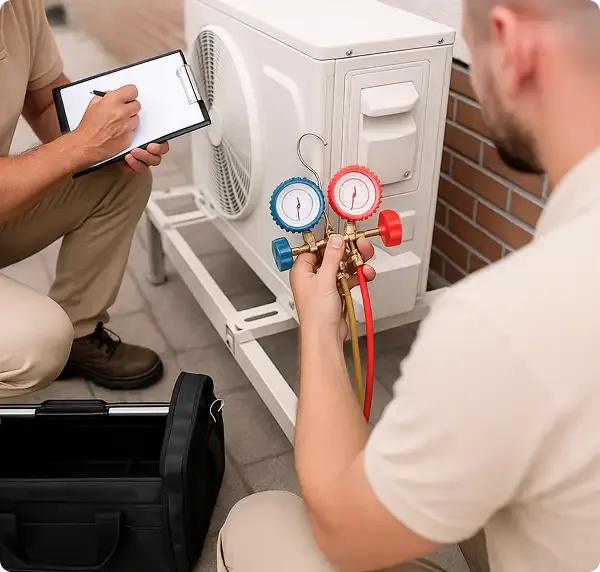
When Your Home Air Conditioner Fails: Understanding Modern Repair Realities
Residential air conditioning systems fail at inconvenient moments—during heat waves, on weekends, or immediately after warranty periods expire. National service call data from the Air Conditioning Contractors of America (ACCA) shows that 68% of emergency repair requests occur between May and September, with peak demand during the third week of July when outdoor temperatures reach annual highs across most U.S. climate zones. Visit acrepair for more.
The home AC repair industry processes approximately 28 million service calls annually in the United States alone, generating roughly $14 billion in combined parts and labor revenue. These numbers reflect both planned maintenance visits and emergency interventions.
Understanding what drives these calls, what repair costs actually entail, and how to locate qualified service providers determines whether your cooling system gets restored efficiently or becomes a prolonged source of discomfort and expense.
Common Failure Modes That Trigger Service Calls
Central air conditioning systems comprise four primary components: the compressor, condenser, evaporator, and expansion valve. When technicians respond to service requests, diagnostic patterns reveal consistent failure categories.
Refrigerant leaks account for approximately 35% of non-routine service calls. These leaks develop at connection points, in coil surfaces weakened by corrosion, or through microscopic fractures in copper tubing. The Environmental Protection Agency mandates that technicians must locate and repair leaks before adding refrigerant—simply recharging a leaking system violates federal regulations and guarantees repeat failure within weeks.
Compressor malfunctions represent the most expensive single-component failure, with replacement costs ranging from $1,200 to $2,800 depending on system tonnage and refrigerant type. Compressors typically fail due to electrical issues, refrigerant contamination, or inadequate lubrication. Systems older than twelve years that experience compressor failure often warrant full replacement rather than repair, as the cost approaches 60-70% of new system installation.
Capacitor and contactor failures create situations where outdoor units hum without starting or indoor air handlers run without cooling. These electrical components cost $150-$400 to replace including labor, making them among the most cost-effective repairs. Capacitors have limited lifespans—typically five to seven years in residential applications—and preventive replacement during routine maintenance prevents emergency calls.
Evaporator coil freezing occurs when airflow restriction, low refrigerant charge, or blower motor problems cause coil temperatures to drop below 32°F. Ice accumulation blocks additional airflow, creating a cascading failure that shuts down cooling entirely. Technicians must identify the root cause—dirty filters, closed supply registers, failing blower motors, or refrigerant issues—rather than simply thawing the ice.
Drainage system clogs affect condensate removal, causing water damage to ceilings, walls, and flooring when drain pans overflow. Modern systems include float switches that shut down operation when water levels rise, protecting property but eliminating cooling. Clearing drain lines costs $75-$150 but prevents thousands in water damage remediation.
Geographic Considerations for Service Access
The phrase "ac repair around me" generates over 450,000 monthly searches nationally, with significant geographic concentration. Metropolitan areas show distinct service availability patterns based on population density, climate demands, and regional construction practices.
New York City represents a unique market for home cooling services. The city's 8.3 million residents occupy housing stock that ranges from pre-war apartments with window units to modern high-rises with central HVAC systems. NYC ac repair services must navigate building access restrictions, co-op board requirements, and the logistical challenges of equipment transportation in dense urban environments.
Hourly labor rates in the city average $135-$175, compared to $85-$120 in suburban and rural markets, reflecting higher operating costs and wage structures.
Southwestern markets—Phoenix, Las Vegas, Tucson—demonstrate different patterns. These regions experience extreme cooling demands with summer temperatures exceeding 110°F for extended periods. Service companies maintain larger technician teams and parts inventories because air conditioning failures create genuine health emergencies rather than mere discomfort.
Many providers in these markets offer 24 hour ac repair to address cooling failures that pose immediate health risks during extreme heat events. Response times average 3-6 hours for emergency calls compared to 24-48 hours in moderate climates.
Coastal regions face humidity-related challenges that accelerate corrosion and biological growth. Gulf Coast and Southeast Atlantic markets report higher incidence of coil fouling, drain line clogs, and electrical connection corrosion. HVAC repair service in these zones emphasizes preventive maintenance more heavily because reactive-only approaches lead to shortened equipment lifespans.
Emergency Service Economics and Realistic Cost Expectations
The question "how much is emergency ac repair" lacks a single answer because emergency pricing includes multiple variables: time of service call, diagnosis complexity, parts requirements, and system accessibility.
Service call fees for emergency response typically range from $150-$350. This fee covers technician dispatch, initial diagnosis, and the first hour of labor. Standard business hours (Monday-Friday, 8 AM-5 PM) command the lower end of this range, while evening, weekend, and holiday calls add $50-$150 surcharges.
Contractors offering 24 hour ac repair maintain after-hours staffing that requires higher base compensation, which drives these premium rates.
Diagnostic time extends beyond the initial service call when problems prove elusive. Intermittent electrical faults, subtle refrigerant leaks, or ductwork issues hidden behind finished walls require extended troubleshooting. Technicians bill this time at $85-$175 per hour depending on regional market rates and company positioning.
Parts markup typically ranges from 25% to 40% above wholesale cost. This markup covers inventory carrying costs, warranty administration, and parts obsolescence risk. Proprietary components from manufacturers like Carrier, Trane, or Lennox cost more than universal parts but ensure compatibility and maintain equipment warranties.
Common repair costs break down as follows based on 2024 industry data:
- Capacitor replacement: $150-$400
- Contactor replacement: $150-$350
- Blower motor replacement: $450-$800
- Fan motor replacement: $350-$650
- Refrigerant recharge (after leak repair): $200-$500
- Coil cleaning: $100-$300
- Drain line clearing: $75-$200
- Thermostat replacement: $140-$350
- Compressor replacement: $1,200-$2,800
- Evaporator coil replacement: $900-$2,200
- Condenser coil replacement: $800-$1,800
Emergency ac repair near me searches spike when systems fail during peak heat, but emergency pricing typically adds 20-35% to standard repair costs. A capacitor replacement that costs $180 during business hours might reach $250 on a Sunday afternoon. This premium compensates for disrupted personal time and the operational costs of maintaining emergency response capability.
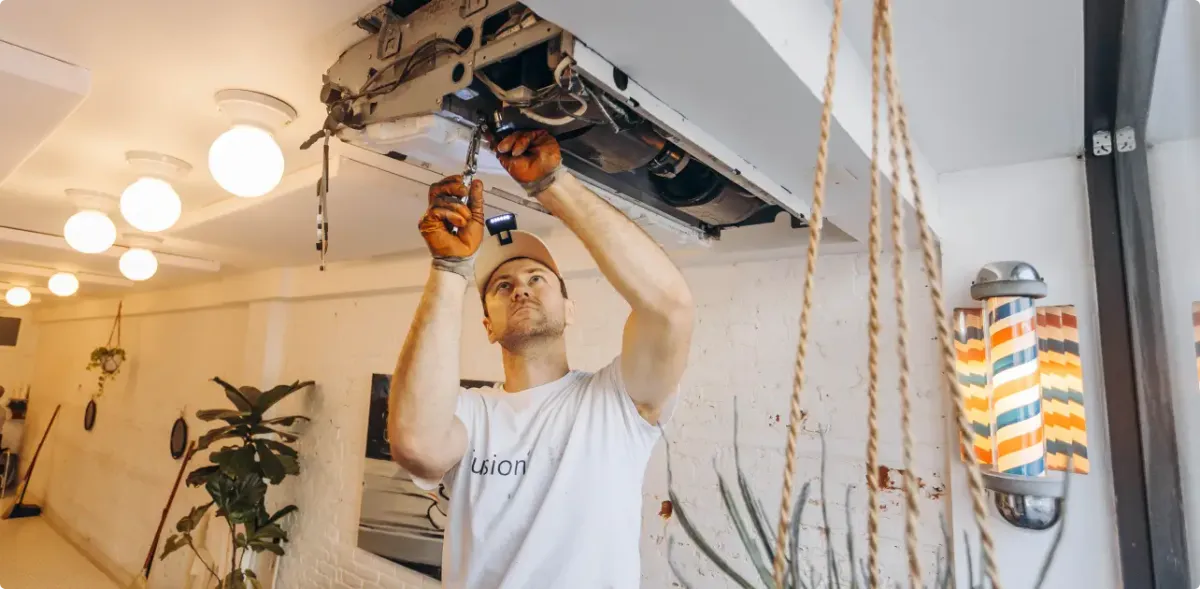
Service Provider Selection Criteria That Matter
Proximity drives initial search behavior—"ac repair nearby" reflects the urgent desire for rapid response—but proximity alone does not predict service quality or fair pricing. Several verification steps separate qualified contractors from opportunistic operators.
Licensing requirements vary by state but typically mandate trade-specific credentials. HVAC technicians should hold EPA Section 608 certification for refrigerant handling, plus state or local licensing. North American Technician Excellence (NATE) certification indicates tested competency across system types.
These credentials verify baseline knowledge but don't guarantee customer service quality or ethical business practices.
Insurance coverage protects property owners from liability when contractors or their employees suffer injuries on-site. General liability insurance should provide minimum $1 million coverage, while workers' compensation insurance covers employee injuries. Requesting certificates of insurance before work begins takes three minutes and prevents potential six-figure liability exposure.
Pricing transparency separates professional operations from predatory ones. Legitimate service companies provide written estimates before beginning repairs, itemize parts and labor separately, and explain warranty coverage clearly. Pressure tactics—"this compressor will explode if we don't replace it today" or "I can only offer this price if you decide right now"—indicate operations that prioritize sales over service.
Response time commitments matter during genuine emergencies. Companies advertising "same-day service" or "2-hour emergency response" should clarify whether these promises apply to all service areas or only core coverage zones. Summer demand periods strain capacity; a company that normally responds within four hours might require twelve during a regional heat wave.
True 24 hour ac repair availability means technicians dispatch at any hour, not just that phone lines remain open overnight.
Parts sourcing practices affect repair longevity. Original equipment manufacturer (OEM) parts cost more than aftermarket alternatives but fit precisely and carry better warranties. Universal replacement parts work for many applications but sometimes require modification or compromise performance.
Technicians should explain parts options and pricing differences rather than defaulting to highest-margin choices.
The Preventive Maintenance Value Proposition
Emergency repairs cost 2.3 times more on average than scheduled maintenance, according to data compiled by the Building Owners and Managers Association. This multiplier reflects emergency service premiums, secondary damage from delayed repairs, and the higher failure rates of neglected systems.
Seasonal tune-ups identify developing problems before they cause breakdowns. Spring maintenance appointments before cooling season allow repairs during moderate weather when system downtime creates minimal discomfort. Technicians inspect electrical connections, measure refrigerant charge, clean coils, lubricate motors, test capacitors, and verify proper airflow.
These services cost $80-$150 per visit but catch 70% of potential failures before they occur.
Filter replacement schedules directly impact system reliability. Standard 1-inch filters require monthly replacement in high-use seasons, while 4-inch media filters last three to six months. Neglected filters restrict airflow, causing evaporator coil freezing, blower motor strain, and decreased efficiency.
The $15 monthly cost of replacement filters prevents $400-$800 repairs related to airflow restriction.
Coil cleaning frequency depends on environmental conditions. Homes near construction sites, agricultural areas, or industrial zones accumulate dust and debris faster than suburban residential locations. Annual outdoor coil cleaning costs $100-$200 but prevents efficiency losses that increase operating costs by 15-25% and accelerate component wear.
Thermostat calibration ensures systems cycle properly rather than short-cycling or running continuously. Digital thermostat batteries require biennial replacement, while mechanical thermostats need periodic leveling and calibration. These minor maintenance items prevent comfort complaints and wasted energy.
System Age and the Repair-Versus-Replace Decision
Air conditioning systems carry expected lifespans of 12-15 years in residential applications, though actual longevity varies with installation quality, maintenance consistency, and regional climate severity. The repair-versus-replace calculation becomes relevant when systems exceed ten years and face major component failures.
The 50% rule provides a practical decision framework: if repair costs exceed 50% of replacement cost and the system has reached 60% of expected lifespan, replacement typically offers better value. A 13-year-old system requiring a $2,000 compressor replacement faces a repair bill equal to 40% of a $5,000 replacement system cost. With only 2-3 years of probable remaining life, that $2,000 repair may require additional major repairs before the system reaches natural end-of-life.
Energy efficiency improvements in modern systems offset replacement costs through reduced operating expenses. SEER ratings (Seasonal Energy Efficiency Ratio) have improved from 10-12 in older systems to minimum 14-15 in current models, with high-efficiency units reaching SEER 20-22. Upgrading from SEER 10 to SEER 16 reduces cooling costs by approximately 38%, saving $300-$600 annually depending on climate zone and home size.
Refrigerant phase-outs complicate repair decisions for older systems. Units using R-22 refrigerant face escalating repair costs because production ceased in 2020. Refrigerant prices have increased from $50 per pound in 2018 to $150-$200 per pound currently, turning routine recharge operations into expensive interventions.
Systems requiring substantial R-22 refrigerant additions warrant replacement to modern R-410A or R-32 systems rather than continued repair.
Warranty coverage on new systems typically includes 5-10 year parts warranties and optional extended labor coverage. Older systems outside warranty periods expose owners to full repair costs, while new installations provide predictable expense horizons. This financial predictability holds particular value for fixed-income households and rental property operators managing multiple systems.
Immediate Actions When Cooling Fails
System failures trigger understandable urgency, but several diagnostic steps provide information before contacting repair services.
Thermostat verification eliminates 12-15% of unnecessary service calls. Confirm the system is set to "cool" rather than "heat" or "off," that temperature setting sits below current indoor temperature, and that circuit breakers serving HVAC equipment remain closed. Battery-operated thermostats may simply need fresh batteries—a $3 fix rather than a $200 service call.
Air filter inspection takes 30 seconds and sometimes resolves cooling loss. Completely blocked filters stop airflow, causing system shutdown or evaporator coil freezing. Replacing a $15 filter and waiting 30 minutes for ice to thaw occasionally eliminates the need for emergency service.
Outdoor unit examination reveals obvious problems. The condenser fan should spin when the system runs; absence of fan operation often indicates capacitor failure. Unusual noises—grinding, shrieking, or rattling—signal mechanical problems requiring immediate shutdown to prevent escalating damage.
Refrigerant leaks sometimes manifest as oily residue or ice formation on refrigerant lines during operation.
Circuit breaker status should be checked at both the main panel and any disconnect boxes serving HVAC equipment. Breakers trip due to electrical overloads, ground faults, or component failures. A breaker that trips repeatedly when reset indicates a genuine fault requiring professional diagnosis rather than simply resetting repeatedly.
These preliminary checks provide information for service calls, help technicians bring appropriate parts, and occasionally reveal simple fixes that avoid service charges entirely.
The Long-Term Relationship Model
Successful home AC repair outcomes rarely result from transactional, price-focused provider relationships. Systems require attention across 12-15 year lifespans, creating value in establishing ongoing service relationships rather than searching for the lowest price on each individual call.
Service agreements typically cost $150-$300 annually and include biannual maintenance visits, priority emergency scheduling, and discounted repair rates. For homes with aging systems or families with medical vulnerability to heat, these agreements provide response assurance worth more than their monetary cost. Many contracts also guarantee access to 24 hour ac repair services, eliminating the stress of finding available help during weekend or holiday system failures.
Service history documentation maintained by a consistent provider enables faster diagnosis and better recommendations. Technicians who know your system's past repairs, chronic issues, and maintenance history diagnose problems more efficiently than those encountering the equipment for the first time.
The initial discomfort of cooling failure tests decision-making under pressure, but systematic evaluation of providers, clear cost expectations, and appropriate urgency assessment lead to satisfactory outcomes. Home air conditioning has transitioned from luxury to necessity across most U.S. climate zones; treating the systems and their repair as critical infrastructure rather than discretionary expense produces better long-term results.


