






Understanding the Demand for HVAC Services in Queens
Queens stands as New York City's largest borough by area, housing over 2.4 million residents across 108 square miles of diverse neighborhoods. This density translates into roughly 835,000 housing units requiring climate control systems that operate under constant stress.
The borough's position along the Atlantic coast subjects HVAC equipment to salt-laden humidity in summer and bitter maritime winds in winter—conditions that accelerate component degradation by 30-40% compared to inland regions. Local property managers report service calls spike 200% during July and August when outdoor temperatures routinely exceed 90°F with humidity levels above 70%.
The borough's aging housing stock compounds these challenges; approximately 42% of residential buildings date to before 1960, often containing original ductwork and outdated systems operating at 40-50% below modern efficiency standards. Commercial properties face similar pressures, with the borough's 55,000 business establishments requiring uninterrupted climate control to maintain operations.
Many property owners schedule AC installation Queens projects during spring months to avoid summer demand surges.
Common HVAC Failures Across Queens Neighborhoods
Technical data from service providers operating in Queens reveals distinct failure patterns tied to building types and geographic zones. Residential split systems in areas like Forest Hills and Bayside typically fail due to compressor burnout, accounting for 28% of emergency calls.
These failures stem from voltage fluctuations during peak demand periods when Con Edison's grid experiences strain—a documented issue during heat emergencies when demand exceeds 11,000 megawatts citywide.
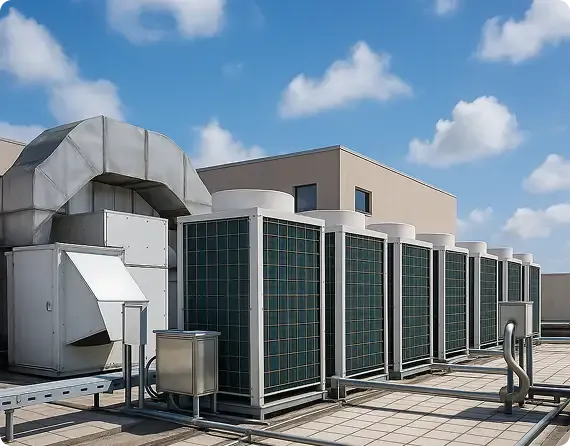
Apartment complexes in Astoria and Long Island City present different challenges. Centralized chiller systems in high-rise buildings develop refrigerant leaks at connection points, losing 15-25% of charge annually through micro-fissures invisible to visual inspection. This gradual loss reduces cooling capacity while increasing energy consumption by up to 45% before tenants notice comfort changes.
PTAC units dominate older apartment buildings and small commercial spaces throughout Jackson Heights and Elmhurst. These through-wall systems experience accelerated corrosion from road salt exposure during winter months.
Service records indicate PTAC condensers in Queens fail 3.2 years earlier on average than identical units installed inland, with rust penetration compromising heat exchange efficiency within 5-7 years of installation. When replacement becomes unavoidable, contractors specializing in AC installation Queens recommend upgrading to corrosion-resistant models for coastal properties.
The True Cost of Delayed Repairs
Financial analysis reveals that postponing HVAC maintenance creates cascading expenses that far exceed immediate repair costs. A refrigerant leak left unaddressed for 90 days increases electricity consumption by an average of $140 monthly in a standard 1,200-square-foot Queens residence. Over a single cooling season, this amounts to $560 in wasted energy—money that contributes nothing to comfort while the system struggles to maintain temperature setpoints.
Equipment longevity suffers measurably from neglect. Air conditioners operating with dirty evaporator coils work 22% harder to achieve the same cooling output, running compressors for extended cycles that shorten lifespan by 4-6 years.
Considering that AC installation Queens projects average $7,800-$12,500 for complete central air system replacement, the premature failure costs homeowners thousands in accelerated capital expenditure.
Commercial operations face steeper penalties. Restaurants in neighborhoods like Flushing and Corona risk health code violations when kitchen ventilation systems malfunction; the New York City Health Code mandates exhaust capacity sufficient to maintain kitchen temperatures below 85°F during cooking operations.
A single violation citation carries a $500-$1,000 fine, while repeat offenses trigger mandatory closure pending remediation. Retail establishments lose an average of $3,200 per day when air conditioning failures drive customers away during peak summer shopping periods.
Technical Capabilities Required for Queens HVAC Work
The borough's equipment diversity demands technician expertise across multiple system architectures. Residential contractors must demonstrate competency with conventional split systems, ductless mini-splits, heat pumps, and hybrid dual-fuel configurations. Commercial work introduces complexity exponentially—packaged rooftop units, variable refrigerant flow systems, water-source heat pumps, and industrial process cooling applications each require specialized diagnostic skills.
Refrigerant handling represents a critical competency area given recent regulatory changes. The EPA's phasedown of hydrofluorocarbon refrigerants reduced R-410A production by 40% in 2024, driving costs from $6 per pound to $22 per pound in just 18 months.
Systems requiring R-22 refrigerant face even steeper challenges; production ceased in 2020, creating a reclaimed-only market where prices fluctuate between $80-$120 per pound. Technicians operating in Queens must possess EPA 608 certification demonstrating proper recovery and handling procedures—a regulatory requirement carrying civil penalties up to $44,539 per violation.
Electrical diagnostics separate competent technicians from parts-changers. Modern HVAC systems employ variable-speed compressors controlled by inverter boards processing pulse-width modulation signals.
Diagnosing these systems requires oscilloscope analysis and understanding of three-phase power characteristics. The borough's mixed commercial-residential zones mean technicians encounter 208V, 240V, and 480V three-phase services, each presenting distinct safety protocols and troubleshooting approaches.
Professionals qualified for AC installation Queens work navigate these electrical complexities during both new construction and retrofit projects.
Geographic Service Considerations Within the Borough
Queens spans diverse building environments that create distinct service challenges. The Rockaways peninsula experiences direct Atlantic exposure, subjecting outdoor condensing units to corrosive salt spray year-round.
Equipment installed within two miles of the shoreline demonstrates 60% faster corrosion rates on aluminum fins and copper tubing compared to inland locations. Service providers addressing these coastal areas stock marine-grade coil coatings and corrosion-resistant fasteners as standard inventory.
The concentration of high-density housing in areas like Rego Park and Kew Gardens creates roof access complications. Buildings exceeding six stories typically house HVAC equipment on rooftops, requiring technicians to transport tools and components through freight elevators and across tar-membrane surfaces that reach 160°F during summer afternoons.
This environment mandates early-morning service scheduling to protect both technicians and temperature-sensitive electronic components during diagnostic work.
Transportation logistics impact service delivery throughout Queens. The borough's position at the confluence of major highways—the Long Island Expressway, Grand Central Parkway, and Brooklyn-Queens Expressway—creates traffic congestion that extends average service call response times by 35% compared to less dense areas.
Companies maintaining multiple dispatch points in neighborhoods like Jamaica and Flushing reduce response windows by positioning inventory and personnel closer to high-density service zones.
Emergency Response Infrastructure and Timing
Data from emergency service providers indicates that 73% of HVAC failures in Queens occur outside standard business hours. Systems stressed by continuous operation fail most frequently between 6 PM and 10 PM as outdoor temperatures peak and equipment runs without respite.
This timing pattern creates demand spikes that overwhelm contractors lacking adequate after-hours staffing.
Response time metrics vary considerably across service providers. Companies operating dedicated emergency crews maintain 90-minute average response windows during peak season, while those relying on on-call technicians average 4.5 hours from initial contact to arrival.
The difference matters substantially during heat emergencies when indoor temperatures climb 3-4°F per hour in poorly insulated apartments, quickly reaching dangerous levels for elderly residents and young children.
Parts availability determines repair completion timeframes. Contractors maintaining local inventory of high-failure components—compressor start capacitors, contactor relays, blower motors, and thermostatic expansion valves—complete 68% of repairs during initial visits.
Those relying on supplier networks face delays of 24-72 hours for common components, extending discomfort and increasing secondary damage risks from condensate overflow or frozen evaporator coils.
Regulatory Compliance and Licensing Requirements
New York City Department of Buildings mandates specific licensing for HVAC work based on system capacity and refrigerant charge. Work on systems containing more than 50 pounds of refrigerant requires a Master HVAC license holder to supervise installation and major repairs.
This regulation impacts larger residential buildings and virtually all commercial properties, where multi-zone systems routinely contain 100-300 pounds of refrigerant charge. Qualified contractors handle AC installation Queens permits and inspections as part of their standard service offering.
The city's Local Law 87 requires energy audits and retro-commissioning for buildings exceeding 50,000 square feet every ten years. This regulation affects approximately 3,200 Queens properties, creating demand for contractors capable of performing HVAC system optimization and documentation.
Non-compliance carries penalties of $0.25 per square foot monthly—a $12,500 monthly fine for a 50,000-square-foot building.
Permit requirements govern equipment replacement projects. Installing new HVAC equipment requires DOB permits when altering structural penetrations, modifying electrical service capacity, or changing fuel types.
The permit process adds 2-4 weeks to project timelines, though it provides inspection verification ensuring code compliance for electrical connections, combustion venting, and refrigerant line installation.
Price Transparency and Cost Structures
Service pricing in Queens reflects the borough's competitive market dynamics and elevated operating costs. Diagnostic visits typically range from $125-$200, with many providers applying this fee toward repair costs when work proceeds.
Emergency after-hours service commands premiums of 50-100% above standard rates, reflecting technician overtime costs and reduced operational efficiency during nighttime hours.
Common repair costs follow predictable ranges based on component complexity. Capacitor replacements run $175-$300 including labor—a straightforward 20-minute repair inflated by service call overhead.
Compressor replacements represent the opposite extreme at $1,800-$3,500 installed, reflecting the component's cost ($600-$1,200), refrigerant charge ($200-$500), and 4-6 hours of skilled labor required for proper installation and evacuation procedures.
Refrigerant recharging costs vary with refrigerant type and leak severity. Simple top-offs of R-410A systems average $350-$600 for 3-5 pounds of refrigerant plus labor.
Systems requiring R-22 refrigerant face charges of $1,200-$2,000 for equivalent repairs due to refrigerant scarcity. These figures assume leak rates slow enough that annual recharging remains economically viable; faster leaks necessitate repair or system replacement to avoid monthly service calls.
Preventive Maintenance Value Proposition
Statistical analysis demonstrates that scheduled maintenance reduces emergency failure rates by 64% compared to run-to-failure approaches. Annual tune-ups costing $150-$250 identify developing problems before they cause system shutdowns.
Technicians measure refrigerant pressures, amperage draws, temperature splits, and airflow volumes—parameters that reveal declining performance before occupants notice comfort degradation.
Filter maintenance alone delivers measurable returns. Standard 1-inch fiberglass filters capture only 20% of airborne particles while restricting airflow minimally.
Upgrading to MERV 11 pleated filters increases particle capture to 85%, improving indoor air quality while maintaining proper airflow when changed quarterly. Neglecting filter changes reduces airflow by 40% within six months, forcing systems to run 25% longer to achieve temperature setpoints.
Condensate drain maintenance prevents water damage that costs Queens residents an average of $3,800 per incident according to insurance industry data. Air conditioning systems in humid climates produce 15-20 gallons of condensate daily during peak operation.
Primary drain lines develop algae growth and sediment accumulation that create blockages, causing overflow into ceiling spaces and walls. Biannual drain cleaning with enzymatic treatments costs $80-$120 but eliminates 90% of overflow incidents.
Selecting Qualified Service Providers
Verification of technical credentials protects property owners from unlicensed operators who proliferate during peak demand periods. The New York City Department of Consumer and Worker Protection maintains online license verification at its website, allowing instant confirmation of Master HVAC license status and current standing.
Technicians should carry EPA 608 certification cards demonstrating refrigerant handling qualification—a federal requirement that applies uniformly across all service providers.
Insurance coverage represents non-negotiable protection. General liability policies protect property owners from damage claims during service work, while workers' compensation coverage prevents homeowner liability when technician injuries occur on-site.
Requesting certificates of insurance before authorizing work takes minutes but prevents financial exposure that can reach six figures in worst-case scenarios.
References and performance history provide insight into reliability and quality. Contractors operating in Queens for five-plus years demonstrate business stability that fly-by-night operations lack.
Online review platforms show patterns across dozens of customer experiences, revealing consistency in pricing, response times, and problem resolution. Exceptionally low pricing often signals corner-cutting on diagnostics, replacement parts quality, or proper refrigerant handling—economies that generate repeat failures and void equipment warranties.
Experienced contractors maintain transparent pricing for both repair work and AC installation Queens services, eliminating surprises during project execution.
The borough's HVAC service market will continue evolving as regulatory pressure and equipment technology advance. Property owners who establish relationships with qualified contractors and maintain proactive service schedules protect their investments while ensuring reliable climate control through New York's demanding seasonal extremes.


