






What Defines a Packaged Terminal Air Conditioner
Packaged terminal air conditioners occupy a distinct category within climate control infrastructure. These self-contained systems integrate cooling, heating, and ventilation into a single chassis that mounts through an exterior wall. Property managers and facility operators encounter them in hotels, hospitals, senior living centers, and multi-family residential buildings where individual zone control outweighs centralized HVAC concerns. Visit acrepair for more.
The architecture differs fundamentally from split systems. A PTAC unit houses the compressor, evaporator, condenser, and controls in one enclosure. Installation requires only a wall sleeve, electrical connection, and exterior grille.
No ductwork. No remote condensing equipment. The front panel faces the conditioned space while the rear section exchanges heat with outdoor air through a louvered exterior grille.
Unit dimensions follow industry standards. Most PTAC installations fit 42-inch-wide wall sleeves with depths ranging from 14 to 16 inches. Height varies between 12 and 16 inches depending on cooling capacity. This standardization simplifies replacement cycles and reduces installation complexity across properties with dozens or hundreds of units.
Performance Parameters and Capacity Ratings
Cooling capacity in PTAC systems spans 7,000 to 15,000 BTU per hour. The majority of installations deploy 9,000 to 12,000 BTU units sized for spaces between 300 and 550 square feet. Capacity selection depends on room volume, insulation quality, window area, occupancy patterns, and climate zone.
Undersized units run continuously without achieving setpoint temperatures. Oversized equipment cycles too frequently, degrading humidity control and energy efficiency.
Energy efficiency ratio measurements for PTAC equipment typically fall between 9.4 and 11.8 EER. Federal standards mandate minimum efficiency levels based on capacity and configuration. A standard cooling-only unit rated at 9,000 BTU must achieve at least 10.9 EER.
Heat pump models face different thresholds. These efficiency requirements increased in recent regulatory updates, forcing manufacturers to redesign compressor systems and heat exchangers.
Heating performance splits between resistance electric and heat pump technologies. Electric resistance strips deliver 3,000 to 5,000 watts of supplemental heat with 100% conversion efficiency but at high operating cost. Heat pump configurations extract thermal energy from outdoor air down to approximately 40°F ambient temperature before defaulting to resistance backup. Combined heating and cooling in one package explains the widespread PTAC adoption in climates requiring both functions.
Sound output presents a persistent challenge. PTAC units generate 45 to 55 decibels during operation due to the proximity of all mechanical components to occupied spaces. Compressor isolation mounts, fan blade design, and cabinet dampening materials distinguish premium models from economy offerings. Guest satisfaction surveys in hospitality settings consistently identify HVAC noise as a primary comfort complaint, driving specification decisions toward quieter equipment despite higher acquisition costs.
Dominant Manufacturers and Model Distinctions
Three manufacturers command substantial market share in the North American PTAC sector. Each brand emphasizes different engineering priorities that influence long-term ownership costs and maintenance requirements.
Friedrich PTAC Engineering
Friedrich positions its PTAC line with emphasis on corrosion resistance and coastal climate durability. The company applies electro-coating to metal components and specifies marine-grade materials for properties within three miles of saltwater. Friedrich units incorporate scroll compressors across most capacity ranges, delivering quieter operation than reciprocating alternatives at a premium price point.
The control systems use microprocessor boards with diagnostic LED codes that simplify troubleshooting. Technicians report faster service calls due to explicit fault indication rather than generic failure modes. Friedrich's distribution network concentrates on commercial HVAC wholesalers rather than big-box retail channels, which limits availability but maintains technical support quality.
Field reliability data from property management firms shows Friedrich equipment averaging 12 to 15 years of service life in hospitality applications with biannual preventive maintenance. Compressor warranties extend seven years on select models, double the industry standard. Replacement parts cost 15% to 25% more than competing brands but maintain backward compatibility across model generations.
Amana PTAC Units in Commercial Applications
Amana PTAC units balance acquisition cost against feature sets tailored for property management workflows. The product line includes cooling-only, heat pump, and electric heat configurations spanning 7,000 to 15,000 BTU capacity points. Amana emphasizes quick-connect wiring harnesses and tool-free filter access to reduce installation labor and routine maintenance time.
The Amana PTAC unit construction uses galvanized steel cabinets with powder-coat finish rather than stainless steel, positioning the brand below Friedrich in corrosion resistance but above economy imports. Compressor selection varies by capacity tier. Models below 12,000 BTU use rotary compressors while larger units specify scroll technology. This split influences sound output and vibration characteristics.
Control interfaces on Amana PTAC equipment range from mechanical thermostats on base models to digital displays with seven-day programming on upper-tier offerings. The digital controls integrate with building management systems through dry contact closures, enabling centralized temperature monitoring without proprietary protocols. This interoperability matters in retrofit scenarios where existing BMS infrastructure must accommodate new HVAC equipment.
Service technicians note that Amana replacement parts ship from regional distribution centers with next-day availability in most metropolitan markets. The parts pricing structure undercuts premium brands by 20% to 35%, which influences total cost of ownership calculations for portfolios with frequent component replacement cycles. Compressor warranties on Amana PTAC models span five years, meeting but not exceeding industry norms.
GE PTAC Technology and Market Position
GE PTAC systems serve value-oriented buyers prioritizing first-cost reduction in new construction and renovation projects. The brand leverages offshore manufacturing to achieve price points 15% to 30% below domestic competitors while maintaining UL certification and federal efficiency compliance. GE units appear frequently in extended-stay hotels, student housing, and affordable senior living developments where capital budgets constrain equipment selection.
Cabinet construction employs lighter-gauge steel with snap-together assembly that accelerates factory production but reduces field serviceability compared to welded designs. Technicians report that cabinet panels warp more readily after multiple removals, complicating maintenance access in older installations. The trade-off between manufacturing cost and service longevity becomes evident after year five of operation.
GE PTAC models use standardized components across capacity ranges to minimize SKU complexity. The same control board, fan motor, and thermostat assembly appear in 9,000 through 12,000 BTU units, simplifying inventory management for maintenance departments operating large equipment fleets. This parts commonality reduces stocking costs but limits performance optimization for specific capacity points.
Compressor warranties on GE equipment extend three to five years depending on model tier. Field failure data indicates higher compressor replacement rates after warranty expiration compared to Friedrich and Amana, though absolute failure rates remain below 8% through year ten. Property owners accepting higher long-term maintenance costs in exchange for lower acquisition prices find GE specifications appropriate for their financial models.
Installation Requirements and Structural Considerations
PTAC installation demands coordination between HVAC contractors, electricians, and sometimes structural engineers. The process begins with wall sleeve insertion through the building envelope. Standard sleeves penetrate 14 to 16 inches into exterior walls, requiring sufficient wall thickness or framing modifications to accommodate the depth.
Masonry walls present fewer complications than wood-frame construction where studs must be cut and headers installed.
Sleeve placement height affects both aesthetics and performance. Industry practice positions the bottom of the sleeve 12 to 18 inches above finished floor level. Lower mounting improves cooling efficiency by addressing the densest cold air layer, but raises condensate management concerns if floor drains aren't present. Higher mounting reduces the risk of water damage but requires longer ductwork runs if supplemental heating distribution matters.
Electrical requirements vary by unit configuration and capacity. Cooling-only models typically draw 8 to 12 amps at 208/230 volts, operating on dedicated 15-amp circuits. Heat pump and electric resistance models consume 12 to 20 amps, necessitating 20 or 30-amp circuits depending on heating element wattage. Local electrical codes determine whether existing circuits can support equipment upgrades or if panel modifications become necessary during replacement projects.
Condensate disposal methods split between gravity drainage and evaporative systems. Units with bottom-pan drains route water through tubing to exterior discharge points or interior drain lines. This approach works reliably but adds installation complexity and potential leak points.
Evaporative designs slinger wheels or troughs that disperse condensate onto the outdoor coil where airflow promotes evaporation. These systems simplify installation but reduce efficiency in humid climates where evaporation rates lag condensate production.
Maintenance Protocols That Extend Service Life
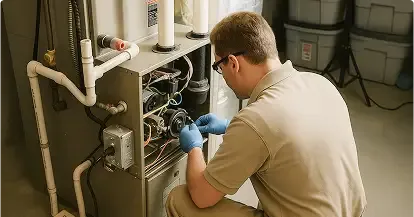
Regular maintenance directly influences PTAC longevity and operating cost. Property management data shows equipment receiving biannual service survives three to five years longer than neglected units. The maintenance interval splits between spring cooling preparation and fall heating checkout, though monthly filter inspection improves performance year-round.
Filter maintenance represents the simplest intervention with disproportionate impact. Clogged filters reduce airflow by 30% to 50%, forcing compressors to run longer cycles while delivering diminished cooling. Most PTAC designs use slide-out filters accessible from the room side without tool requirements.
Washable mesh filters cost nothing to maintain but require drying time. Disposable pleated filters trap smaller particles but add $3 to $7 per replacement to operating budgets.
Coil cleaning addresses both indoor evaporator and outdoor condenser surfaces. Evaporator coils accumulate dust and biological growth that insulates fins and restricts airflow. Technicians apply foaming coil cleaners and rinse with low-pressure water, removing debris without damaging delicate aluminum fins.
Outdoor coil maintenance proves more critical in dusty or coastal environments where airborne contamination degrades heat transfer capacity. Bent fins require straightening with specialized combs to restore proper airflow patterns.
Condensate system inspection prevents water damage and biological hazards. Drain pans collect moisture that supports mold and bacteria growth if not cleaned annually. Standing water indicates blocked drain tubes or failed slinger systems requiring immediate correction. Indoor moisture stains below PTAC units signal drainage failures that compromise building envelope integrity and indoor air quality.
Electrical connection evaluation catches problems before catastrophic failure. Loose terminal screws increase resistance, generating heat that degrades insulation and eventually causes shorts. Technicians measure voltage and amperage under load to verify proper electrical characteristics.
Compressor capacitors degrade predictably with age; preventive replacement every five to seven years costs $40 to $80 but prevents $800 to $1,200 compressor failures.
Energy Consumption and Operating Cost Analysis
PTAC operating costs vary dramatically based on climate, usage patterns, and equipment efficiency. A 12,000 BTU unit with 10.5 EER running eight hours daily in a moderate climate consumes approximately 275 kWh monthly during cooling season. At $0.13 per kWh national average electricity rates, cooling costs reach $36 monthly per unit. Properties operating 100 units face $3,600 monthly cooling expenses before accounting for heating loads.
Heating costs exceed cooling in most climate zones due to electric resistance inefficiency. A 3,500-watt heating element operating four hours daily consumes 420 kWh monthly, costing $55 per unit at average rates. Heat pump configurations reduce heating costs by 40% to 60% in mild climates where outdoor temperatures remain above 40°F. The heat pump premium adds $150 to $300 to unit acquisition cost, requiring two to four heating seasons to recover through reduced electricity consumption.
Efficiency degradation accelerates operating costs as equipment ages. Compressor wear, refrigerant charge loss, and fouled coils reduce cooling capacity by 15% to 25% over ten years while maintaining similar power draw. The unit runs longer to achieve desired temperatures, consuming more electricity to deliver less comfort.
Energy monitoring systems that track individual unit consumption identify degraded equipment candidates for replacement or major service before complete failure.
Demand charges compound energy costs in commercial rate structures. PTAC systems frequently start simultaneously during morning recovery periods, creating power demand spikes that establish monthly billing tiers. Staggered startup sequences through building automation systems distribute electrical load across 15 to 30-minute windows, reducing demand charges by 10% to 20% without affecting occupant comfort.
When PTAC Systems Make Strategic Sense
PTAC deployment suits specific building types and operational models better than central systems or ductless splits. Hotels exemplify ideal PTAC applications. Individual room control allows unoccupied spaces to operate at setback temperatures while occupied rooms maintain guest preferences. This zone-level control reduces energy waste compared to central systems conditioning entire floors uniformly.
Renovation projects favor PTAC installation where existing buildings lack space for ductwork or equipment closets. Historic structures with solid masonry walls and protected interior finishes cannot accommodate ducted systems without compromising architectural character. PTAC units require only through-wall penetrations that minimize building modifications and preserve interior volumes.
Multi-family residential properties benefit from PTAC systems by assigning energy costs directly to tenants. Individual metering eliminates disputes over shared utility expenses and incentivizes responsible thermostat management. Tenant-paid utilities reduce property operating costs while delivering comparable comfort to central systems with occupancy sensors and programmable controls.
Facilities requiring rapid equipment replacement choose PTAC architecture for its modularity. Failed units swap out in 30 to 90 minutes, restoring space conditioning without affecting adjacent zones. Central system failures disable entire building sections for hours or days pending diagnosis and repair. This redundancy matters in healthcare settings, data centers, and critical infrastructure where climate control interruptions carry severe consequences.
PTAC limitations include higher installed cost per ton compared to large central systems. A 12,000 BTU PTAC delivers one ton of cooling at installed costs between $1,200 and $2,500 depending on brand and features. Central rooftop units provide cooling for $800 to $1,400 per ton when distributing capacity across multiple zones. The PTAC premium buys zone control and installation flexibility rather than raw cost efficiency.
Replacement Timing and Equipment Lifecycle Economics
PTAC replacement decisions balance repair costs against new equipment efficiency and reliability improvements. Industry guidance recommends replacement at 12 to 15 years for standard-use applications or when repair costs exceed 50% of new equipment prices. Compressor failures after year ten typically trigger replacement rather than repair due to labor costs and uncertain remaining life on other components.
Proactive replacement programs replace units on fixed schedules before failure. Properties replace 7% to 10% of installed PTAC inventory annually, completing full building upgrades over 10 to 15-year cycles. This approach reduces emergency service calls, improves energy efficiency through modern equipment deployment, and maintains consistent guest experience by eliminating aged, noisy units.
Efficiency gains justify early replacement in some scenarios. A 15-year-old PTAC operating at 9.0 EER consumes 17% more electricity than a modern 10.8 EER replacement delivering identical cooling. The $350 annual energy savings on a heavily-used unit recovers a $1,500 equipment investment in 4.3 years, after which savings flow directly to operating margins.
Properties with high electricity rates or extended cooling seasons see faster payback periods. Specifying an Amana PTAC during upgrade cycles offers competitive pricing that further shortens payback timelines while maintaining quality standards.
Refrigerant regulations accelerate replacement timelines independent of equipment condition. Older PTAC units using R-22 refrigerant face escalating service costs as production bans inflate refrigerant prices to $80 per pound and higher. Major repairs requiring refrigerant charge exceed economic viability when R-22 costs triple, making new equipment with R-410A refrigerant the practical choice.


