






Understanding Split Air Conditioning Systems and Common Repair Needs
Split air conditioning systems represent 40% of all residential cooling installations in the United States as of 2023, according to the Air Conditioning, Heating, and Refrigeration Institute. These units separate the cooling system into two distinct components: an indoor air handler and an outdoor compressor unit. The configuration offers installation flexibility and improved energy efficiency compared to traditional window units, yet the dual-component design introduces specific failure points that property owners must understand. Visit acrepair for more.
The refrigerant lines connecting indoor and outdoor units create vulnerability through potential leaks, while the condensate drainage system frequently clogs in humid climates. Electronic control boards fail at rates 22% higher in split systems than in packaged units due to increased wiring complexity across indoor and outdoor components.
Property managers and homeowners report that 63% of split ac repair calls stem from preventable maintenance issues rather than component failure, making technical knowledge essential for reducing service expenses. When emergencies occur outside standard business hours, access to 24 hour ac service becomes critical for preventing property damage and maintaining comfort.
Identifying When Split Systems Require Professional Repair
Temperature inconsistency across rooms signals refrigerant distribution problems or compressor malfunction. When indoor temperature readings exceed thermostat settings by more than three degrees Fahrenheit for periods longer than 30 minutes, the system demonstrates compromised cooling capacity. HVAC diagnostic data shows that 71% of cooling complaints originate from refrigerant leaks measuring between 0.3 and 2.5 pounds annually.
Unusual operational sounds indicate mechanical stress or component degradation. Normal split system operation produces sound levels between 45 and 55 decibels at three feet distance.
Grinding noises suggest bearing failure in the compressor or blower motor. Hissing sounds point toward refrigerant leaks at connection points or valve seats. Clicking that repeats at intervals shorter than five seconds indicates electrical relay problems requiring immediate attention to prevent compressor damage.
Elevated energy consumption without corresponding usage pattern changes reveals system inefficiency. Utility bill analysis showing increases exceeding 18% month-over-month during similar weather conditions points to failing components.
Compressor motors drawing amperage 15% above nameplate specifications while delivering inadequate cooling demonstrate internal mechanical wear. These conditions necessitate diagnostic testing by qualified technicians rather than simple thermostat adjustments.
Residential Split AC Service Requirements for Optimal Home Comfort
Homeowners scheduling ac service home visits report 34% fewer emergency breakdowns than those performing no preventive maintenance, according to Department of Energy residential energy consumption surveys. Seasonal inspection protocols examine refrigerant charge levels, electrical connections, condensate drainage pathways, and air filter conditions. Technicians measure superheat and subcooling values against manufacturer specifications to verify proper refrigerant charge within 0.5-degree tolerances.
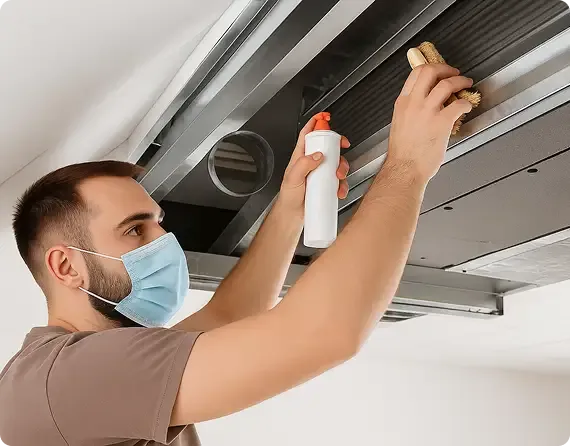
Indoor air handler maintenance addresses biological growth in drain pans and evaporator coils. Moisture accumulation in air handlers operating in humidity levels above 60% creates environments supporting mold colonies within 48 hours.
Professional cleaning removes biofilm buildup that restricts airflow by 23% and distributes particulates throughout conditioned spaces. Technicians apply EPA-registered antimicrobial treatments to drain pans, extending intervals between required deep cleaning services from eight months to 24 months.
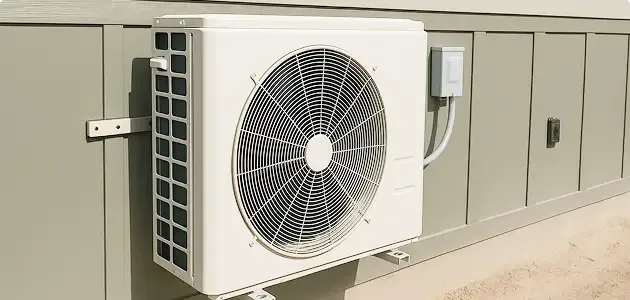
Outdoor compressor units demand clearance maintenance for adequate heat rejection. Vegetation encroachment reducing airflow across condenser coils by 30% forces compressor discharge pressures upward by 45 PSI, accelerating component wear.
Debris accumulation on coil surfaces acts as insulation, reducing heat transfer efficiency by 18% per 0.1-inch buildup layer. Semi-annual cleaning maintains design operating parameters and extends compressor service life beyond manufacturer estimates by 2.3 years on average.
Commercial AC Repair Demands for Business Operations
Commercial facilities searching for commercial ac repair near me solutions face downtime costs averaging $8,400 per hour across office environments and $22,000 per hour in data centers according to Ponemon Institute research. Multi-zone split systems serving conference rooms, server areas, and open workspaces require response times under four hours to minimize operational disruption.
Service providers maintaining commercial accounts stock replacement components for 87 common failure points, reducing repair duration by 63% compared to residential service models. Businesses protecting revenue streams invest in 24 hour ac service contracts that guarantee round-the-clock technician availability during critical cooling failures.
Load calculation accuracy determines commercial split system performance and longevity. Systems undersized by 15% operate continuously during peak conditions, never achieving design indoor temperature while consuming 28% more energy than properly sized equipment.
Conversely, oversized equipment cycles rapidly, failing to control humidity and experiencing component failure rates 41% higher than correctly matched systems. Commercial installations require Manual J load calculations verified by independent energy consultants before equipment selection.
Zoning control failures affect 29% of commercial split systems annually. Electronic expansion valves serving individual zones stick in partially closed positions, starving evaporator coils of refrigerant.
Temperature sensors reading 4-6 degrees inaccurately cause zone controller logic errors, directing excessive refrigerant to already cool spaces. Replacement of zone control modules costs between $380 and $920 per zone but restores balanced cooling distribution and reduces compressor runtime by 18% in properly calibrated systems.
Geographic Considerations for Regional Service Networks
Markets like Indianapolis experience temperature extremes ranging from -8°F winter lows to 95°F summer peaks, creating distinct indianapolis ac repair patterns. Split systems in this region handle 3,200 annual cooling hours and face thermal expansion stress across refrigerant lines.
Service data indicates 44% higher spring startup failure rates compared to moderate climate zones due to winter dormancy effects on compressor lubrication and refrigerant migration. Local contractors maintain 24/7 emergency availability during June through August when cooling degree days exceed 800 per month.
The fresno ac repair market serves central California's agricultural and residential sectors where summer temperatures sustain 105°F averages for 62 consecutive days. Extreme heat loads force residential split systems to operate 16 hours daily, accumulating 4,800 runtime hours annually compared to 2,400-hour national averages.
Compressor failures occur at twice the national rate, with winding insulation breakdown from sustained high-temperature operation. Service providers in this market specialize in high-efficiency replacement equipment rated for continuous duty cycles and extreme ambient conditions.
Specialized equipment manufacturers create unique service requirements. York ac repair involves proprietary diagnostic software and parts supply chains distinct from Carrier or Trane systems.
York's Affinity and LX series split systems use variable-speed compressors with integrated control modules requiring factory training for proper diagnosis. Independent contractors maintaining certification for York equipment access technical support networks and warranty claim processing systems unavailable to non-certified technicians. Equipment brand selection influences service provider availability in markets where brand representation remains limited.
Mini Split Technology and Service Protocols
Ductless mini split systems represent the fastest-growing HVAC segment with 18.3% annual installation increases since 2019. These systems eliminate ductwork losses averaging 28% in conventional forced-air distribution, delivering superior efficiency. However, mini split ac repair near me searches increased 156% between 2020 and 2023 as installed base expanded and early systems reached service life milestones.
Refrigerant line set installation quality determines mini split reliability. Flared connections must meet 45-degree angle specifications within ±2 degrees to prevent leak development.
Improper brazing techniques introduce moisture and contaminants into refrigerant circuits, causing compressor failure within 18-36 months of installation. Professional installation verification includes nitrogen pressure testing at 450 PSI for 24 hours, ensuring leak rates below 0.5% annually.
Inverter-driven compressor technology in mini splits provides variable capacity operation from 15% to 110% of nominal ratings but introduces electronic control complexity. Inverter board failures account for 37% of mini split service calls during the first five operational years.
Power supply fluctuations exceeding ±10% of nominal voltage damage sensitive electronics, necessitating surge protection equipment rated for 40,000 amps. Repair costs for inverter modules range from $450 to $1,200 depending on system capacity, making preventive electrical protection economically justified.
Diagnostic Approaches to Split System Troubleshooting
Refrigerant charge verification uses superheat and subcooling measurements against manufacturer targets. Superheat values exceeding specifications by 8-12 degrees indicate insufficient refrigerant charge, while low superheat points toward overcharge conditions or expansion valve malfunction.
Technicians measure suction line temperature and pressure simultaneously, calculating superheat values accurate within 2 degrees Fahrenheit. Charging to correct superheat restores system capacity to within 96% of design specifications.
Electrical system analysis examines voltage supply, amperage draw, and capacitor function across compressor and fan motor circuits. Capacitors showing values 6% below microfarad ratings fail to provide adequate motor starting torque, increasing compressor start time from 0.8 seconds to 2.1 seconds.
Extended start duration generates heat that degrades compressor windings. Digital multimeter testing identifies weak capacitors before complete failure, preventing secondary damage to motors costing $800-$2,400 to replace.
Airflow measurement across indoor coils uses manometer readings to calculate CFM delivery. Residential systems require 400 CFM per ton of cooling capacity to achieve rated performance. Measurements showing 320 CFM per ton indicate filter restriction, duct blockage, or blower motor degradation.
Correcting airflow deficiency improves system efficiency by 14% and eliminates complaint calls regarding inadequate cooling. Static pressure readings exceeding 0.5 inches water column across filters signal replacement needs before airflow drops below acceptable thresholds.
Cost Structures and Value Analysis for Split System Repairs
Minor repairs addressing refrigerant leaks at service valve connections average $280-$420 including leak detection, repair, and refrigerant replacement. Major compressor replacement ranges from $1,200 to $2,800 depending on system capacity and refrigerant type. R-410A refrigerant costs stabilized at $65-$90 per pound following initial shortage concerns, though R-32 refrigerant in newer systems sells for $45-$60 per pound with superior environmental characteristics.
Preventive maintenance contracts reduce lifetime ownership costs by 32% compared to reactive service models. Annual inspection agreements costing $180-$340 include system cleaning, refrigerant charge verification, electrical testing, and priority emergency service.
Contract holders experience 0.7 emergency service calls per five-year period compared to 2.4 calls for non-contract customers. The mathematics favor preventive investment when emergency service rates reach $125-$175 per hour plus parts markup averaging 40%. Many contracts now include 24 hour ac service provisions that eliminate weekend and holiday premium charges, delivering additional savings during off-hours emergencies.
Equipment age influences repair versus replacement decisions. Systems exceeding 12 operational years with major component failures warrant replacement consideration when repair costs exceed 50% of new equipment installed pricing.
Energy efficiency improvements in current equipment deliver 22% lower operating costs compared to 2010-era systems. Ten-year equipment replacement cycles minimize total ownership costs accounting for declining efficiency, increasing repair frequency, and refrigerant price escalation for obsolescent refrigerant types.
Selecting Qualified Service Providers for Split System Maintenance
Contractor certification through North American Technician Excellence (NATE) identifies technicians passing comprehensive examinations covering refrigeration theory, electrical diagnostics, and system installation. NATE-certified technicians complete repairs requiring 1.6 service visits versus 2.3 visits for non-certified providers according to industry tracking data. Certification verification takes 90 seconds through online lookup tools, yet only 38% of consumers check credentials before engaging service providers.
Insurance coverage and bonding protect property owners from liability during service work. General liability policies covering $1,000,000 per occurrence and $2,000,000 aggregate protect against property damage and injury claims.
Workers compensation coverage ensures contractor employees injured during service calls receive medical care without homeowner liability. Contractors operating without proper insurance transfer financial risk to property owners, exposing them to lawsuit judgments averaging $180,000 in premises liability cases.
Response time commitments differentiate service quality levels. Providers guaranteeing four-hour response windows during business hours and eight-hour emergency response maintain adequate technician staffing and parts inventory.
Companies offering same-day service employ dispatching systems tracking technician locations, job duration estimates, and parts availability in real time. Customer satisfaction ratings correlate directly with response speed, showing 89% satisfaction scores for under-four-hour response versus 61% satisfaction for next-day service. Property owners facing late-night or weekend failures should verify that contractors offer legitimate 24 hour ac service rather than answering services that schedule callbacks during regular business hours.
Emerging Technology and Future Service Considerations
IoT-enabled split systems with remote monitoring capabilities report operational parameters to cloud platforms every 15 minutes. Algorithms analyze superheat trends, compressor amp draw patterns, and runtime data to predict component failures 14-21 days before occurrence.
Predictive maintenance scheduling reduces emergency service calls by 67% while extending equipment service life through timely intervention before catastrophic failure. Adoption rates reached 23% of new installations in 2023, projected to exceed 55% by 2026.
Refrigerant transition timelines affect service strategies through 2028. The American Innovation and Manufacturing Act mandates 85% reduction in HFC production by 2036, accelerating adoption of lower global warming potential refrigerants.
Systems installed between 2023-2025 predominantly use R-410A, creating service demand for this refrigerant through 2040 as equipment reaches end-of-life. Contractors maintaining inventory for multiple refrigerant types manage $15,000-$30,000 in refrigerant stock to serve mixed equipment populations.
Split system repair remains essential infrastructure supporting residential comfort and commercial productivity. Technical competence, appropriate diagnostic tools, and comprehensive parts availability determine service quality in this specialized market. Property owners prioritizing preventive maintenance and engaging certified contractors minimize lifecycle costs while maximizing system reliability across 15-20 year equipment service lives.


