






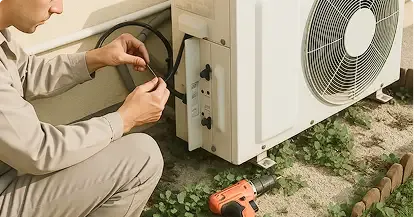
Why Annual Air Conditioner Service Matters More Most Homeowners Think
The average central air conditioning system costs between $3,500 and $7,500 to replace. Most units fail prematurely not because of manufacturing defects, but because of neglect. Visit acrepair for more.
Industry data from the Air Conditioning Contractors of America shows that 42% of system failures could have been prevented with routine maintenance. That single statistic explains why yearly AC service represents the difference between a 10-year system lifespan and one that extends beyond 15 years.
Regular maintenance reduces energy consumption by 15-20% according to the U.S. Department of Energy. For the typical household spending $200-400 annually on cooling, this translates to $30-80 in immediate savings. Over a decade, proper maintenance saves $300-800 while preventing a premature replacement that costs thousands.
What Happens During a Professional Yearly AC Service
A comprehensive annual inspection covers more than changing filters. Certified HVAC technicians perform 20-30 distinct checks during a standard maintenance visit.
The refrigerant level receives careful measurement—systems running low work harder and consume more electricity while delivering less cooling. Technicians inspect electrical connections for signs of corrosion or looseness that could trigger system failure during peak demand.
The condensate drain line gets flushed to prevent water backup and potential property damage. Evaporator and condenser coils undergo cleaning because even a thin layer of dust reduces efficiency by 5-10%.
Blower components receive lubrication, and belts get inspected for wear. Thermostat calibration ensures the system responds accurately to temperature settings.
Air filter replacement or cleaning stands as the most basic yet critical task. A clogged filter forces the system to work 7-10% harder, according to data from Lawrence Berkeley National Laboratory.
Technicians also measure airflow across the system—restricted airflow causes the compressor to run longer cycles, accelerating wear on the most expensive component.
In regions like Phoenix where summer temperatures routinely exceed 110°F, systems operate under extreme stress. AC service Phoenix providers report that units in the desert Southwest require particularly thorough inspections because dust infiltration occurs faster than in humid climates. The same principle applies in Las Vegas, where annual service appointments often reveal accelerated wear patterns not seen in milder environments.
The Economics of Preventive Maintenance Versus Emergency Repairs
Emergency AC repairs cost 30-50% more than scheduled service calls. When a system fails during a July heat wave, homeowners face limited negotiating power and urgent timelines.
Service companies charge premium rates for after-hours and weekend calls, with fees ranging from $150-300 before any actual repair work begins. Access to 24 hour ac service becomes essential during these crisis situations, though the premium pricing reflects the urgency and inconvenience of equipment failures during peak demand periods.
Compare this to planned yearly AC service that typically costs $80-150 for a thorough inspection and tune-up. The math becomes compelling: one prevented emergency repair pays for two to three years of annual maintenance.
Data from HomeAdvisor indicates the average AC repair costs $365, while major component replacements run $600-2,500 depending on the part.
Warranty considerations add another layer of financial logic. Most manufacturers require proof of annual professional maintenance to honor extended warranties.
Failing to maintain service records can void coverage worth hundreds or thousands of dollars. This requirement exists because manufacturers know maintained systems rarely fail prematurely—they protect their interests by incentivizing proper care.
For businesses considering whether to offer AC repair free estimate options, the competitive landscape has shifted significantly. Homeowners now expect transparent pricing before committing to service calls. Companies that provide upfront cost assessments capture 35-40% more inquiries than those using opaque pricing models, according to service industry surveys.
Geographic Variations in Service Needs and Timing
Climate dramatically influences when and how often air conditioning systems require attention. In Jacksonville, FL, where humidity remains high year-round and cooling seasons extend from March through November, systems accumulate more runtime hours than northern counterparts.
This extended operation means components degrade faster, making annual service not just recommended but essential.
Coastal environments introduce additional challenges. Salt air accelerates corrosion on outdoor condensing units, requiring more frequent coil cleaning and protective coating inspection.
HVAC professionals serving coastal regions recommend scheduling yearly AC service before the cooling season begins, typically in February or March, to address any winter corrosion before the system faces heavy demand.
Desert markets like AC repair Las Vegas and Phoenix operate under different constraints. Dust storms deposit fine particles that penetrate even well-sealed outdoor units.
These particulates coat coils and clog fins, reducing heat transfer efficiency. Spring maintenance in these regions focuses heavily on cleaning and sealing to prevent performance degradation during summer months when outdoor temperatures can damage inadequately maintained systems.
Timing matters strategically. Scheduling service during shoulder seasons—April to May or September to October—typically yields better technician availability and potentially lower rates.
During peak summer months, HVAC companies operate at capacity, extending wait times and sometimes limiting the thoroughness of inspections due to scheduling pressure. Some homeowners find that providers offering 24 hour ac service availability during off-peak months can accommodate flexible scheduling at more competitive rates than emergency calls.
Portable AC Units and Supplemental Cooling Systems
The residential portable air conditioner market grew 28% between 2019 and 2023 as homeowners sought flexible cooling solutions. These units require different maintenance protocols than central systems, yet many owners neglect them entirely.
Portable units accumulate dust faster because they operate at floor level where airborne particles concentrate.
Finding qualified portable AC repair near me services presents challenges because many HVAC companies focus exclusively on central systems. Portable units contain compressors, condensers, and evaporators identical in principle to larger systems, but miniaturized components require specialized knowledge.
Refrigerant leaks in portable units often go undetected because the units lack pressure monitoring systems found in professional-grade equipment.
Maintenance for portable units should occur twice annually if used regularly. Filter cleaning needs to happen monthly during active use—these small filters clog quickly and can reduce efficiency by 20-30% in just a few weeks of operation.
The condensate collection system requires particular attention; bacterial growth in standing water creates health hazards and unpleasant odors.
When searching for AC repair near me options, homeowners should verify whether providers service portable units. Approximately 60% of residential HVAC companies decline portable unit repairs, viewing them as less profitable than central system work. This limitation creates gaps in service availability, particularly in urban areas where portable units supplement inadequate central cooling.
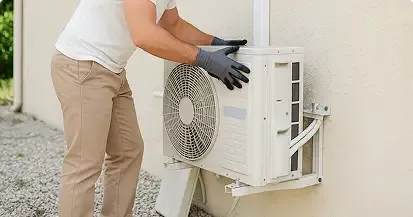
Common Problems Detected During Annual Service That Prevent Major Failures
Refrigerant leaks represent one of the most frequently identified issues during routine maintenance. Small leaks reduce system efficiency gradually—homeowners often fail to notice the 1-2 degree drop in cooling performance that develops over months.
Left unaddressed, low refrigerant causes compressor overheating and eventual failure costing $1,200-2,500 to replace.
Electrical problems constitute another major category. Loose connections create resistance that generates heat, potentially starting fires or causing component failure.
Capacitor degradation shows up in routine testing before causing no-start conditions. Replacing a failing capacitor during scheduled maintenance costs $80-180; replacing it during an emergency call after the system fails costs $200-400.
When equipment fails completely, homeowners often discover the value of 24 hour ac service options that can address urgent repairs outside standard business hours.
Duct leakage, discovered through pressure testing, wastes 20-30% of cooled air in typical homes according to Environmental Protection Agency research. Annual inspections identify deteriorating duct sealing and insulation problems that dramatically reduce system efficiency.
Addressing these issues costs $300-800 but can reduce cooling costs by $60-150 annually.
Drain line clogs develop slowly as algae and sediment accumulate. During maintenance visits, technicians clear these lines before blockages cause water damage or automatic system shutdowns. Water damage from a backed-up condensate line easily exceeds $1,000 in restoration costs, far more than the $100 prevention would cost.
DIY Maintenance Tasks Between Professional Service Calls
Homeowners can perform several maintenance tasks that extend system life and maintain efficiency between professional visits. Monthly filter inspection and replacement when dirty represents the single most impactful DIY task.
Standard 1-inch filters should be replaced every 30 days during active cooling seasons; 4-inch pleated filters last 3-6 months depending on home conditions.
Outdoor unit maintenance requires minimal effort but delivers measurable results. Clearing debris, leaves, and vegetation from around the condensing unit maintains proper airflow.
A 24-inch clearance around all sides ensures adequate ventilation. Gently spraying coils with a garden hose removes surface dust, though this superficial cleaning cannot replace professional coil treatment.
Thermostat attention prevents unnecessary service calls. Replacing batteries before they die prevents system communication issues.
Checking that the thermostat mount remains level ensures accurate temperature sensing. Smart thermostats require software updates that homeowners can perform following manufacturer instructions.
Indoor vent inspection catches problems early. Closing or blocking more than 20% of vents disrupts system balance and reduces efficiency.
Furniture placement that blocks return air vents forces the system to work harder. These simple observations prevent performance issues that might otherwise prompt service calls.
Selecting a Reliable HVAC Service Provider
Credentials matter significantly in HVAC service quality. Technicians should hold EPA certification for refrigerant handling—this legal requirement indicates baseline competency.
NATE (North American Technician Excellence) certification demonstrates advanced knowledge, with NATE-certified technicians performing 15-20% better on quality metrics according to industry studies.
Service agreements versus one-time calls present a value proposition worth evaluating. Annual maintenance contracts typically cost $150-300 and include one or two service visits plus priority scheduling and discounts on repairs.
For homeowners committed to regular maintenance, these agreements often save 20-30% compared to paying for individual service calls. Many contracts also include priority access to 24 hour ac service when emergency repairs become necessary outside regular business hours.
Online reviews provide valuable insight but require careful interpretation. Companies with 50-200 reviews offer more reliable patterns than those with only a handful of testimonials.
Look for specific mentions of technician knowledge, punctuality, and pricing transparency. Red flags include multiple complaints about upselling unnecessary services or bait-and-switch pricing tactics.
Local licensing and insurance verification protects homeowners from liability and ensures basic competency standards. Every state regulates HVAC contractors differently, but legitimate companies readily provide license numbers and insurance certificates. Unlicensed technicians may charge less but offer no recourse if work proves defective or causes damage.
The Future of AC Maintenance and Smart System Integration
Connected HVAC systems with diagnostic capabilities now represent 18% of new installations, a figure that grows 12-15% annually. These smart systems monitor refrigerant pressure, airflow rates, and component runtime, alerting homeowners to developing problems before failures occur.
Predictive maintenance based on actual system data will reshape service schedules from calendar-based to condition-based approaches.
Remote diagnostics already reduce service call costs by allowing technicians to arrive with specific parts and knowledge of the problem. This capability cuts diagnostic time by 30-40%, reducing labor costs and system downtime.
Some manufacturers now offer subscription monitoring services that include annual maintenance as part of system oversight.
Energy efficiency regulations continue tightening. The minimum SEER (Seasonal Energy Efficiency Ratio) rating for new systems rose to 14 in northern states and 15 in southern states in 2023.
As older, less efficient systems age out, maintenance becomes even more critical—pushing a 10 SEER system beyond its intended lifespan through excellent maintenance saves money compared to premature replacement, but only if that maintenance happens consistently.
Refrigerant transitions present another evolving factor. The R-22 refrigerant phase-out means systems using this older refrigerant face increasing service costs.
Annual maintenance becomes particularly valuable for these aging systems, extending their usable life until replacement makes economic sense. Technicians can advise homeowners on the optimal replacement timing based on system condition and repair cost trends.
Making Yearly AC Service a Non-Negotiable Home Maintenance Item
Evidence overwhelmingly supports annual air conditioning maintenance as a cost-effective investment. The combination of energy savings, extended equipment life, and prevented emergency repairs creates a return on investment exceeding 300% over a system's lifespan.
For a $100 annual service that saves $50 yearly in energy costs and prevents one $400 emergency repair over five years, the financial case closes definitively.
Beyond economics, comfort and reliability matter. Systems that fail during extreme weather events create health risks, particularly for vulnerable populations.
The certainty that comes from professional inspection and maintenance provides peace of mind worth more than dollars alone can measure.
Establishing a relationship with a trusted local service provider simplifies the process. Automatic scheduling eliminates the procrastination that leads to neglect.
Service agreements with calendar reminders remove the friction between intention and action, making yearly AC service as routine as vehicle oil changes or dental cleanings.
The air conditioning system represents one of the largest mechanical investments in any home. Treating it as a disposable item that requires attention only when broken accelerates depreciation and multiplies costs. Viewing it as a critical asset deserving regular professional care transforms economics, reliability, and comfort outcomes simultaneously.


