






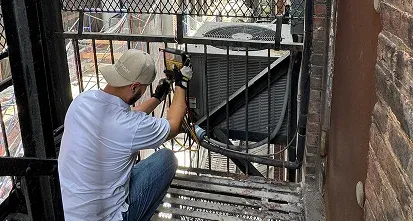
When Your Air Conditioning Fails at Midnight
Air conditioning systems follow no schedule when they break down. A study by the Air Conditioning Contractors of America found that 42% of emergency HVAC failures occur outside normal business hours, with peak incident rates between 9 PM and 6 AM. These failures coincide with periods of maximum household demand or extreme outdoor temperatures that stress aging equipment beyond operational thresholds. Visit acrepair for more.
The financial impact of AC failure extends beyond repair costs. Hotels report average revenue losses of $3,200 per room per night when climate control systems fail during summer months. Residential property owners face spoiled food, heat-related health risks, and potential structural damage from humidity accumulation.
Commercial facilities experience productivity drops of 18-28% when indoor temperatures exceed 78°F, according to workplace environmental studies. Round-the-clock repair services emerged as a specialized HVAC sector in response to this demand pattern.
Markets with extreme climates show the highest concentration of 24 hour ac service providers, with Florida, Texas, and Arizona accounting for 61% of emergency dispatch calls nationally.
Geographic Demand Patterns for Emergency HVAC Services
Metropolitan areas demonstrate distinct emergency service needs based on climate zones and population density. AC repair Dallas providers log approximately 14,000 after-hours service requests annually, with July and August representing 47% of total volume. The Dallas-Fort Worth metroplex experiences summer daytime temperatures exceeding 100°F for an average of 19 days per year, creating sustained equipment stress that triggers component failures.
AC repair Jacksonville FL services report different usage patterns. Coastal humidity levels averaging 74% year-round create corrosion and mold issues that differ from dry-heat failures. Jacksonville emergency calls peak during September and October when hurricane-season power fluctuations damage compressor units and control boards. The city's subtropical climate means year-round cooling demand, translating to 11 months of active service calls rather than seasonal concentration.
Tampa follows a similar coastal pattern. AC repair Tampa operations handle elevated emergency volumes during afternoon thunderstorm seasons when lightning strikes and power surges compromise electrical components. The region's sandy soil and high water tables create unique challenges for ground-level condensate drainage, causing overflow shutdowns that require immediate attention.
Smaller markets show different characteristics. Searches for "ac repair shop near me" increase 340% during the first week of sustained 90°F+ temperatures as dormant systems restart with accumulated dust, debris, and minor mechanical issues that escalated during off-season months. Property owners in these markets depend on 24 hour ac service when unexpected breakdowns occur during extreme weather events.
Mini Split Systems and After-Hours Service Requirements
Mini split ac repair represents a growing segment within emergency services. These ductless systems captured 18% of residential AC market share by 2023, up from 7% in 2018. Their modular design creates specific failure modes that differ from central air systems.
Individual air handler failures in multi-zone installations create partial system outages. A bedroom unit failing at 2 AM affects sleep quality immediately, particularly for elderly residents or infants vulnerable to heat stress. The average response time for mini split ac repair during overnight hours runs 2.7 hours in major metropolitan markets with dedicated emergency teams.
Refrigerant line issues present the most common mini split emergency. Vibration from improperly mounted outdoor compressors causes line-set connections to loosen over time. These leaks become apparent when outdoor temperatures spike and the system cannot maintain set points. Repairs require nitrogen pressure testing, leak detection, and refrigerant recharging—procedures that demand EPA-certified technicians regardless of hour.
Condensate pump failures rank second. Mini splits installed in locations without gravity drainage rely on electric pumps to evacuate moisture. Pump failure triggers automatic shutdowns to prevent water damage.
In humid climates, a single air handler generates 5-20 gallons of condensate daily. Pump failures during overnight hours can flood wall cavities within six hours, making immediate service necessary to prevent mold and structural damage.
How Emergency HVAC Dispatch Systems Operate
Professional 24 hour ac service companies employ dedicated dispatch protocols that differ substantially from standard appointment scheduling. Call centers operate with minimum two-person staffing during overnight hours, with one dispatcher and one shift supervisor who holds master-level HVAC certification.
Incoming calls undergo triage assessment. Dispatchers trained in HVAC fundamentals ask specific diagnostic questions: What sounds does the system make? Is the thermostat display active? Can you feel any air movement from vents? Does the outdoor unit run continuously? These questions help categorize calls into priority levels.
Life-safety situations receive immediate dispatch—typically within 15 minutes. These include complete system failures affecting medical equipment, households with infants or elderly residents during heat advisories, and refrigeration systems protecting medication or food inventory.
Standard emergencies deploy within 60-90 minutes. These calls involve complete cooling loss in normal circumstances or partial failures affecting sleep or critical business operations. Approximately 68% of after-hours calls fall into this category.
Scheduled emergencies represent calls that can safely wait until early morning hours (5-7 AM) but require same-day service. Reduced cooling capacity, unusual noises, or intermittent operation typically qualify. Dispatchers schedule these for first-available morning slots while providing interim guidance to maximize remaining capacity.
The dispatcher forwards job details to the on-call technician, who carries a fully stocked service vehicle. These trucks inventory 200-300 common replacement parts based on statistical failure analysis. High-turnover items include capacitors (38% of emergency repairs), contactor relays (22%), and thermostat replacements (16%).
This inventory strategy enables single-trip resolution rates of 73% for after-hours calls.
Cost Structures and Pricing Models
Emergency service commands premium pricing that reflects operational realities. Standard 24 hour ac service rates include base emergency fees ranging from $89 to $175 depending on market and time of day. These fees cover dispatch, travel, and initial diagnosis.
Hourly labor rates increase 50-100% for after-hours work. A technician billing $95 per hour during business hours typically charges $142-$190 per hour between 6 PM and 6 AM. Weekend rates fall between these extremes. Holiday rates (Memorial Day, Fourth of July, Labor Day, Christmas) command the highest premiums—often 200% of standard rates.
Parts markup remains consistent regardless of service time at 20-35% above wholesale cost. The emergency premium applies only to labor and dispatch fees. A $240 compressor costs the same whether installed at noon or midnight.
Trip charges apply per location. Multi-property managers calling for repairs at several addresses pay separate trip fees for each location even when handled by one technician in sequence. This policy reflects fuel, vehicle wear, and opportunity cost of extended travel time.
Some companies offer service agreements that modify emergency pricing. Annual maintenance contracts costing $150-$300 typically include priority dispatch, waived emergency fees, and 15-25% discounts on parts and labor. For property owners with multiple systems or aging equipment, these agreements show positive ROI when a single emergency call would be required within the coverage year.
What MAC Services Include Beyond Basic Repair
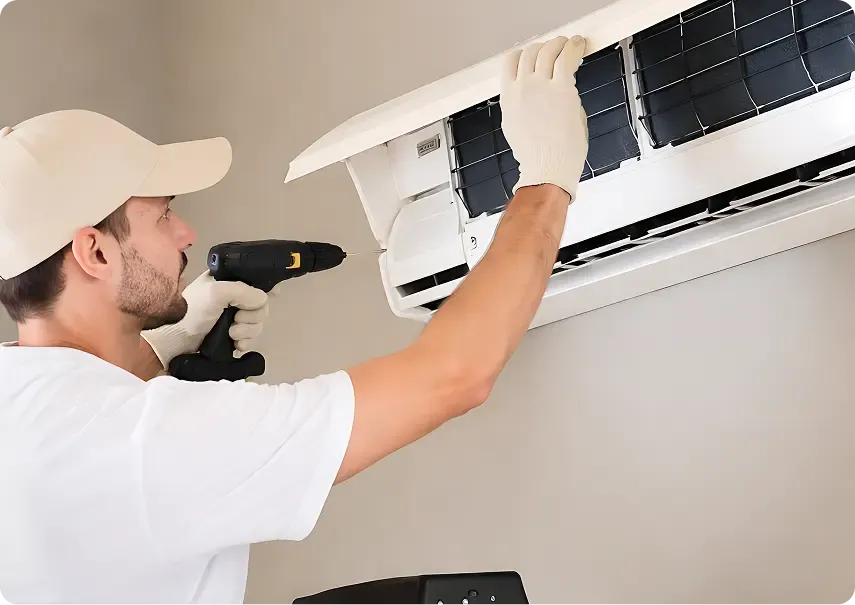
The term "mac services" encompasses maintenance, air conditioning, and comprehensive system care beyond isolated repairs. This integrated approach addresses root causes rather than symptoms.
Diagnostic precision forms the foundation. Emergency calls frequently stem from underlying issues that preceded the failure event. A capacitor failure at 11 PM often results from voltage irregularities that stressed the component for weeks. MAC services approach identifies these patterns through electrical testing, refrigerant pressure analysis, and airflow measurement across all system zones.
Preventive corrections prevent recurrence. When emergency technicians identify contributing factors—dirty coils reducing heat transfer efficiency, low refrigerant from slow leaks, or inadequate return air causing compressor overheating—they offer immediate corrective options. Declining these corrections typically results in repeat failures within 30-90 days based on service records analysis.
System optimization extends equipment lifespan. Emergency repairs restore operation, but MAC services includes performance tuning that reduces future failure probability. This involves calibrating thermostat differential settings, adjusting fan speeds to match duct design, and verifying proper refrigerant superheat and subcooling values. These adjustments improve efficiency by 8-15% while reducing component stress.
Documentation creates service history. Detailed records of each emergency call, parts replaced, and conditions found enable pattern recognition. When the same system requires a second emergency visit, technicians review prior notes to identify whether the new issue relates to previous repairs or represents an independent failure. This institutional knowledge prevents redundant diagnostics and accelerates resolution.
Selecting Reliable After-Hours Service Providers
Credential verification should precede any emergency service call. All HVAC technicians must hold EPA Section 608 certification to legally handle refrigerants. This federal requirement has no exceptions for emergency situations. Companies should provide certification numbers upon request or display them prominently on websites and vehicles.
State-level licensing requirements vary. Florida requires state certification for all contractors performing air conditioning work. Texas mandates licensing only for businesses, not individual technicians. California enforces contractor licensing through the CSLB with specific HVAC classifications. When searching for "ac repair shop near me," verify the provider holds appropriate state credentials for your jurisdiction.
Insurance coverage protects property owners from liability. Legitimate 24 hour ac service companies carry general liability insurance ($1-2 million policy limits) and workers compensation for all employees. Uninsured technicians who suffer injuries on your property may pursue damages against the property owner. Request certificates of insurance before authorizing any work.
Response time guarantees indicate operational capacity. Companies promising specific arrival windows demonstrate sufficient staffing and dispatch infrastructure to honor those commitments. Vague assurances of "as soon as possible" often precede four-hour delays. Established providers specify 60-90 minute windows for standard emergencies and meet those targets in 85%+ of dispatches.
Transparent pricing published online or provided during initial phone contact signals ethical business practices. Companies that refuse to discuss rates until technicians arrive on-site frequently deploy high-pressure sales tactics. While exact costs cannot be determined before diagnosis, legitimate providers explain their fee structures, hourly rates, and typical repair cost ranges without hesitation.
Customer review patterns reveal service consistency. Single reviews mean little, but patterns across 50+ reviews indicate reliable performance. Look for specific mentions of after-hours responsiveness, pricing transparency, and technical competence. Reviews mentioning return visits for the same issue within weeks suggest quality problems.
Preventing Emergencies Through Seasonal Maintenance
Statistical analysis of service records demonstrates that 67% of emergency failures could have been prevented through regular maintenance. Annual inspections cost $75-150 but identify developing problems before they trigger system shutdowns.
Spring preparation prevents summer failures. Pre-season service includes cleaning evaporator coils that accumulate dust during heating season, testing capacitor microfarad values that degrade over time, and verifying refrigerant charge accuracy. Coils restricted by even 30% debris reduce capacity by 15% and increase compressor head pressure, the leading cause of mid-season failures.
Electrical connection inspection catches fire hazards. Terminals corrode, wire insulation cracks from heat cycling, and connection points loosen from vibration. These conditions create resistance that generates heat, eventually melting connections or tripping breakers. Thermal imaging during maintenance visits identifies hot spots before they fail, typically during peak-load conditions at 3 PM on 98°F days.
Drain system maintenance prevents water damage emergencies. Condensate lines clog with algae growth in humid climates, causing overflow shutdowns. Treating lines with algaecide tablets and verifying proper slope prevents 89% of drain-related service calls. This $15 preventive measure eliminates potential emergency visits costing $300-500.
Thermostat calibration ensures accurate system response. Thermostats drift out of calibration by 2-4°F over several years. This error causes systems to short-cycle or run continuously, wearing components prematurely. Calibration during annual service extends equipment life by approximately 20%.
Filter replacement schedules reduce system stress. Standard 1-inch filters require monthly replacement during cooling season in most climates. Neglecting this simple task restricts airflow, causing evaporator coils to freeze and compressors to overheat.
Frozen coil emergencies account for 23% of after-hours calls during peak season—nearly all preventable through proper filtration. Scheduled maintenance visits catch these issues before you need 24 hour ac service on the hottest night of summer.
The Technology Evolution in Emergency Response
Mobile diagnostic tools have transformed emergency service capabilities. Technicians now carry tablet-based applications that access manufacturer service bulletins, wiring diagrams, and troubleshooting trees for thousands of equipment models. This instant reference eliminates guesswork and reduces diagnostic time by 40% compared to manual-only methods.
Refrigerant analyzers identify contamination that causes premature failures. Non-condensable gases (primarily air) in refrigerant circuits raise head pressure and reduce cooling capacity. Detection requires specialized equipment that quantifies contamination levels in minutes. This capability prevents misdiagnosis of compressor failure when system purging and recharging would resolve the issue at one-third the cost.
Digital manifolds provide precision measurements impossible with analog gauges. Superheat and subcooling calculations performed automatically reveal charge accuracy to within 0.2°F. This precision matters because systems operating just 10% low on refrigerant consume 20% more energy while delivering reduced capacity—conditions that accelerate wear and trigger future emergencies.
Thermal imaging cameras detect problems invisible to visual inspection. Hot electrical connections, restricted ductwork sections, and refrigerant flow issues all display as temperature variations on thermal images. A connection running 40°F above ambient temperature will fail within weeks—an emergency call prevented through detection during a current service visit.
Video inspection equipment examines ductwork, drain lines, and equipment interiors without disassembly. Borescope cameras navigate through small access points to assess coil condition, verify drain system integrity, and check for pest damage or insulation deterioration. This non-invasive examination finds problems that would otherwise remain hidden until catastrophic failure.
When to Call for Emergency Service Versus Waiting
Complete system failure during extreme temperatures justifies immediate calls. Indoor temperatures above 85°F pose health risks for vulnerable populations. Heat exhaustion symptoms begin appearing when ambient temperatures exceed body temperature regulatory capacity—typically 90-95°F for extended periods. Elderly residents, infants, and individuals with cardiovascular conditions face serious risks within 6-8 hours of exposure.
Unusual sounds indicate mechanical failures requiring prompt attention. Grinding noises suggest bearing failure in blower motors or compressors. Continued operation destroys surrounding components, converting a $300 motor replacement into a $2,000 compressor or air handler replacement. Squealing sounds indicate belt slip or bearing wear—problems that worsen rapidly under load.
Burning odors demand immediate shutdown and emergency service. Electrical failures produce distinctive acrid smells as insulation melts. Never operate systems emitting smoke or burning odors.
Shut down power at the breaker and contact emergency services immediately. Approximately 7% of residential fires originate from HVAC equipment, with most involving electrical failures that produced warning odors before ignition.
Water leaks require rapid response to prevent property damage. A system leaking water indicates drain blockage, pump failure, or frozen coil conditions. Water migrating into walls creates mold growth within 48 hours in humid conditions. Stained ceilings below attic air handlers suggest long-term slow leaks that have already damaged structural materials.
Reduced cooling capacity can often wait until morning. Systems running continuously but maintaining temperatures 5-10°F above set point have sufficient capacity to prevent health risks overnight. Setting thermostats to higher temperatures reduces load on struggling systems, preventing complete failure before morning service becomes available.
Intermittent operation suggests electrical or control issues but rarely constitutes true emergencies. Systems that cycle on and off irregularly may


