






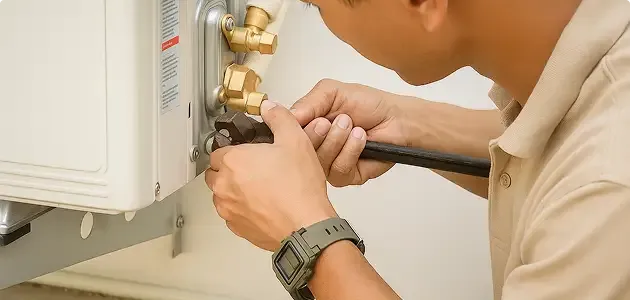
The Critical Role of Regular HVAC Maintenance in Queens
Queens homeowners and property managers face unique climate challenges that demand reliable heating and cooling systems year-round. With winter temperatures regularly dropping into the teens and summer heat indexes climbing above 95°F, HVAC systems in this borough work harder than in many other parts of the country. Visit acrepair for more.
Systems operating under these conditions require systematic maintenance to avoid costly breakdowns during peak demand periods.
Data from the Building Performance Institute shows that unmaintained HVAC systems lose approximately 5% of their operating efficiency each year. For the average Queens household running a 3-ton central air system, this translates to roughly $150-$200 in additional annual energy costs after just three years of neglect.
The compounding effect over a system's typical 15-year lifespan creates thousands of dollars in unnecessary expense.
Regular HVAC maintenance queens services address this degradation through scheduled inspections, cleaning, and component adjustments. Property owners who invest in biannual tune-ups—once before cooling season and once before heating season—consistently report 30-40% fewer emergency service calls compared to those who operate on a "fix it when it breaks" philosophy.
Understanding Queens-Specific HVAC Challenges
The borough's diverse housing stock creates distinct maintenance requirements. Pre-war apartment buildings in Astoria and Forest Hills often contain steam heating systems paired with window AC units or PTAC systems.
Post-war construction in neighborhoods like Bayside and Douglaston typically features forced-air furnaces with central air conditioning. Modern developments in Long Island City increasingly incorporate heat pump technology and zone-controlled systems.
Each configuration presents different maintenance priorities. Steam systems require regular boiler inspections, pressure testing, and radiator valve maintenance. Central air systems need coil cleaning, refrigerant level checks, and ductwork inspection.
PTAC units common in Queens hotels and apartment buildings demand frequent filter changes, condensate drain clearing, and sleeve seal verification.
The proximity to LaGuardia Airport and major roadways introduces higher-than-average airborne particulate levels across many Queens neighborhoods. Air quality monitoring data from the NYC Department of Environmental Protection indicates that areas within two miles of major traffic corridors experience particulate concentrations 35-50% higher than outer borough locations.
These particles accumulate on HVAC components, reducing airflow and forcing systems to work harder to maintain temperature setpoints.
Coastal neighborhoods in the Rockaways face additional corrosion challenges from salt air. HVAC equipment in these areas requires specialized maintenance protocols, including more frequent coil inspections and protective coating applications.
Systems located within one mile of the Atlantic Ocean typically show accelerated wear on outdoor components, with condenser coils experiencing visible corrosion within 5-7 years versus 10-12 years for inland units. Property owners in these zones should consult with experienced ac installation queens contractors who understand coastal equipment specifications before purchasing replacement systems.
Comprehensive Maintenance Service Components
Professional HVAC maintenance queens programs follow systematic checklists developed from manufacturer specifications and industry best practices. A complete cooling system inspection includes 25-30 distinct checkpoints covering electrical, mechanical, and refrigeration subsystems.
Technicians begin with electrical component testing. Voltage and amperage readings at the compressor, condenser fan motor, and blower motor verify proper power delivery and identify developing issues before failure occurs.
Capacitor testing deserves particular attention—these components fail more frequently than any other electrical part, and degraded capacitors reduce motor efficiency while increasing failure risk. Measurements showing capacitance values outside 6% of nameplate ratings signal replacement needs.
Refrigerant system assessment represents the technical core of AC maintenance. Technicians measure operating pressures, superheat, and subcooling values to verify proper refrigerant charge.
The Environmental Protection Agency reports that 60% of residential AC systems operate with incorrect refrigerant levels—either overcharged or undercharged—causing efficiency losses between 5% and 20%. Correcting these issues during maintenance visits prevents compressor damage that leads to expensive ac repair queens service calls.
Airflow verification ensures the system moves the correct volume of air across the evaporator coil. Restricted airflow causes reduced cooling capacity, frozen evaporator coils, and increased operating costs.
Technicians measure temperature splits across the coil and verify blower speeds against design specifications. Dirty filters, blocked return grilles, and accumulated coil debris commonly reduce airflow by 15-30% in unmaintained systems.
Condensate drain systems require inspection and clearing to prevent water damage. AC systems in Queens produce 10-20 gallons of condensate daily during peak summer operation.
Algae growth, dust accumulation, and mineral deposits gradually restrict drain lines, causing backups that damage ceilings, walls, and flooring. Preventive maintenance includes drain cleaning, trap verification, and biocide treatment to inhibit biological growth.
Heating System Maintenance Protocols
Queens heating systems face intense demand during cold months, with many furnaces and boilers operating 8-12 hours daily from December through March. Natural gas furnaces require annual inspections that verify combustion efficiency, heat exchanger integrity, and safety control operation.
Heat exchanger inspection represents the most critical safety check. Cracks or deterioration in this component allow carbon monoxide to enter living spaces—a potentially fatal condition.
Technicians use visual inspection, flame pattern analysis, and specialized diagnostic tools to identify exchanger problems. Systems showing exchanger cracks require immediate shutdown and replacement; no repair option exists for this component.
Combustion analysis quantifies burner performance through exhaust gas testing. Properly adjusted burners produce carbon dioxide levels between 8-10% with minimal carbon monoxide output—typically under 50 parts per million.
Readings outside these ranges indicate incomplete combustion, which wastes fuel and creates safety hazards. Burner adjustment during maintenance visits typically improves efficiency by 5-8% in systems that haven't received service in over two years.
Steam heating systems common in older Queens buildings demand specialized maintenance knowledge. Boiler water level controls, pressure relief valves, and Hartford loop configurations require verification at least annually.
Low-water cutoff controls protect against dangerous dry-firing conditions and must undergo manual testing to confirm proper operation. Industry statistics show that boiler-related accidents almost exclusively occur in systems that haven't received professional maintenance.
PTAC repair queens ny services address the unique requirements of packaged terminal air conditioners found in thousands of apartment units and hotel rooms across the borough. These through-wall units combine heating and cooling in a single chassis and require specialized maintenance approaches different from split systems.
Filter access, condensate management, and sleeve weatherproofing demand attention during service visits.
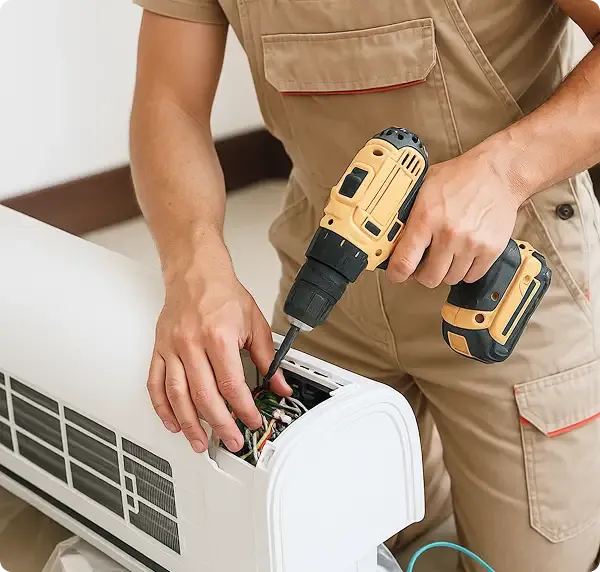
Same Day Service Availability and Emergency Preparedness
HVAC failures don't respect business hours or weather forecasts. Queens property owners frequently need immediate assistance when systems fail during heat waves or cold snaps.
Same day ac repair queens services provide emergency response for critical situations—defined as complete system failure when outdoor temperatures exceed 85°F or drop below 40°F.
Data from HVAC service companies operating in the borough indicates that emergency calls increase 300-400% during extreme weather events. The summer heat wave of 2022 generated call volumes exceeding normal levels by 500% across a three-day period in mid-July.
Systems that had received spring maintenance demonstrated failure rates 75% lower than unmaintained units during this stress period.
Emergency repair costs typically exceed scheduled service costs by 150-200%. After-hours labor rates, expedited parts procurement, and the inherently reactive nature of breakdown service drive these premium charges.
Property owners who maintain systems proactively spend an average of $400-$600 annually on scheduled maintenance versus $1,200-$1,800 on emergency repairs for neglected equipment.
The relationship between maintenance and system lifespan creates compelling financial incentives. Air conditioning systems receiving biannual maintenance average 15-18 years of service life compared to 10-12 years for unmaintained units.
Furnaces show similar patterns—maintained equipment reaches 18-22 years versus 12-15 years without service. Replacement costs for complete HVAC systems in Queens range from $8,000 to $18,000 depending on equipment type and installation complexity, making lifespan extension through maintenance economically advantageous.
AC Installation Queens Standards and Replacement Considerations
Even properly maintained systems eventually require replacement due to age, efficiency advances, or changing property needs. Professional ac installation queens projects must comply with New York City building codes, manufacturer specifications, and EPA refrigerant handling regulations.
Load calculation represents the foundation of proper installation. Manual J calculations account for building square footage, insulation levels, window specifications, occupancy patterns, and exposure to determine correct equipment sizing.
Oversized equipment short-cycles, reducing comfort and efficiency while increasing wear. Undersized systems run continuously without achieving temperature setpoints. Industry studies show that 40-50% of replacement systems suffer from incorrect sizing, typically oversizing by 20-30%.
Ductwork assessment determines whether existing distribution systems can support new equipment. Many Queens homes contain duct systems designed decades ago for different equipment types.
Inadequate duct sizing, excessive restriction, and air leakage commonly reduce system capacity by 25-35%. Quality ac installation queens work should include duct testing and modification as needed to achieve design airflow.
Refrigerant transition considerations affect replacement decisions. The EPA mandated R-22 refrigerant production phase-out in 2020, making this older refrigerant increasingly expensive and difficult to obtain.
Systems using R-22 that require significant repairs often make better economic sense to replace rather than repair. New installations use R-410A or newer refrigerants like R-32 that provide better efficiency and environmental performance.
Energy efficiency ratings directly impact operating costs. SEER (Seasonal Energy Efficiency Ratio) ratings quantify cooling efficiency, with minimum standards now requiring SEER 14 for new installations in the Northeast.
Premium systems reach SEER 20-26, delivering 40-60% energy savings compared to minimum-efficiency units. For Queens homeowners running AC systems 900-1,200 hours annually, high-efficiency equipment typically pays back the efficiency premium within 7-9 years through reduced utility costs.
Air Conditioner Repair Queens Service Patterns
Air conditioner repair queens services address specific failure modes that occur predictably across system lifespans. Compressor failures represent the most expensive repair scenario, with replacement costs ranging from $1,500 to $3,000 including labor.
Compressors typically fail due to electrical issues, refrigerant problems, or contamination—all conditions that preventive maintenance detects before catastrophic failure.
Capacitor failures account for roughly 35% of AC service calls during summer months. These inexpensive components ($15-$40 for parts) cause complete system shutdown when they fail.
Symptoms include the condenser fan or compressor failing to start despite thermostat calls for cooling. Technicians routinely test capacitors during maintenance visits and replace marginal units before in-season failure.
Refrigerant leaks create progressive performance degradation as charge levels drop. Small leaks may take months or years to fully deplete system refrigerant, causing gradual capacity loss.
Queens property owners often adapt to declining performance by lowering thermostat settings, unaware that refrigerant loss causes the problem. Professional leak detection, repair, and recharge restores full capacity. EPA regulations require technicians to locate and repair leaks before adding refrigerant to systems.
Evaporator coil freezing presents a common complaint during cooling season. Multiple root causes produce this symptom: restricted airflow from dirty filters, low refrigerant charge, failed blower motors, or closed supply registers.
Diagnosis requires systematic component testing to identify the underlying issue. Homeowners who discover ice formation should shut down the system and switch the fan to continuous operation to accelerate thawing before service arrival.
Control board and sensor failures increase in frequency as systems age beyond 10 years. Modern HVAC equipment contains multiple circuit boards managing compressor operation, blower speed, defrost cycles, and safety shutdowns.
Board replacement costs vary widely—from $200 to $800 depending on equipment brand and board complexity. Sensor failures causing incorrect temperature readings cost substantially less to repair but produce similar symptoms of poor temperature control.
Seasonal Maintenance Scheduling for Optimal Performance
Queens' distinct seasonal climate demands strategic maintenance timing. Spring cooling system preparation should occur in April or early May before heat season begins.
This scheduling ensures that any parts requiring replacement arrive and install before peak demand periods when technician availability tightens and parts inventory depletes.
Fall heating system maintenance belongs on October calendars. Furnace and boiler tune-ups completed before November prepare systems for winter demand while technicians maintain reasonable availability.
Waiting until the first cold snap creates scheduling delays of 5-10 days when service companies handle emergency calls ahead of routine maintenance appointments.
Commercial property managers operating buildings with 20+ HVAC units often implement quarterly maintenance rotations, servicing 25% of equipment each quarter. This approach spreads costs across budget periods while ensuring every system receives attention twice annually.
Data tracking across quarterly programs reveals equipment problems trending across multiple units, enabling proactive resolution before widespread failures occur. Property managers planning ac installation queens upgrades in commercial buildings benefit from maintenance records that identify patterns requiring capital investment.
Maintenance agreement programs offered by service companies provide guaranteed scheduling, priority emergency service, and typically 15-20% discounts on repairs. These programs work well for property owners managing multiple units or systems.
Agreement holders report higher satisfaction rates and fewer emergency situations compared to per-incident service purchasers. Many contractors bundle ac installation queens discounts into long-term maintenance agreements, reducing total ownership costs.
The financial analysis supporting regular maintenance shows clear returns. Annual maintenance costs averaging $250-$350 per system prevent repairs averaging $800-$1,200, extend equipment life by 40-50%, and reduce energy costs by 10-15%.
For Queens property owners operating HVAC systems in one of the nation's most demanding climate zones, professional maintenance represents essential infrastructure investment rather than optional expense.


