






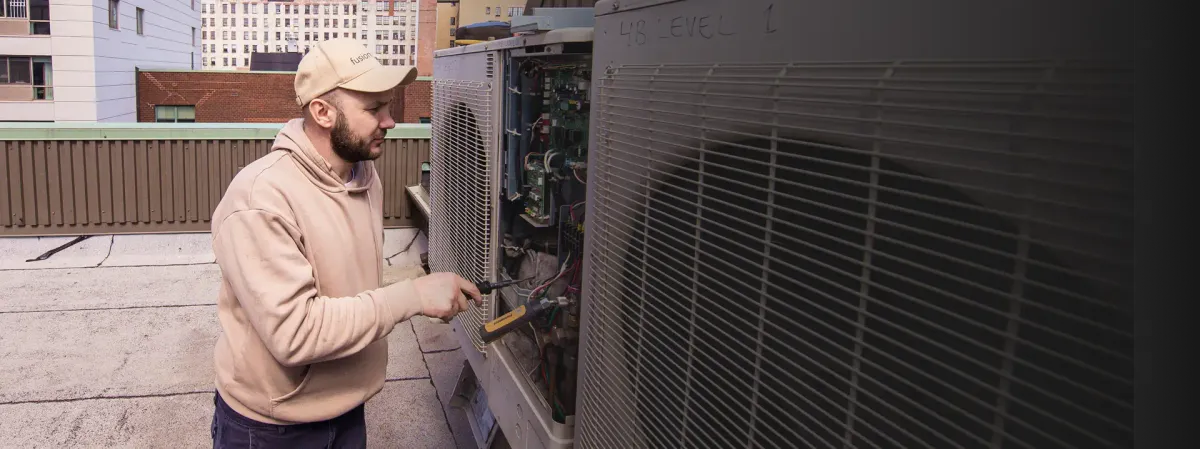
Understanding Modern HVAC System Repair Demands
The global HVAC repair market reached $19.8 billion in 2023, driven by aging residential infrastructure and stricter commercial building codes. Industry data shows that 42% of system failures stem from neglected maintenance, while 31% result from component wear after the typical 10-15 year service life. Visit acrepair for more.
Property managers and homeowners face a stark choice: invest in timely repairs or shoulder replacement costs that average $7,400 for residential units and exceed $25,000 for commercial installations.
Temperature extremes accelerate this timeline. Systems operating in regions with harsh winters or brutal summers experience 23% more service calls than those in moderate climates.
New York City typifies this challenge—summer peaks above 95°F and winter lows near 15°F force units to run at maximum capacity for extended periods, stressing compressors, evaporator coils, and blower motors beyond manufacturer baselines.
The repair landscape has shifted dramatically. Technicians now service systems with variable-speed compressors, smart thermostats, and refrigerants subject to phase-out regulations.
R-22 refrigerant, once the industry standard, costs 340% more than it did in 2015 due to production bans. This regulatory shift pushes many repair decisions into replacement territory, particularly when compressor failures coincide with refrigerant leaks in older systems.
Property owners increasingly seek 24 hour ac repair services to address failures that occur during extreme weather events when systems face maximum stress.
Critical Components That Drive Repair Costs
Compressor Failures and Economic Calculations
Compressors function as the heart of any cooling system, circulating refrigerant and maintaining pressure differentials that enable heat transfer. When compressors fail, property owners confront the steepest repair bills in the HVAC spectrum.
Replacement costs range from $1,800 to $3,200 for residential units, with commercial systems climbing to $6,500 or higher depending on tonnage and accessibility.
Labor represents 45-60% of total compressor repair costs. Technicians must recover refrigerant, disconnect electrical connections, remove the failed unit, install the replacement, vacuum the system, and recharge with the correct refrigerant type and quantity.
This process typically requires 4-8 hours for residential work and extends to 12+ hours for rooftop commercial units requiring crane access or structural modifications.
The decision matrix becomes complex when compressor replacement costs approach 50% of full system replacement value. A 12-year-old residential unit with a failed compressor valued at $2,400 for repair sits uncomfortably close to a $5,800 full replacement that includes a warranty, improved efficiency ratings, and compatibility with modern refrigerants.
Industry analysts recommend replacement when repair costs exceed 40% of new equipment value on systems older than 10 years.
Refrigerant Leaks and Regulatory Pressure
Refrigerant leaks plague 28% of malfunctioning systems, according to field service data from major metropolitan areas. These leaks stem from corrosion in coil joints, vibration damage to refrigerant lines, or failed valve cores.
Simple recharges without addressing the underlying leak provide only temporary relief—systems typically lose pressure again within 30-90 days.
Proper leak repair protocols require electronic leak detection, pressure testing, and evacuation procedures that meet EPA standards. Technicians use nitrogen pressure tests to verify repairs before introducing refrigerant, preventing costly callbacks and environmental violations.
The process adds $400-$900 to basic service calls but ensures long-term system integrity.
R-410A refrigerant, the current residential standard, costs $75-$150 per pound in 2024. Most residential systems hold 6-15 pounds, making full recharges a $600-$1,800 expense before accounting for leak detection and repair labor.
Commercial systems with 50+ pound capacities push refrigerant costs alone past $5,000, incentivizing leak prevention through annual maintenance contracts.
Electrical Component Degradation
Capacitors, contactors, and control boards fail at predictable intervals. Dual-run capacitors, which provide starting torque for compressor and fan motors, typically last 3-5 years in harsh operating environments.
Replacement runs $150-$300 including service call fees. Contactors that switch high-voltage power to compressors deteriorate from electrical arcing, with replacement costs of $200-$400.
Control board failures present more complex challenges. Modern boards integrate multiple functions—thermostat communication, safety monitoring, variable-speed motor control, and diagnostic codes.
Proprietary designs limit aftermarket options, forcing reliance on manufacturer parts that cost $400-$900. Diagnostic time adds another $150-$250 to the bill as technicians eliminate other potential causes before committing to board replacement.
Thermostat compatibility issues create additional service calls. Older mechanical thermostats operate on simple 24-volt circuits, while programmable and smart thermostats require C-wire connections for continuous power.
Retrofitting systems lacking this wire requires running new cable from the air handler or installing power-stealing adapters. This upgrade work adds $180-$350 to installation costs but prevents nuisance service calls from low-battery warnings and connection drops.
Geographic Variations in Service Requirements
Urban HVAC Repair Markets
Dense urban markets like New York City present unique service challenges that inflate repair costs and extend response times. Technicians navigate restricted parking zones, coordinate building access with management companies, and haul equipment up stairwells when freight elevators are unavailable.
These logistical hurdles add 18-25% to service rates compared to suburban markets with easy access and dedicated parking.
Rooftop commercial installations dominate urban landscapes, requiring specialized rigging equipment and safety protocols. Units positioned on 20+ story buildings need crane access for major component replacement, adding $2,500-$5,000 in equipment rental and coordination costs.
This expense often tips the economic balance toward complete system replacement rather than major repairs on aging equipment.
Air quality regulations in major metropolitan areas mandate specific filtration standards that affect repair protocols. High-efficiency particulate air (HEPA) filters and upgraded filter racks require additional maintenance attention and increase static pressure across the system.
Technicians must verify that blower motors and ductwork adequately handle this increased resistance, sometimes necessitating blower upgrades that cost $600-$1,200.
The concentration of service providers in urban markets creates competitive dynamics that benefit consumers during off-peak seasons. Spring and fall shoulder seasons see discount offers of 10-20% on standard repairs as companies compete for work between peak cooling and heating demands.
Service agreements that bundle seasonal maintenance with priority repair access typically cost $200-$400 annually and deliver measurable savings on emergency calls.
Commercial Versus Residential Repair Economics
Commercial HVAC systems operate under different performance parameters than residential equipment. The average commercial unit runs 3,200-4,800 hours annually compared to 1,200-2,000 hours for residential systems.
This intensive duty cycle accelerates wear on compressors, fan motors, and contactors, requiring component replacement at twice the residential frequency.
Packaged rooftop units (RTUs) dominate commercial installations, integrating heating, cooling, and ventilation in weather-resistant cabinets. These units range from 3 to 50 tons of cooling capacity, with repair costs scaling proportionally.
A 10-ton RTU compressor replacement averages $4,200-$6,800, while 40-ton units climb to $12,000-$18,000 including refrigerant, labor, and crane access.
Preventive maintenance contracts become economically essential for commercial properties. Data from facility management firms shows that buildings with quarterly maintenance protocols experience 34% fewer emergency repairs and extend equipment life by 2.8 years on average.
Contract costs range from $800-$2,400 annually per RTU but prevent the business disruption costs that accompany unexpected failures during peak occupancy periods. Commercial facilities particularly value 24 hour ac repair availability since system downtime directly impacts revenue and tenant satisfaction.
Variable refrigerant flow (VRF) systems represent the fastest-growing commercial segment, offering zone-level temperature control and energy efficiency improvements of 20-30% over conventional systems. These complex installations require specialized diagnostic equipment and manufacturer-certified technicians.
Repair costs run 40-60% higher than standard commercial equipment, but reduced energy consumption offsets this premium in buildings with diverse thermal loads.
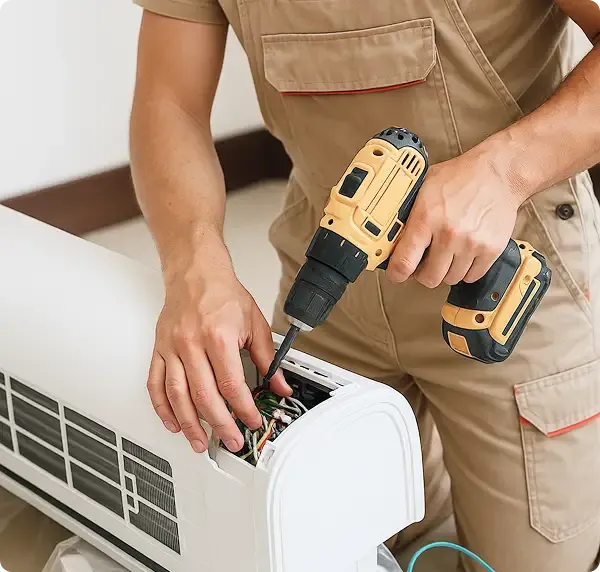
Diagnostic Technology and Modern Repair Efficiency
Digital manifold gauges, thermal imaging cameras, and wireless pressure sensors have transformed diagnostic accuracy. Technicians can identify refrigerant charge imbalances within 2% of optimal levels, detecting subtle issues before they cascade into major failures.
Thermal imaging reveals hot spots in electrical connections and insulation gaps in ductwork, expanding service opportunities beyond the core HVAC components.
Smartphone-connected diagnostic tools enable remote supervision and quality assurance. Senior technicians review field data in real-time, guiding junior staff through complex troubleshooting sequences and reducing diagnostic time by an average of 22 minutes per call.
This efficiency translates to same-day repairs on a higher percentage of service visits, improving customer satisfaction scores and reducing callback rates.
Predictive maintenance algorithms analyze equipment operation patterns to forecast component failures. Commercial building management systems track compressor amp draw, refrigerant pressures, temperature differentials, and run-time hours.
Machine learning models identify deviations from baseline performance, triggering maintenance alerts 2-4 weeks before failures occur. This proactive approach reduces emergency repair premiums of 35-50% charged for after-hours service.
OEM partnerships with national service networks provide parts availability guarantees that minimize downtime. Next-day delivery programs ensure that 94% of common components arrive within 24 hours in major markets.
This logistics infrastructure prevents the multi-day waits that once plagued commercial property managers, reducing lost productivity and tenant complaints.
Financial Planning for System Repairs
Industry benchmarks recommend budgeting 1-2% of system replacement value annually for repairs and maintenance on residential equipment. A $6,000 system justifies a $60-$120 annual maintenance budget, with additional reserves for unexpected repairs.
Commercial properties typically allocate 3-5% of replacement value, reflecting higher duty cycles and regulatory compliance requirements.
Extended warranties modify these calculations by capping annual repair exposure. Manufacturer warranties typically cover parts for 5-10 years on residential equipment, with labor excluded after the first year.
Third-party warranty programs fill this gap, charging $300-$600 annually to cover both parts and labor on systems up to 15 years old. Claims data shows these programs deliver positive returns when compressor or coil failures occur, but provide minimal value on systems requiring only routine maintenance.
Energy efficiency rebates from utilities and government programs can offset repair costs when upgrades accompany necessary work. Replacing a failed single-stage compressor with a variable-speed model qualifies for rebates of $200-$800 in many jurisdictions.
Similarly, upgrading to programmable thermostats during control board replacement generates $50-$100 rebates while improving operational efficiency by 8-12%.
Tax treatment varies by property type and use. Commercial property owners can expense repair costs immediately under IRS guidelines when work maintains existing functionality without material improvements.
Residential landlords follow similar rules, deducting repair expenses against rental income. Owner-occupied homes lack this tax advantage unless the property includes a legitimate home office space subject to business expense deductions.
Selecting Qualified Service Providers
Licensing requirements vary by jurisdiction but typically mandate state-issued contractor licenses, EPA refrigerant handling certifications, and liability insurance minimums of $500,000-$1,000,000. North American Technician Excellence (NATE) certification indicates technician competency through standardized testing on installation, service, and system design principles.
Approximately 38% of active HVAC technicians hold NATE credentials, correlating with 28% fewer callback rates according to industry surveys.
Online review platforms provide performance insights but require careful interpretation. Companies with 100+ reviews averaging 4.2+ stars demonstrate consistent service quality.
Review recency matters—businesses maintaining high ratings over 2+ years show sustainable operational practices rather than short-term promotional efforts. Detailed reviews mentioning specific technician names and repair outcomes carry more weight than generic praise.
Flat-rate pricing models provide cost certainty but may inflate charges on simple repairs. Time-and-materials billing offers transparency and potential savings on straightforward fixes but exposes customers to uncertainty on complex diagnostics.
Hybrid approaches that quote diagnostic fees upfront and present repair options at tiered prices balance these competing concerns.
Service response time commitments separate premium providers from budget alternatives. Companies guaranteeing same-day service for emergencies charge 12-18% premiums over next-day providers.
This differential becomes justified during heat waves or cold snaps when comfort and safety issues escalate. Service agreements that include priority scheduling typically move customers to the front of dispatch queues without emergency call surcharges.
Contractors offering 24 hour ac repair distinguish themselves during peak summer months when cooling failures create urgent situations that cannot wait until regular business hours.
Future Repair Trends and Market Evolution
Refrigerant regulations continue reshaping repair economics. The American Innovation and Manufacturing Act mandates 85% reductions in HFC production by 2036, accelerating the shift to lower global warming potential refrigerants.
R-454B and R-32 alternatives require different lubricants, seals, and service procedures. Technicians need updated training and tools, costs that filter through to consumers as service rates increase 8-15% over the 2024-2027 period.
Heat pump adoption for both heating and cooling alters regional repair markets traditionally dominated by separate furnace and air conditioner systems. Cold-climate heat pumps now function effectively at temperatures down to -15°F, expanding market penetration in northern states.
These systems require defrost cycle diagnostics and reversing valve troubleshooting that expand technician skill requirements and potentially increase diagnostic time on service calls.
Direct-to-consumer equipment sales through home improvement retailers complicate the service landscape. DIY installations often lack proper refrigerant charging, electrical connections, and condensate drainage—creating service calls that blur the line between warranty coverage and installation corrections.
Professional service providers report 40% higher callback rates on customer-supplied equipment versus company-installed systems.
The technician shortage constrains service capacity across the industry. Trade schools graduate approximately 15,000 HVAC technicians annually, while retirements and career changes remove 22,000 from the workforce.
This 7,000-person annual deficit drives wage inflation of 4-6% yearly, directly impacting service call rates and emergency repair premiums. Companies offering apprenticeship programs and career advancement pathways gain competitive advantages in technician recruitment and retention.
The shortage particularly affects 24 hour ac repair availability as companies struggle to staff overnight and weekend shifts with qualified technicians.
Proper HVAC system repair extends equipment life, maintains efficiency ratings that control utility costs, and preserves indoor air quality. The decision between repair and replacement requires analysis of equipment age, repair costs relative to replacement value, and projected remaining service life.
Professional diagnostics from licensed technicians provide the data foundation for these economic decisions, while regular maintenance prevents the catastrophic failures that force rushed, expensive emergency repairs.


