






Understanding Modern AC Service and Repair Requirements
Air conditioning systems represent a significant investment for property owners, with installation costs ranging from $3,000 to $12,000 for residential units and substantially more for commercial applications. Regular maintenance and timely repairs protect this investment while ensuring optimal performance during peak demand periods. Visit acrepair for more.
The HVAC industry processes approximately $21 billion annually in repair and maintenance services across North America, reflecting the critical nature of these systems in modern buildings.
Professional AC service encompasses preventive maintenance, diagnostic evaluations, component replacements, and emergency repairs. Industry data shows that properly maintained systems last 15-20 years, while neglected units often fail within 10-12 years.
The difference translates to thousands of dollars in premature replacement costs and significantly higher monthly utility expenses throughout the system's shortened lifespan.
Typical AC Repair Costs and Pricing Structures
The question "how much is AC repair" lacks a simple answer due to multiple variables affecting final costs. National averages from HomeAdvisor and Angi place most repairs between $150 and $650, with the median service call settling around $350. These figures include diagnostic fees, labor, and standard replacement parts for common failures.
Minor repairs typically cost $150-$300. These address refrigerant top-offs, capacitor replacements, thermostat issues, and drain line clearing.
Mid-range repairs from $300-$650 cover blower motor replacement, contactor repairs, and electrical component failures. Major repairs exceeding $1,000 involve compressor replacement ($1,200-$2,800), evaporator coil replacement ($900-$2,500), and condenser unit repairs ($1,300-$4,000).
Geographic location significantly impacts pricing. AC repair Orlando FL services generally charge 8-15% above the national average due to year-round demand and elevated operating costs in high-humidity climates.
Metropolitan areas consistently command premium pricing compared to rural markets, with differentials reaching 25-40% for identical services.
Labor rates constitute 50-70% of total repair costs. HVAC technicians charge $75-$200 per hour depending on certification level, regional market conditions, and service complexity.
Emergency calls outside standard business hours typically add 50-100% surcharges, pushing hourly rates to $150-$300 for nights, weekends, and holidays. Contractors offering 24 hour ac service often maintain premium pricing structures to cover extended availability and after-hours staffing costs.
Comprehensive AC Service for Home Applications
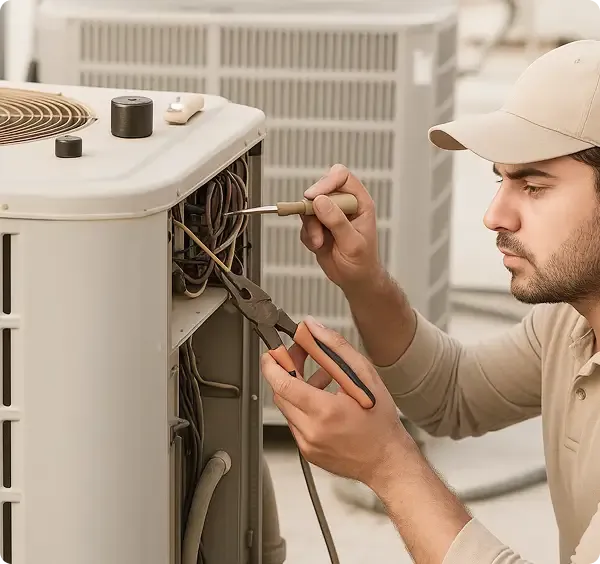
AC service for home properties requires systematic evaluation of multiple system components. Professional maintenance visits follow standardized protocols established by HVAC industry associations and manufacturer specifications. A complete service appointment typically consumes 60-90 minutes for residential systems.
Technicians begin with thermostat calibration, verifying accurate temperature readings and proper system cycling. Modern smart thermostats require firmware updates and connectivity checks beyond traditional analog units.
Air filter inspection follows, with replacement recommended every 30-90 days depending on household conditions, pet ownership, and local air quality.
Electrical component testing measures voltage, amperage, and resistance across capacitors, contactors, and relays. These components fail frequently, representing 35-40% of all service calls according to HVAC industry reports.
Refrigerant level verification ensures systems operate at manufacturer-specified pressures. Low refrigerant indicates leaks requiring immediate attention, as undercharged systems consume 20-30% more electricity while delivering reduced cooling capacity.
Condensate drain inspection prevents water damage from blocked lines. Systems in humid climates generate 10-20 gallons of condensation daily during peak operation.
Algae growth and debris accumulation cause 90% of drain failures, leading to overflow conditions and potential structural damage.
Outdoor unit cleaning removes accumulated dirt, pollen, leaves, and debris that restrict airflow. Reduced airflow forces systems to work harder, increasing energy consumption by 15-25% while accelerating component wear.
Coil straightening corrects bent fins that impede heat transfer efficiency.
When to Schedule AC Service and Maintenance Intervals
Preventive maintenance scheduling dramatically affects system longevity and operational costs. Manufacturers universally recommend annual service visits before cooling season begins.
Spring appointments in March and April allow technicians to identify and correct issues before summer heat creates peak demand and extended repair wait times.
Property owners in regions with year-round cooling requirements should schedule biannual service visits. Systems operating continuously experience accelerated wear patterns requiring more frequent inspection and adjustment.
Commercial facilities and multi-family properties benefit from quarterly maintenance contracts that catch developing problems before they cause downtime.
Warning signs demanding immediate professional evaluation include unusual noises, reduced airflow, inadequate cooling, moisture around indoor units, and unexplained utility bill increases. Ice formation on refrigerant lines indicates serious problems requiring urgent attention to prevent compressor damage.
Strange odors suggest mold growth, electrical issues, or burned components. When breakdowns occur during extreme weather, access to 24 hour ac service becomes critical for protecting property and maintaining comfort.
Systems over ten years old warrant increased monitoring. Components begin degrading rapidly after a decade of operation, with failure rates doubling after year twelve.
Energy efficiency declines 5-8% annually without proper maintenance, making older units substantially more expensive to operate than comparable modern systems.
Factors Affecting AC Service Cost Structures
Multiple elements influence final AC service cost beyond simple labor and parts. System size measured in tonnage affects service duration and complexity.
Residential units range from 1.5 to 5 tons, with larger systems requiring proportionally more refrigerant, longer diagnostic periods, and additional time for component access and testing.
System type creates significant cost variations. Central air conditioning with ductwork costs more to service than ductless mini-split systems due to accessibility challenges and additional components.
Packaged units combining heating and cooling elements require specialized knowledge and extended service times compared to split systems.
Refrigerant type substantially impacts costs. Older R-22 (Freon) systems face refrigerant costs of $50-$150 per pound due to phase-out regulations, while modern R-410A refrigerant runs $10-$30 per pound.
Systems requiring refrigerant replacement should be evaluated for full system upgrade given environmental regulations and escalating legacy refrigerant costs.
Service contract holders typically receive 15-30% discounts on repairs and priority scheduling during peak demand periods. Annual contracts cost $150-$500 depending on coverage levels and system complexity.
These agreements include scheduled maintenance visits, discounted labor rates, and waived trip charges for covered repairs.
Brand and system complexity affect service availability and pricing. Common residential brands receive widespread technician familiarity and competitive pricing.
Specialized systems require technicians with specific training and certification, limiting service provider options and often increasing costs by 20-40%.
AC Service Mercedes and Specialized Vehicle HVAC Systems
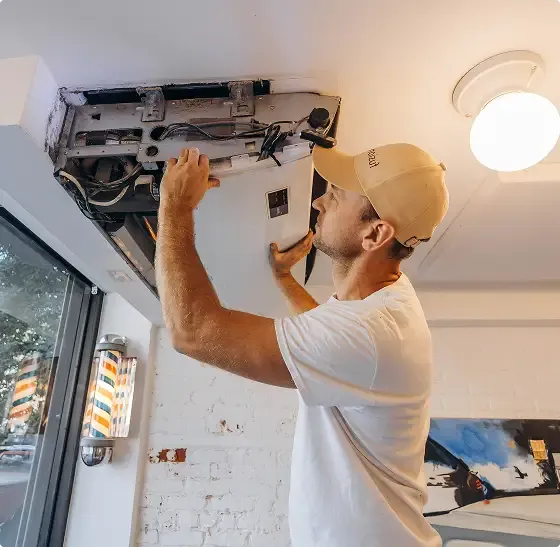
The automotive AC service sector operates under distinct parameters from residential applications. Vehicle climate control systems require specialized equipment, refrigerants, and expertise separate from building HVAC knowledge.
AC service Mercedes and other luxury vehicles demands brand-specific training due to proprietary systems and integrated electronic controls.
Automotive AC service costs range from $100-$800 depending on required work. Refrigerant recharge services start at $100-$200, while compressor replacement reaches $500-$800 including parts and labor.
Luxury vehicle services command premium pricing due to complex electronic integration and expensive OEM components.
Vehicle AC systems use R-134a or newer R-1234yf refrigerant. Federal regulations require certified technicians to handle automotive refrigerants, preventing DIY service attempts.
Improper refrigerant recovery releases greenhouse gases and incurs substantial EPA fines.
Mercedes-Benz vehicles integrate climate control with multiple vehicle systems through CAN bus networks. Diagnostic procedures require manufacturer-specific scan tools costing $3,000-$8,000, limiting service to dealerships and specialized independent shops.
Software updates frequently resolve climate control issues in modern vehicles, highlighting the electronic complexity beyond simple mechanical repairs.
DIY Maintenance vs Professional Service Requirements
Property owners can perform limited maintenance tasks between professional service visits. Monthly air filter changes represent the single most impactful DIY activity, maintaining airflow and preventing dust accumulation on internal components.
Standard filters cost $5-$25, while high-efficiency filters run $15-$50 depending on size and filtration rating.
Outdoor unit cleaning removes surface debris and vegetation growth. Property owners should maintain 24-inch clearance around condenser units for adequate airflow.
Gentle water spray from garden hoses removes accumulated dirt without requiring disassembly or refrigerant handling.
Thermostat battery replacement prevents system failures during peak demand. Battery-powered thermostats require annual battery changes to maintain reliable operation.
Programmable thermostat optimization reduces runtime during unoccupied periods, lowering utility costs by 10-15% without compromising comfort during occupancy.
Professional service becomes mandatory for refrigerant work, electrical repairs, and component replacement. EPA regulations prohibit unlicensed individuals from purchasing or handling refrigerants.
Electrical work carries shock and fire risks requiring proper training and safety equipment. Improper repairs void manufacturer warranties and create liability issues for property damage or personal injury.
Diagnostic work demands specialized equipment beyond typical homeowner tool collections. Manifold gauge sets cost $150-$400, while quality multimeters run $75-$200.
Refrigerant leak detectors start at $200 for basic models, with professional-grade units exceeding $1,000. These investments rarely make economic sense for single-property owners.
Evaluating Repair vs Replacement Decisions
Major repair costs warrant careful analysis against replacement options. Industry guidelines suggest replacing systems when repair costs exceed 50% of replacement value for units over ten years old.
This calculation accounts for reduced efficiency in aging systems and the probability of additional failures in near-term operation.
Modern systems deliver SEER ratings of 16-22 compared to 10-13 for units manufactured before 2006. A 16 SEER system consumes 30-40% less electricity than a 10 SEER unit for equivalent cooling capacity.
Monthly savings of $40-$80 accumulate rapidly, offsetting replacement costs through reduced utility bills over the system's lifespan.
Compressor failures on systems over twelve years old almost always justify replacement rather than repair. Compressor replacement costs $1,500-$3,000 for labor and parts, approaching 40-60% of complete system replacement cost.
Old systems with new compressors still operate at outdated efficiency levels and face additional component failures within 2-3 years.
Financing options make replacement more accessible when faced with major repair decisions. Manufacturer rebates, utility company incentives, and promotional financing frequently reduce effective replacement costs by $500-$2,000.
Federal tax credits for high-efficiency systems provide additional savings, though eligibility requirements and credit amounts vary by year and legislative changes.
Selecting Qualified AC Service Providers
Professional certification indicates technician competence and legal compliance. NATE (North American Technician Excellence) certification demonstrates knowledge across HVAC disciplines through standardized testing.
EPA Section 608 certification proves refrigerant handling competency and legal authorization to purchase and use refrigerants.
State licensing requirements vary significantly. Many states mandate contractor licenses for HVAC work, while others regulate only refrigerant handling.
Property owners should verify appropriate licensing for their jurisdiction before engaging service providers. Unlicensed contractors often charge below-market rates but create liability risks and provide no recourse for substandard work.
Insurance verification protects property owners from liability. Reputable contractors carry general liability coverage of $1-2 million and workers compensation insurance for all employees.
These policies protect property owners when accidents occur during service visits. Uninsured contractors shift all liability risk to property owners.
Written estimates prevent billing disputes and establish clear expectations. Detailed proposals should itemize parts, labor, diagnostic fees, and any additional charges.
Verbal quotes lack enforceability and frequently lead to conflicts when final bills exceed customer expectations.
Customer reviews provide performance insights beyond marketing claims. Platform-specific reviews on Google, Yelp, and Better Business Bureau reveal patterns in service quality, pricing transparency, and customer satisfaction.
Companies with consistent 4.5+ star ratings across multiple platforms demonstrate reliable service delivery. When evaluating contractors, confirm their availability for emergency situations—providers offering 24 hour ac service give you peace of mind when systems fail at inconvenient times.
Maximizing System Lifespan Through Proactive Care
Proper installation establishes the foundation for system longevity. Oversized or undersized equipment cycles improperly, reducing efficiency and accelerating wear.
Load calculations using Manual J methodology ensure appropriate system sizing for building characteristics, occupancy patterns, and local climate conditions.
Ductwork integrity affects system performance as significantly as equipment quality. Leaking ducts waste 20-40% of conditioned air, forcing systems to run longer cycles and consume excess energy.
Professional duct sealing costs $1,000-$2,500 but typically pays for itself within 3-5 years through reduced utility bills.
Air filter quality impacts both equipment longevity and indoor air quality. MERV ratings from 8-13 provide optimal balance between filtration efficiency and airflow restriction.
Higher ratings restrict airflow excessively in standard residential systems, while lower ratings allow damaging particles to reach internal components.
Outdoor unit placement affects operational efficiency and maintenance requirements. Shaded locations reduce cooling loads by 5-10% compared to direct sun exposure.
Protected locations minimize debris accumulation and storm damage while maintaining required clearances for airflow and service access.
Smart thermostat technology optimizes runtime based on occupancy patterns, weather forecasts, and utility rate structures. Advanced models learn household routines and adjust temperatures automatically, reducing unnecessary runtime by 15-25%.
Remote access allows temperature adjustment before arrival, maintaining comfort while minimizing waste during extended absences.
Regular professional service remains the single most effective strategy for maximizing system lifespan and maintaining peak efficiency. The modest annual investment in preventive maintenance delivers substantial returns through extended equipment life, lower utility costs, and reduced probability of expensive emergency repairs during extreme weather conditions.
Establishing relationships with contractors who provide 24 hour ac service ensures you have reliable support when urgent problems arise outside normal business hours.


