






Why Regular HVAC Maintenance Matters in Brooklyn's Demanding Climate
Brooklyn's climate places unique demands on heating and cooling systems. Summer humidity regularly exceeds 70%, while winter temperatures drop below freezing for extended periods. Visit acrepair for more.
A 2023 energy audit of multi-family buildings across Kings County found that poorly maintained HVAC systems consumed 32% more energy than serviced units—translating to hundreds of dollars annually per household.
Property owners face another reality: emergency repair calls during peak seasons cost 2.5 times more than scheduled maintenance visits. When a boiler fails during a February cold snap or central air stops working during August heat waves, technicians command premium rates because demand outstrips availability.
Regular maintenance eliminates most emergency scenarios while extending equipment lifespan by an average of 7 years according to Department of Energy data.
The borough's housing stock adds another layer of complexity. Pre-war buildings with radiator systems, mid-century walk-ups with window units, and modern construction with central HVAC all require different maintenance protocols. Each building type presents specific failure points that trained technicians identify during routine service calls.
Core Components of Professional HVAC Maintenance Brooklyn Services
Comprehensive hvac maintenance brooklyn programs address both heating and cooling systems through systematic inspection schedules. Technicians examine furnaces, boilers, heat pumps, central air conditioning units, and ductless mini-splits during biannual visits—spring for cooling systems, fall for heating equipment.
Filter replacement ranks as the most frequent maintenance task. Standard 1-inch filters require monthly changes during peak usage months, while MERV-rated pleated filters last 90 days.
Buildings in high-traffic areas near Atlantic Avenue or the BQE accumulate particulates faster, necessitating more frequent replacements. A clogged filter forces systems to work 15% harder, directly impacting energy bills.
Coil cleaning prevents the gradual efficiency loss that affects all air conditioning equipment. Evaporator coils inside air handlers and condenser coils in outdoor units accumulate dust, pollen, and urban grime.
Annual professional cleaning maintains manufacturer-specified heat transfer rates. Field data shows uncleaned coils lose 5% efficiency yearly, compounding until systems struggle to reach set temperatures.
Refrigerant levels require precise calibration. Systems running low on R-410A or older R-22 refrigerant deliver inadequate cooling while compressors work overtime.
EPA regulations mandate that only certified technicians handle refrigerants, making this a strictly professional service component. Proper charging restores cooling capacity and prevents compressor failure—the most expensive single-component replacement.
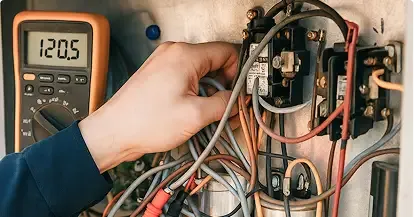
Electrical connections throughout HVAC systems loosen over time due to thermal expansion and vibration. Technicians torque all connections to specification, preventing arcing that damages control boards.
They also test capacitors, which show measurable degradation after 20,000 operating hours. Replacing aging capacitors before failure costs $150-200; emergency compressor replacement after capacitor-induced failure runs $1,800-2,500.
Thermostat calibration ensures accurate temperature control. Even a 2-degree calibration error forces systems into unnecessary runtime, wasting energy while failing to maintain comfort levels.
Smart thermostats require firmware updates and WiFi connectivity verification—services traditional HVAC contractors now incorporate into maintenance visits.
Window Air Conditioner Repair Brooklyn: Unique Maintenance Requirements
Window units remain the primary cooling solution for millions of Brooklyn residents. The NYC Housing and Vacancy Survey documents window air conditioners in 68% of rental apartments. These self-contained units demand specific maintenance protocols different from central systems.
Annual pre-season preparation takes 45-60 minutes per unit. Technicians remove front panels to access air filters—many residents operate units for entire summers without ever cleaning filters, reducing efficiency by up to 40%.
Professional service includes removing the chassis from the sleeve to clean both evaporator and condenser coils, which face different environmental exposures.
The condensate drainage system in window units clogs frequently. These units rely on gravity drainage through small holes in the base pan.
Brooklyn's high pollen counts and urban dust create sludge in drain pans, causing water backup that damages walls and creates mold conditions. Maintenance visits include clearing drain holes and treating pans with biocide tablets that prevent algae growth.
Window air conditioner repair brooklyn services address mechanical failures specific to these units. Fan motors operate in harsh conditions—exposed to weather on one side, humid interior air on the other.
Sealed bearings degrade, causing noisy operation before total failure. Replacing fan motors costs $180-300 including labor, while neglecting the issue leads to compressor overheating and complete unit failure.
Installation integrity affects performance dramatically. Units installed with improper tilt angle don't drain condensate correctly.
Gaps around sleeve installations allow conditioned air to escape while admitting outdoor air, forcing units to run continuously. Comprehensive maintenance includes checking installation parameters and recommending corrections.
Energy consumption varies wildly among window units. Older models draw 1,200-1,500 watts while cooling equivalent square footage to modern 550-watt Energy Star units.
Maintenance visits provide opportunities to assess whether repairs make financial sense or if replacement delivers better economics. A unit requiring $400 in repairs while consuming $180 in annual electricity surplus compared to an efficient replacement represents poor investment.
Air Conditioner Repair Brooklyn NY: Seasonal Demand Patterns
Service demand follows predictable annual patterns across Brooklyn. The first heat wave of the season—typically late May or early June—generates a surge in air conditioner repair brooklyn ny calls.
Systems that sat dormant for eight months reveal problems immediately upon startup. Capacitors that weakened during winter storage fail when equipment draws startup current. Refrigerant leaks that developed during the off-season become apparent when systems fail to cool.
July and August represent peak emergency service months. Temperatures in Brooklyn averaged 84°F during July 2023, with heat index values exceeding 95°F on 18 days.
During these periods, wait times for non-established customers stretch to 48-72 hours while service agreements receive same-day response.
The heat island effect intensifies cooling demands in specific neighborhoods. Areas with dense construction and limited tree cover—Downtown Brooklyn, Williamsburg's waterfront, Sunset Park's industrial zones—experience temperatures 7-9 degrees higher than leafy sections of Park Slope or Brooklyn Heights.
HVAC systems in heat islands run 30% more hours annually, accelerating wear on all components.
Smart property managers schedule ac repair in brooklyn services during shoulder seasons. April and October offer ideal windows for maintenance when technicians have availability and can thoroughly address issues without time pressure.
Early detection of refrigerant leaks, failing compressors, or corroded electrical connections prevents mid-summer failures.
Commercial buildings face different timing considerations. Retail spaces, restaurants, and offices cannot afford downtime during business hours.
Brooklyn hvac repair contractors serving commercial clients work overnight and weekend schedules, commanding premium rates but ensuring uninterrupted business operations. A restaurant losing air conditioning during dinner service can lose $5,000-8,000 in a single evening—making emergency overnight service at $250/hour economically rational.
AC Repair Brooklyn: Diagnostic Approaches and Common Failures
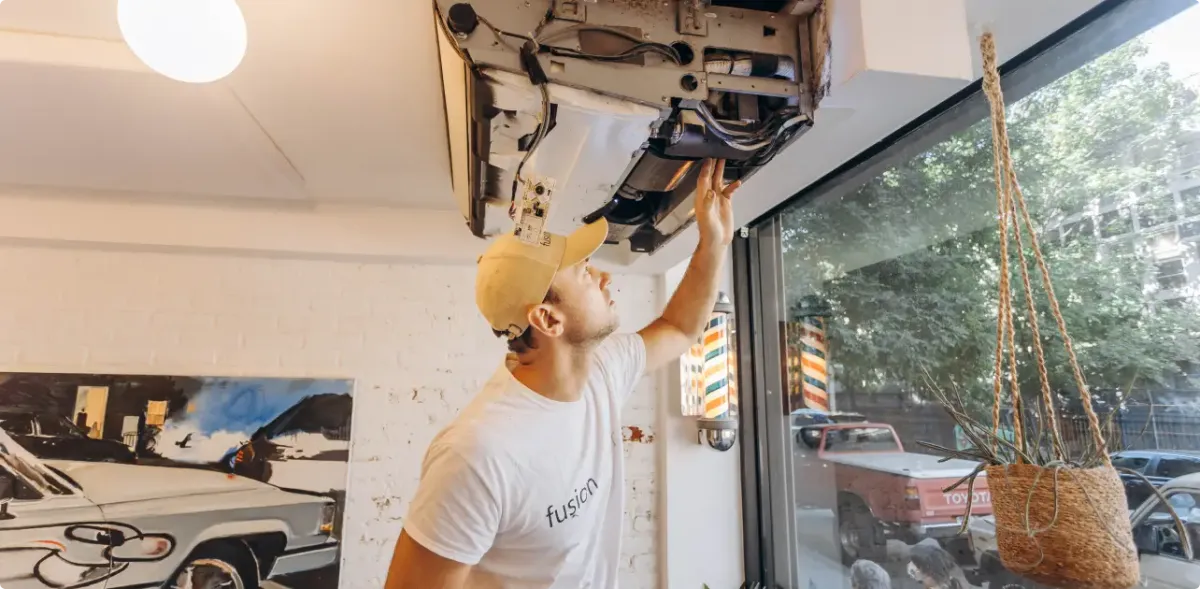
Modern diagnostic methods have transformed ac repair brooklyn services. Technicians arrive with digital manifold gauges that provide real-time refrigerant pressure and temperature data, comparing actual performance against manufacturer specifications.
Thermal imaging cameras identify air leaks in ductwork, hot spots in electrical panels, and uneven cooling patterns indicating blocked airflow.
The most common failure mode involves restricted airflow. Beyond dirty filters, crushed flex ducts in crawl spaces and unconditioned attics choke airflow.
Registers covered by furniture or drapes create pressure imbalances. Technicians measure static pressure across system components, identifying restrictions that force blowers to work harder while delivering less conditioned air.
Compressor failures represent the most expensive single repair. Reciprocating and scroll compressors in residential systems cost $1,200-2,800 depending on tonnage and refrigerant type.
Contributing factors include operating with low refrigerant charge—which causes compressor overheating—dirty condenser coils that prevent heat rejection, and failed capacitors that reduce starting torque. Most compressor failures are preventable through maintenance addressing these underlying causes.
Electrical control board problems increased significantly as systems adopted more sophisticated electronics. Modern boards manage variable-speed compressors, multi-stage heating, and integration with smart home systems.
Lightning strikes and power surges damage sensitive circuits. Proper surge protection costs $200-400 installed but prevents $600-900 control board replacements.
Ductwork issues affect 40% of central air systems according to field studies. Joints separate due to building settlement, insulation deteriorates exposing ducts to attic temperatures, and poor initial installation creates turbulence that reduces airflow.
Comprehensive maintenance includes visual duct inspection where accessible and pressure testing to identify leakage rates. Systems with 25% duct leakage—the industry average—lose a quarter of conditioned air before it reaches living spaces.
Air Conditioner Repair Brooklyn: Cost Factors and Financial Planning
Understanding repair economics helps property owners make informed decisions. Service call fees in Brooklyn range from $89-150 for diagnosis, typically applied toward repair costs.
Hourly labor rates run $125-185 depending on contractor certifications and insurance coverage. Weekend and after-hours emergency calls add 50-100% premiums.
Common repairs fall into predictable price brackets. Capacitor replacement costs $150-225, contactor replacement $140-200, and blower motor replacement $380-650.
Refrigerant recharging runs $300-600 depending on system capacity and refrigerant type—with R-22 for older systems commanding premium prices as production phased out under EPA regulations.
Major component replacement triggers different financial analysis. When compressor, heat exchanger, or evaporator coil failures occur in systems over 12 years old, replacement often makes more sense than repair.
A $2,200 repair on a 15-year-old system that may fail again soon compares unfavorably to a $4,500-6,000 replacement with 10-year warranties and 30% better efficiency.
Financing options have expanded for HVAC replacement. Many contractors offer 0% interest programs for 12-24 months, making replacement accessible when major repairs approach 50% of replacement cost.
Con Edison and NYSERDA rebate programs provide $150-350 credits for Energy Star equipment installation, improving replacement economics.
Maintenance contracts cost $200-400 annually for residential systems, providing biannual service visits plus priority emergency response and discounted repair rates. For systems over 5 years old, these contracts typically pay for themselves through prevented emergency calls and extended equipment life.
Buildings with multiple HVAC units negotiate volume pricing, bringing per-unit costs to $150-250.
Selecting Brooklyn HVAC Repair Professionals: Credentials and Qualifications
Credential verification protects property owners from unqualified contractors. New York requires HVAC contractors to hold appropriate licenses through the Department of Buildings.
Master HVAC licenses demonstrate comprehensive training and examination passage. Many companies employ licensed technicians supervised by master license holders—a legal configuration but one requiring verification.
EPA Section 608 certification is mandatory for anyone handling refrigerants. Four certification types exist: Type I (small appliances), Type II (high-pressure systems), Type III (low-pressure systems), and Universal (all types).
Technicians servicing residential air conditioning need minimum Type II certification. Request certification verification before allowing refrigerant work.
Insurance coverage matters significantly in Brooklyn's dense housing environment. General liability insurance protects property owners if technician errors damage equipment or property.
Workers compensation coverage protects owners from liability if technicians suffer injuries on-site. Minimum recommended coverage includes $1 million general liability and statutory workers compensation. Request certificates of insurance showing current coverage.
Manufacturer certifications indicate advanced training on specific equipment brands. Carrier, Trane, Lennox, and other manufacturers offer technical training programs resulting in factory-certified status.
These certifications demonstrate technician familiarity with brand-specific diagnostic procedures and access to technical support resources.
Industry association memberships provide quality signals. Air Conditioning Contractors of America (ACCA) members commit to continuing education and professional standards.
NATE (North American Technician Excellence) certification requires passing competency examinations in specialty areas. Building Performance Institute (BPI) credentials indicate whole-building diagnostic capabilities beyond basic HVAC work.
Customer reviews and complaint history offer practical insights. The Better Business Bureau maintains complaint records and resolution patterns.
Online review platforms show service patterns across multiple customers—though smart property owners weight verified service experiences more heavily than anonymous internet reviews. Local community boards and building management networks provide peer recommendations based on direct experience.
Preventive Maintenance Schedules: Optimal Timing and Frequency
Equipment manufacturers specify maintenance intervals in installation documentation. Most residential systems require professional attention twice yearly—spring cooling preparation and fall heating system readiness.
High-use commercial systems benefit from quarterly maintenance, particularly in restaurants and retail spaces with heavy HVAC demands.
Spring cooling maintenance occurs ideally in April or early May, before temperature spikes create service backlogs. Technicians verify refrigerant charge, clean coils, lubricate motors, and test electrical components.
Starting cooling systems under controlled conditions allows orderly repair scheduling rather than emergency crisis response. Property owners scheduling ac installation brooklyn during spring months ensure proper setup before peak cooling season demands test equipment performance.
Fall heating preparation takes place in September or October. Gas furnaces require combustion analysis to verify complete burning and safe exhaust venting.
Heat exchangers receive crack inspection using fiber-optic cameras—cracks allow carbon monoxide entry into living spaces, creating life-threatening conditions. Ignition systems, flame sensors, and limit switches all undergo testing.
Monthly owner tasks supplement professional service. Filter changes top the list—mark calendars for first-of-month replacement to establish routine.
Outdoor unit inspection identifies debris accumulation, vegetation growth within the 24-inch clearance zone, and obvious damage. Thermostat battery replacement prevents system shutdown due to dead batteries.
Seasonal transitions present specific tasks. When switching from heating to cooling, wait 24 hours between mode changes to allow systems to stabilize.
During first cooling season operation, check condensate drain lines for proper water flow—indoor water damage results from clogged drains. First heating season operation requires verifying that all registers are open and airflow reaches all rooms.
Long-term component replacement follows predictable schedules. Capacitors typically last 7-10 years in Brooklyn's climate. Blower motors run 15-20 years with proper maintenance. Compressors reach 12-15 years under good conditions.
Planning for these replacements prevents surprise expenses and allows strategic timing during contractor slow seasons when pricing is most competitive. Buildings scheduling ac installation brooklyn for equipment upgrades during off-peak periods secure better pricing and faster service.
Environmental Considerations and Efficiency Optimization
Brooklyn's climate goals affect HVAC maintenance practices. Local Law 97 establishes building emission caps beginning in 2024, with stricter limits in 2030.
Buildings exceeding caps face annual penalties of $268 per ton of CO2 equivalent over limits. Efficient HVAC operation directly impacts compliance with these regulations.
Refrigerant environmental impact continues evolving. R-22 refrigerant, common in pre-2010 systems, has high global warming potential and phased out of production.
Remaining supplies cost $120-180 per pound versus $80-100 for R-410A replacement refrigerant. Systems using R-22 facing major repairs warrant replacement consideration both economically and environmentally. Modern ac installation brooklyn projects specify environmentally preferable refrigerants that meet current EPA standards while delivering superior energy efficiency.
Energy recovery ventilators (ERVs) and heat recovery ventilators (HRVs) improve efficiency while meeting ventilation requirements. These systems capture energy from exhaust air to precondition incoming fresh air, reducing heating and cooling loads by 25-40%.
Maintenance includes cleaning heat exchange cores and verifying balanced airflow—typically annual service requirements.
Programmable and smart thermostats reduce energy consumption by 8-15% according to EPA data. Contractors offering ac installation brooklyn services now include smart thermostat integration as standard practice, allowing property owners to optimize heating and cooling schedules while monitoring system performance remotely. Proper


