Brooklyn · Neighborhood guide
AC repair in Flatbush, Brooklyn
In brief. AC repair in Flatbush — the Brooklyn neighborhood covering ZIPs 11226, 11203, 11210 — is shaped by its building stock: mixed housing stock — pre-war rentals along church and flatbush avenues, single-family homes east of nostrand, and mid-century apartment buildings throughout. This guide lists 2026 cost ranges for the systems most common on these blocks and names DCWP-verified contractors experienced with the neighborhood's typical jobs.
Housing stock and typical AC systems
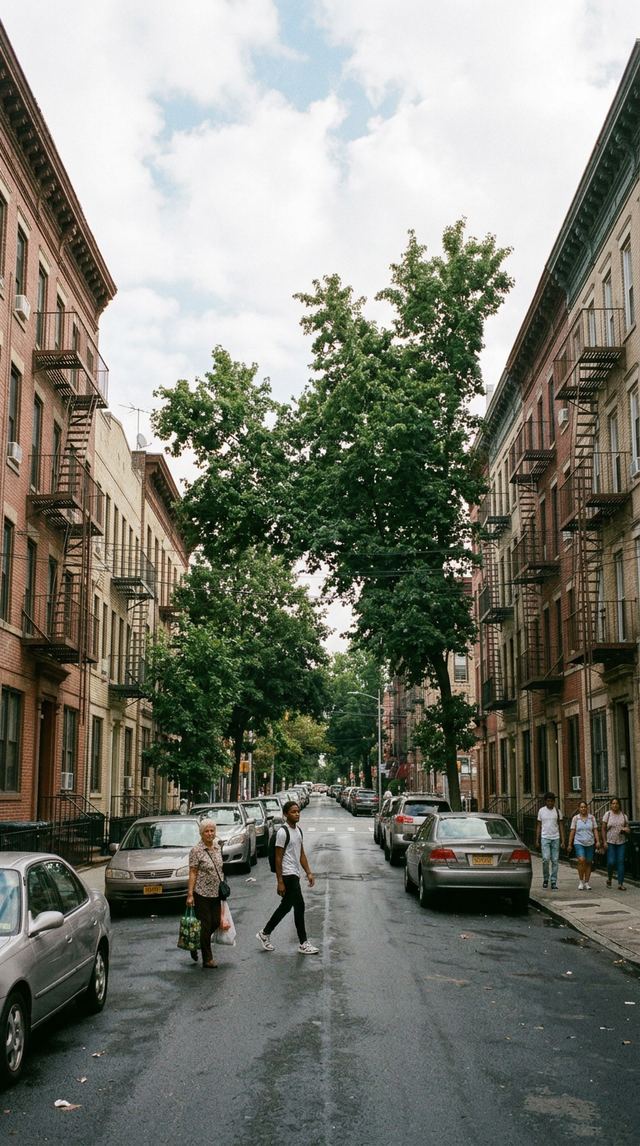
Mixed housing stock — pre-war rentals along Church and Flatbush Avenues, single-family homes east of Nostrand, and mid-century apartment buildings throughout. PTAC and window units are typical in the rental buildings; central air is more common in the residential blocks.
Most common systems on these blocks:
- PTAC
- Window units
- Central air (residential blocks)
Regulatory notes for Flatbush
- Prospect–Lefferts Gardens Historic District triggers Landmarks review for street-visible exterior work.
- Most Flatbush rental buildings replace PTAC in bulk during building-wide capital projects.
For the full NYC-wide framework, see our guides hub.
Typical 2026 costs
| Job | Typical range |
|---|---|
| PTAC repair | $180–$550 |
| PTAC replacement | $1,200–$2,600 installed |
| Central AC repair | $300–$1,100 |
Ranges reflect residential jobs at typical difficulty. Emergency, after-hours, and permit-required jobs sit at the top of each range or above.
Common failure patterns
The most common repair signatures our editors document in this neighborhood, grounded in contractor invoices and NYC 311 records reviewed for 2026.
PTAC bulk failure in rental buildings
Along Church and Flatbush Avenues, pre-war rental buildings replace PTAC units in bulk every 12–15 years as part of building-wide capital projects. Failure signals cluster: multiple units in one line stop cooling in the same summer because the shared exterior sleeve corrodes together. Diagnose by checking a full riser, not just the reporting unit.
Landmarks review delays in Prospect–Lefferts Gardens
Homes in the Prospect–Lefferts Gardens Historic District cannot install street-visible condensers without Landmarks Preservation Commission review. Applications typically take 4–8 weeks. Contractors experienced with the district recommend rear-yard placement wherever possible to skip the review — verify the placement plan in writing before scheduling install.
Refrigerant reclaim on old central AC
East of Nostrand Avenue, single-family stock installed in the 1990s often runs on R-22 refrigerant. R-22 is no longer produced in the US as of 2020, and reclaimed stock sells at 10x the R-410A price. On a leaking R-22 system, the honest recommendation is usually replacement to an R-454B system; a repair-heavy quote should raise questions.
Verified contractors for Flatbush
Brooklyn contractors familiar with multi-family building HVAC and single-family conversions in Flatbush.
See our top 10 NYC ranking and the Brooklyn borough page for our full verified shortlist. Every contractor we recommend for Flatbush passes the checks documented in how we verify licences.
FAQ — Flatbush
Which parts of Flatbush have landmark restrictions on AC?
The Prospect–Lefferts Gardens Historic District, roughly bounded by Flatbush Avenue, Empire Boulevard, New York Avenue, and Lincoln Road, requires NYC Landmarks Preservation Commission review for any exterior AC work visible from the street. Rear-yard condensers and interior-only installs generally proceed without LPC review.
How much does PTAC replacement cost in a Flatbush rental?
PTAC replacement in Flatbush's pre-war rental buildings runs $1,200–$2,600 installed per unit for standard 9,000–15,000 BTU sizes. Building-wide capital projects negotiate bulk pricing that lands closer to the bottom of that range. Tenant-initiated replacement is uncommon — this cost typically falls to the landlord.
Can I put a window unit in a Flatbush landmark building?
Interior-side window units in landmark buildings are permitted as long as the exterior appearance is not permanently altered. Bracket installations that penetrate the facade require Landmarks Preservation Commission review. Consult your building's alteration agreement and, for owner-occupied units, the district's rules before drilling.